

Key Highlights
- Funeral proceedings showcased large crowds and high-profile attendance.
- The event highlighted the temporary unity among rival factions.
- Analysts note that underlying tensions persist despite public displays of solidarity.
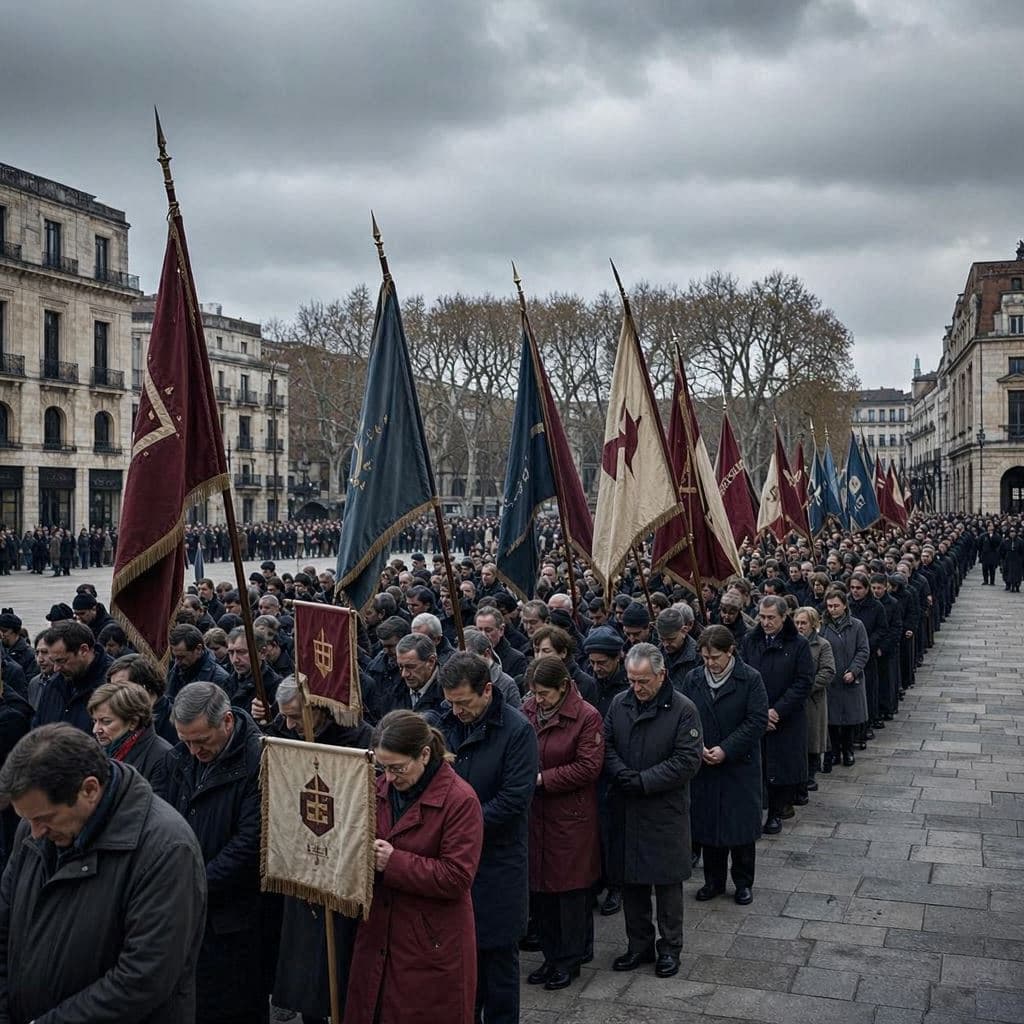
The recent funeral of a senior Iranian official served as a poignant reminder of the complex interplay between public unity and private discord within the Islamic Republic. Attended by prominent figures such as President Masoud Pezhaei and Supreme Leader Ayatollah Ali Khamenei, the event was meticulously orchestrated to project an image of strength and stability to both domestic and international observers. While the presence of rival factions side by side suggested a momentary truce, analysts caution that these displays often mask deeper ideological and strategic divisions that continue to shape Iran's political landscape.
Iran's political environment is characterized by a persistent struggle between hardliners, who advocate for strict adherence to revolutionary principles, and pragmatists, who seek economic relief and diplomatic engagement. Recent elections and policy debates have illuminated these fault lines, particularly regarding relations with the West and economic management. The funeral setting provided a neutral ground for these groups to coexist publicly, yet it did not resolve their fundamental disagreements, which are likely to resurface in future political maneuvers.
The death of influential figures frequently triggers a reshuffling of power dynamics, as various factions vie for influence in the resulting vacuum. While the immediate response to such losses is often one of collective mourning, the subsequent period is typically marked by intense negotiations and positioning behind the scenes. The unity observed during the funeral is thus a transitional phase, a brief pause before the next chapter of political competition unfolds. Understanding this cycle is essential for interpreting the internal dynamics of Iran.
International observers closely monitor these events for insights into Iran's future direction. A display of unity may signal a consolidated front against external pressures, while visible fractures could indicate vulnerability. However, the Iranian leadership has demonstrated a remarkable ability to manage perceptions, ensuring that public displays remain orderly despite internal strife. This capacity to maintain control is a testament to the regime's resilience, even in the face of significant challenges.
The Supreme Leader plays a crucial role in mediating these divisions. Ayatollah Khamenei serves as the ultimate arbiter, balancing the interests of various power centers, including the military, judiciary, and elected government. His authority helps prevent open conflict, yet it does not eliminate the friction that exists among different factions. The funeral serves as a reminder of his pivotal role in maintaining the system's cohesion, even as differences simmer beneath the surface.
Public sentiment also influences this dynamic. While the state projects an image of unity, many Iranians grapple with economic hardships and social restrictions that fuel discontent. The gap between the elite's ceremonial solidarity and the everyday struggles of the populace can widen trust deficits. For the leadership, managing this disconnect is as critical as navigating internal political rivalries. Thus, the funeral transcends a mere political event, reflecting broader societal tensions.
As the mourning period concludes, attention will inevitably shift back to governance and policy. The divisions that were temporarily masked will reemerge, influencing decisions on nuclear negotiations, regional proxy conflicts, and domestic reforms. The fleeting unity observed during the funeral will fade, replaced by the usual push and pull of Iranian politics. Nevertheless, the ritual itself remains a powerful symbol of the system's endurance, encapsulating the complexities of leadership within the Islamic Republic.
Published by Banx Network. This article is part of the Banx decentralized media programme, powered by the BXE token on the XRP Ledger.




