
Key Highlights
- Iran's military has launched strikes against U.S. forces in the Middle East.
- The strikes are framed as retaliation for earlier U.S. attacks.
- Tensions continue to escalate amid ongoing military exchanges.
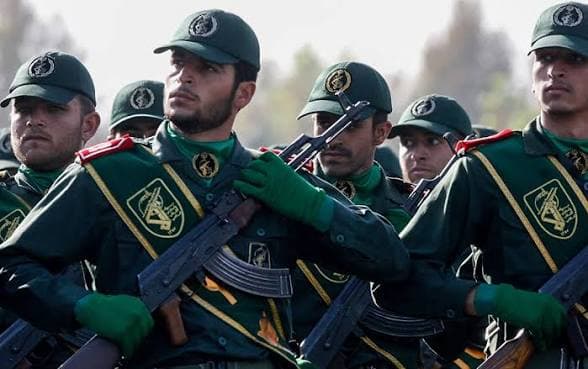
Iran's military has officially announced that it has launched retaliatory strikes against U.S. forces stationed in the Middle East. This action is being framed by Iranian officials as a direct response to what they describe as U.S. aggression in the region. The Islamic Revolutionary Guard Corps (IRGC) reported that its naval forces targeted U.S. deployment sites, emphasizing that these strikes are part of a broader strategy to counteract the U.S. military presence in the area.
The IRGC's announcement follows confirmation from U.S. Central Command (CENTCOM) that it conducted strikes on Iranian territory. These U.S. strikes were reportedly in response to an earlier attack on a commercial vessel in the strategically significant Strait of Hormuz, a vital waterway for global oil shipments. The IRGC has characterized its retaliatory actions as necessary to protect Iranian interests and assert its military capabilities.
The situation in the Middle East has been increasingly volatile, with both Iranian and U.S. officials accusing each other of violating ceasefire agreements. This tit-for-tat exchange of military actions has raised concerns about the potential for a broader conflict in the region. Analysts suggest that the ongoing military exchanges could lead to further escalation, particularly as both sides appear unwilling to back down.
In recent weeks, the IRGC has intensified its rhetoric against U.S. forces, framing their presence as an occupation that threatens regional stability. The Iranian government has also called for a united front among its allies in the region to counteract U.S. influence. This latest round of strikes is seen as a significant escalation in the ongoing conflict, with potential implications for U.S. military strategy in the Middle East.
As tensions rise, the international community is closely monitoring the situation, with calls for diplomatic solutions to prevent further military escalation. The U.S. has reiterated its commitment to protecting its forces and allies in the region, while Iran continues to assert its right to defend its sovereignty against foreign intervention.
The developments in this ongoing conflict highlight the complexities of U.S.-Iran relations and the broader geopolitical dynamics at play in the Middle East. With both sides entrenched in their positions, the path to de-escalation remains uncertain, and the potential for miscalculation could lead to a more significant military confrontation.
Published by Banx Network. This article is part of the Banx decentralized media programme, powered by the BXE token on the XRP Ledger.



