
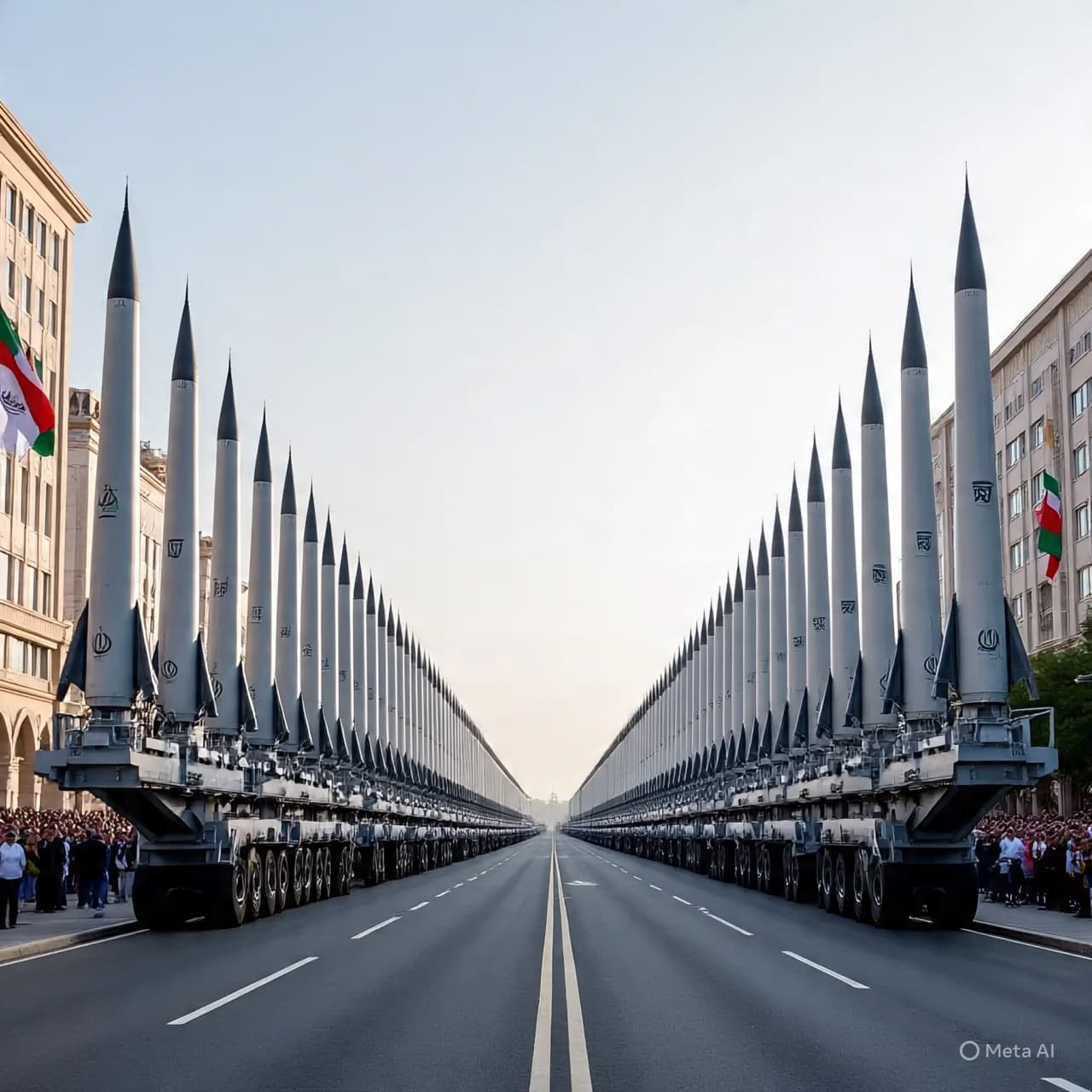
Diplomacy often advances in careful steps, shaped as much by limits as by possibilities. In Tehran, that balance was made clear again this week as Iran’s foreign minister reaffirmed a long-standing position: the country’s missile program will not be part of any negotiations.
Foreign Minister Abbas Araqchi said Iran’s ballistic missile capabilities have never been on the agenda for talks and will not be included in future discussions. The statement comes at a sensitive moment, as indirect diplomatic contacts between Iran and the United States have resumed with the aim of easing tensions and exploring a possible framework for nuclear-related agreements.
Iranian officials have indicated that they remain open to dialogue over the country’s nuclear program, particularly in the context of sanctions relief. However, Tehran continues to draw a clear distinction between nuclear issues and what it describes as its defensive capabilities. The missile program, leaders say, is a core element of national security and therefore a non-negotiable matter.
The position reflects a longstanding divide between Iran and Western governments. Washington and its regional allies have repeatedly argued that any future agreement should address not only nuclear activities but also Iran’s ballistic missile development and regional security concerns. Tehran, by contrast, has insisted that negotiations must remain narrowly focused on nuclear commitments.
Recent diplomatic contacts, including indirect talks held in Oman, suggest cautious movement toward renewed engagement. Both sides have signaled interest in preventing further escalation, even as significant gaps remain over the scope and structure of any potential deal.
Regional dynamics add further weight to the issue. Iran’s missile arsenal is viewed by its leadership as a deterrent in a volatile security environment, particularly amid ongoing tensions with Israel and a sustained U.S. military presence in the region. At the same time, Israeli officials have pressed Washington to ensure that any future agreement includes limits on Tehran’s missile capabilities, highlighting the issue’s strategic importance beyond the nuclear file.
The firmness of Tehran’s position underscores the challenge facing negotiators. While there may be room for compromise on nuclear transparency or enrichment levels, the broader security questions that concern Western governments appear unlikely to be addressed in the near term.
For now, the diplomatic landscape is defined by parallel messages: openness to talks on one front and immovable boundaries on another. Whether this narrow negotiating space can produce a durable agreement remains uncertain.
As discussions continue, the outcome will depend not only on technical details but on whether both sides can work within the limits each has chosen to draw.
AI Image Disclaimer Images included with this report may be generated using artificial intelligence for illustrative purposes and are not actual photographs.
Published by Banx Network. This article is part of the Banx decentralized media programme, powered by the BXE token on the XRP Ledger.


