There are forces in the universe that do not glow, do not glitter, and yet quietly shape everything they touch. Among them is magnetism—a silent architecture woven through stars, dust, and empty space. We cannot see it with our eyes, but the Milky Way feels its presence everywhere. It guides charged particles, sculpts cosmic clouds, and threads its influence through spiral arms. And now, astronomers suggest that something unusual may be unfolding within this vast magnetic tapestry.
Recent observations reported by researchers affiliated with NASA and the European Space Agency point to unexpected structures in the Milky Way’s magnetic field. Using sensitive radio telescopes capable of detecting polarized emissions, scientists have mapped distortions and large-scale patterns that challenge earlier assumptions about how our galaxy’s magnetic field is organized.
Magnetic fields in galaxies are generated and sustained by complex processes involving rotating plasma and turbulent motion—phenomena collectively described as a galactic dynamo. For decades, models suggested that the Milky Way’s field would follow relatively smooth, spiral-aligned lines, echoing the galaxy’s visible structure. Yet new data indicate regions where the field appears twisted, looped, or unexpectedly aligned.
One particularly intriguing aspect of the findings involves large filamentary structures stretching across thousands of light-years. These features, detected in radio wavelengths, suggest that magnetic forces may be interacting with cosmic rays and interstellar gas in ways not fully understood. Rather than a uniform magnetic sheet, the galaxy may host pockets of intensified or reoriented magnetism.
Such variations are not inherently alarming. Galaxies are dynamic systems, shaped by star formation, supernova explosions, and gravitational interactions. Each of these processes can disturb local magnetic environments. What makes the recent discovery noteworthy is its scale. The structures appear coherent over vast distances, hinting at processes that operate on galactic levels rather than local ones.
Researchers caution that interpretation remains ongoing. Mapping magnetic fields requires indirect methods, including measuring how radio waves twist as they pass through magnetized plasma—a phenomenon known as Faraday rotation. The precision of these measurements has improved significantly in recent years, thanks to advances in radio astronomy arrays and computational modeling.
The implications extend beyond cartography of the cosmos. Magnetic fields influence how gas collapses to form stars, how cosmic rays travel, and even how galaxies evolve over billions of years. A revised understanding of the Milky Way’s magnetic geometry could refine models of star formation and cosmic radiation shielding.
There is also an element of perspective. Our solar system resides within one spiral arm of the Milky Way, immersed in this magnetic environment. While current findings do not suggest any immediate effect on Earth, they deepen our understanding of the larger forces shaping our galactic neighborhood.
Some scientists propose that past interactions—perhaps with satellite galaxies or waves of starburst activity—could have contributed to the observed irregularities. Others suggest that the galactic dynamo itself may produce more complex patterns than previously modeled. Future observations from next-generation radio observatories are expected to clarify these possibilities.
In many ways, this discovery underscores how much remains to be learned about our own galaxy. We have mapped distant galaxies with remarkable clarity, yet the structure of our cosmic home still contains surprises.
For now, astronomers describe the phenomenon as an evolving area of study rather than a definitive anomaly. According to research teams contributing to journals such as Nature and Science and supported by space agencies including NASA and ESA, further data collection is underway. The Milky Way’s magnetic field is not unraveling—but it may be more intricate, more dynamic, than once imagined.
And so the invisible threads of our galaxy continue to shift and shimmer, reminding us that even in familiar skies, mystery persists.
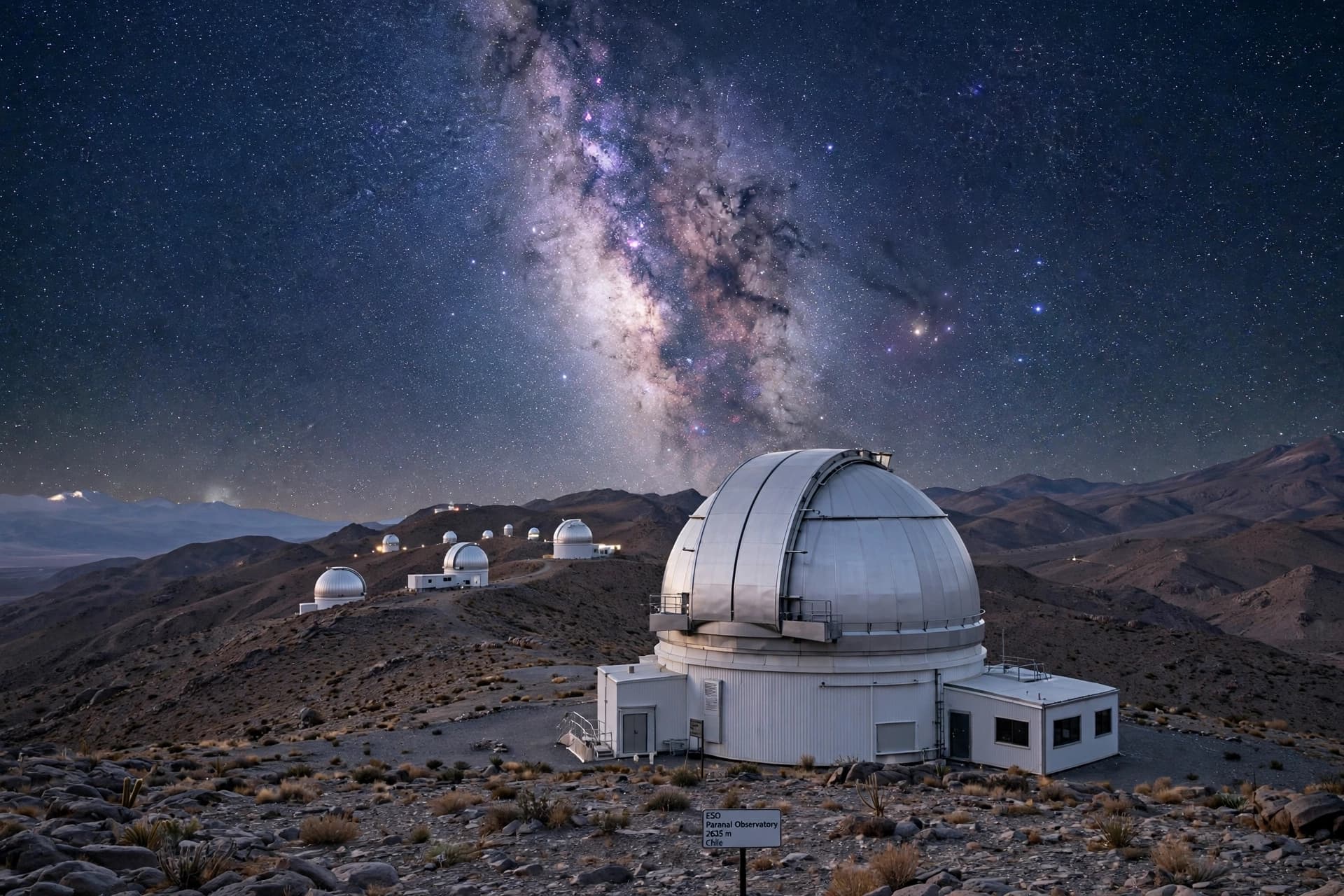
AI Image Disclaimer Graphics are AI-generated and intended for representation, not reality.
Sources
NASA European Space Agency (ESA) Nature Science Space.com
Published by Banx Network. This article is part of the Banx decentralized media programme, powered by the BXE token on the XRP Ledger.