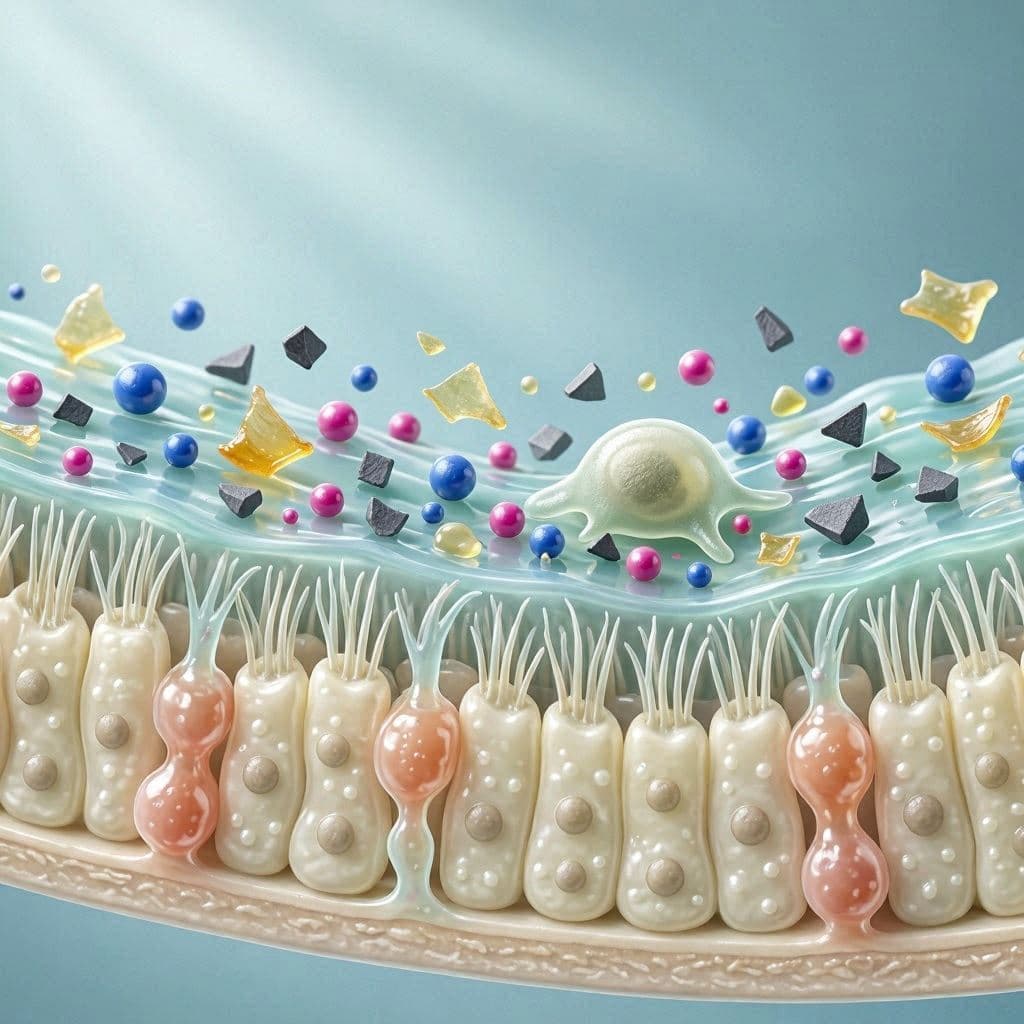
The air we breathe carries more than the invisible currents that sustain life. Alongside oxygen, countless microscopic particles move quietly through our surroundings, many too small to notice yet large enough to attract the attention of scientists seeking to understand their long-term effects on human health. As research advances, each discovery adds another piece to a complex picture of how different environmental exposures may interact within the body.
A new laboratory study has found that human airway cells exposed to cigarette smoke extract became more vulnerable to damage when later exposed to nanoplastics. Researchers observed that the combination produced stronger biological effects than nanoplastics alone, suggesting that cigarette smoke may increase the sensitivity of respiratory cells under controlled experimental conditions.
The study was conducted using cultured human airway epithelial cells, allowing scientists to examine how the cells responded to sequential exposure. After treatment with cigarette smoke extract, the cells showed greater signs of oxidative stress, inflammation, and reduced cellular function when nanoplastics were introduced. These biological responses are commonly used to evaluate potential cellular injury in laboratory research.
Researchers explained that cigarette smoke already contains thousands of chemical compounds capable of stressing respiratory tissues. When airway cells were subsequently exposed to nanoplastics, the existing cellular stress appeared to amplify the biological response. The findings suggest that multiple environmental exposures may interact in ways that differ from exposure to a single substance alone.
The authors emphasized that the research was performed in a laboratory setting rather than in living people. Cell culture studies provide valuable insight into biological mechanisms but cannot by themselves determine how the same exposures affect human health in everyday life. Additional animal studies, epidemiological research, and clinical investigations will be necessary to better understand the real-world implications.
Nanoplastics are extremely small plastic particles that can originate from the breakdown of larger plastic materials, synthetic textiles, vehicle tires, and other consumer products. Scientists continue investigating where these particles accumulate in the environment, how people are exposed to them, and whether long-term exposure contributes to disease. Research in this field remains active as analytical techniques continue improving.
Public health experts have long recognized that avoiding tobacco smoke is one of the most effective ways to reduce respiratory disease risk. While this study focused specifically on cellular interactions with nanoplastics, it also reinforces broader scientific interest in understanding how multiple environmental factors may collectively influence lung health over time.
The findings contribute to a growing body of research exploring the combined effects of environmental pollutants on the respiratory system. Although further investigation is required before drawing conclusions about human health outcomes, the study provides new evidence that cumulative exposures deserve careful scientific attention as researchers continue examining the complex relationship between pollution and respiratory biology.
AI Image Disclaimer:
The illustrations accompanying this article are AI-generated visual representations created for educational purposes and do not depict the actual laboratory experiments described.
Sources:
American Chemical Society (ACS) ACS ES&T Air Medical Xpress ScienceDaily
Published by Banx Network. This article is part of the Banx decentralized media programme, powered by the BXE token on the XRP Ledger.