The universe often reveals itself through light—through stars, galaxies, and glowing clouds visible across unimaginable distances. Yet scientists believe much of the cosmos is shaped by something that cannot be seen directly at all. Using new observations from the James Webb Space Telescope, NASA researchers have released fresh analysis exploring how dark matter may influence the formation of galaxies throughout the universe.
Dark matter remains one of modern science’s greatest unresolved mysteries. Although invisible to telescopes, researchers believe it exists because its gravitational effects appear throughout the cosmos. Galaxies rotate and cluster together in ways that cannot be explained by visible matter alone.
According to NASA scientists, Webb Telescope observations are helping researchers study extremely distant galaxies formed during the universe’s early history. By examining how these ancient structures developed, scientists hope to better understand the role dark matter may have played in shaping cosmic evolution after the Big Bang.
The James Webb Space Telescope, launched in 2021, was designed to observe deep space with unprecedented sensitivity. Its advanced infrared instruments allow astronomers to detect faint and distant objects previously hidden from earlier telescopes, opening new windows into the origins of stars and galaxies.
Researchers believe dark matter may function as a kind of invisible framework around which galaxies form and grow. While ordinary matter creates stars, planets, and gas clouds, dark matter’s gravitational influence could help organize large-scale cosmic structures over billions of years.
Despite decades of study, scientists still do not know exactly what dark matter is composed of. Numerous theories exist, ranging from undiscovered particles to alternative gravitational models, but no direct detection has yet been confirmed through experiments or observations.
The latest findings highlight how astronomy increasingly depends on both advanced observation tools and complex computational analysis. Massive datasets collected by modern telescopes require sophisticated modeling techniques to interpret patterns hidden within deep-space imagery.
Public fascination with dark matter continues partly because it challenges ordinary intuition. The idea that most of the universe may consist of invisible material fundamentally reshapes how humanity understands reality itself. In many ways, dark matter represents both the limits of current knowledge and the possibilities of future discovery.
As Webb continues scanning the cosmos, scientists expect many more questions to emerge alongside new answers. The deeper humanity looks into space, the more clearly the universe reveals that its greatest structures may depend on forces still waiting to be fully understood.
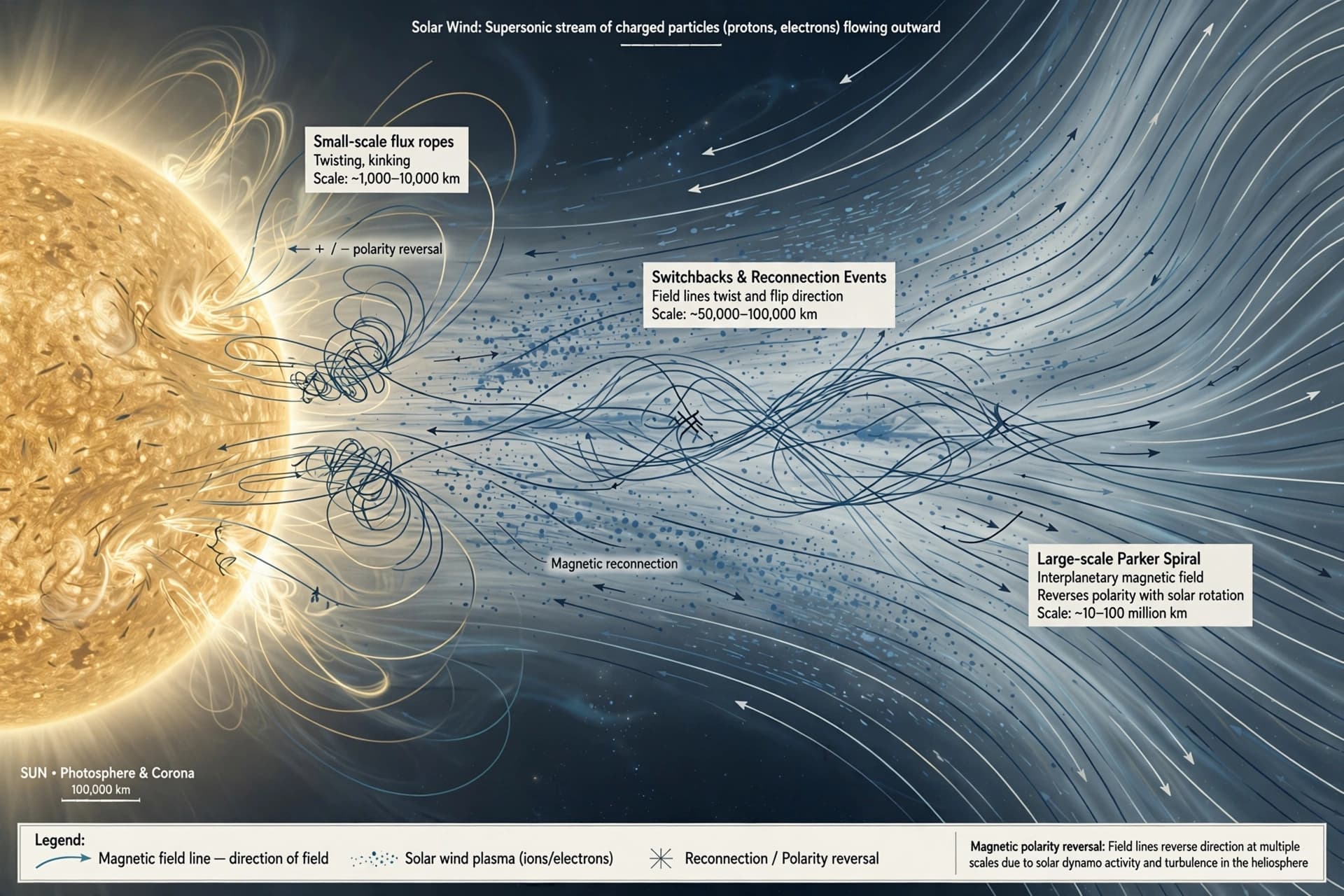
AI Image Disclaimer: Some cosmic visuals accompanying this article were generated with AI assistance to illustrate deep-space scientific concepts.
Sources: NASA, JPL, Nature, Space.com, Scientific American
Published by Banx Network. This article is part of the Banx decentralized media programme, powered by the BXE token on the XRP Ledger.