In the vast theatre of the cosmos, what we see with the naked eye — dazzling stars, glowing galaxies — is only part of the story. Beyond the brilliance that captures our imaginations, astronomers have long suspected that the universe is woven with unseen structures that guide the formation and movement of galaxies across billions of light-years. Now, thanks to the remarkable capabilities of the James Webb Space Telescope (JWST), scientists say they have glimpsed what some are calling the “invisible scaffolding” of the universe — an intricate cosmic web of matter that frames the architecture of space itself.
For decades, physicists have theorized that ordinary matter — the atoms and molecules that make up planets, stars and people — accounts for only a small portion of the universe. The rest, they believe, is largely composed of dark matter — an unseen and mysterious substance that does not emit or absorb light but exerts gravitational influence. According to leading models of cosmology, this dark matter should be arranged in an extensive filamentary network, linking galaxies and galaxy clusters in a vast, three-dimensional web.
Now, images captured by the James Webb Space Telescope — the most powerful space observatory ever built — appear to offer direct visual hints of this long-predicted structure. By peering deeper into space and further back in time than any previous telescope, Webb has revealed faint streams and delicate filaments of matter that seem to trace this cosmic web. In these new observations, scientists see patterns of light and shadow that align with simulations of how dark matter and ordinary matter should be distributed across the universe’s massive, unseen framework.
The revelation is more than a stunning set of cosmic portraits; it represents an important step toward understanding how the universe evolved from a nearly uniform sea of particles after the Big Bang into the richly structured cosmos we observe today. The delicate threads woven across Webb’s deep images act as a natural guide, showing where galaxies have formed along dense strands of matter and where vast voids remain, shaped by the pull of gravity over billions of years.
For researchers, these images are as much about context as they are about discovery. Each shimmering galaxy and glowing nebula now sits within a broader tapestry — a hidden skeleton that, until now, could only be inferred through mathematical models and indirect measurements. Webb’s ability to capture the faintest glimmers of distant light allows astronomers to see this cosmic pattern more clearly, lending new insight into the role that dark matter plays in shaping the universe.
Of course, much remains mysterious. Dark matter itself has not been directly detected in laboratories, and its nature continues to elude scientists. The scaffolding glimpsed by Webb does not answer the question of what dark matter is, but it does help show how it influences the distribution of galaxies and the evolution of cosmic structure. It is a reminder that, even amid overwhelming darkness, there are patterns — quiet, elegant, and waiting to be understood.
For the rest of us, these images invite wonder. They are an invitation to step back from familiar night skies and imagine a universe more interconnected than we once thought — a place where even emptiness is shaped by unseen hands and where every point of light hangs in a broader, beautiful tapestry of cosmic design.
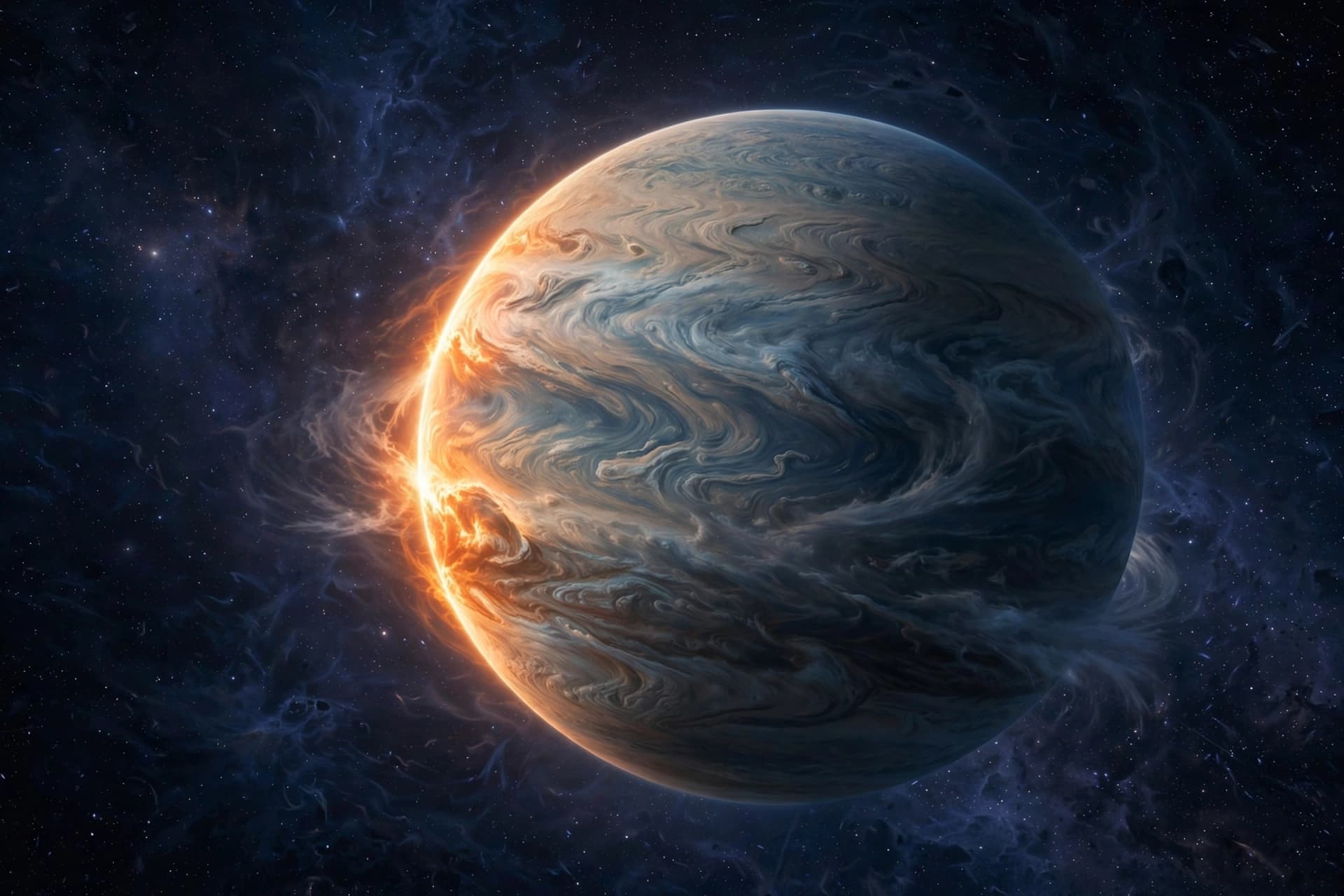
AI Image Disclaimer Visuals are created with AI tools and are not real photographs.
Sources
• Recent science reporting on James Webb Space Telescope deep-field images revealing structures consistent with the predicted cosmic web.
• Commentary from astronomers and cosmologists on how these observations align with models of dark matter architecture.
Published by Banx Network. This article is part of the Banx decentralized media programme, powered by the BXE token on the XRP Ledger.