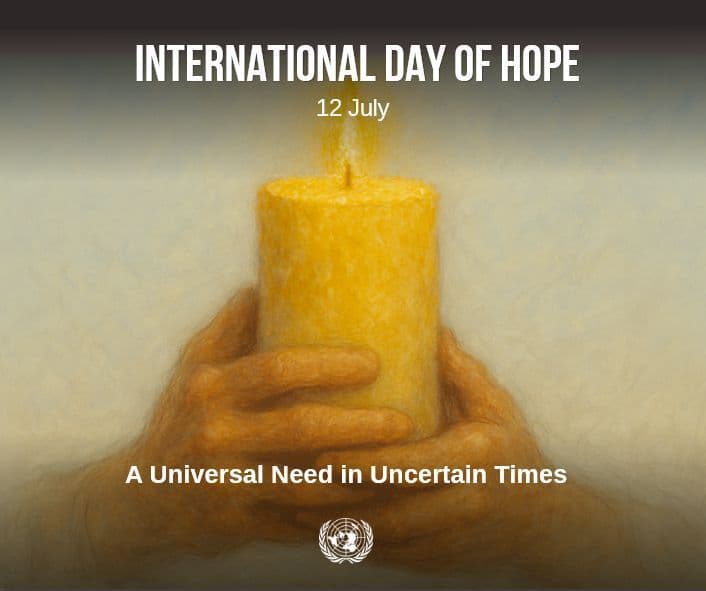
The United Nations observed the International Day of Hope by encouraging people and communities worldwide to view hope as a guiding principle during periods of uncertainty and persistent global challenges. The annual observance seeks to inspire positive action while emphasizing resilience, cooperation, and optimism amid economic, humanitarian, environmental, and social difficulties. International awareness days provide opportunities to focus attention on shared global priorities. The International Day of Hope promotes dialogue surrounding mental well-being, peaceful coexistence, sustainable development, and community resilience. Rather than representing a single policy initiative, the observance serves as a symbolic reminder that collective action can contribute to meaningful progress. The United Nations frequently uses commemorative days to encourage governments, educational institutions, businesses, and civil society organizations to organize activities that strengthen public awareness and community engagement. These events often include educational campaigns, volunteer initiatives, cultural programs, and discussions addressing local and global challenges. Supporters believe hope encourages resilience during crises by motivating individuals and institutions to pursue constructive solutions instead of despair. Communities facing conflict, poverty, natural disasters, or economic hardship often rely on cooperation and long-term planning to rebuild stability and improve living conditions. Although symbolic, the International Day of Hope reinforces the broader message that positive action begins with confidence that change remains possible. The observance encourages individuals and organizations alike to contribute toward building stronger, more inclusive societies.
Published by Banx Network. This article is part of the Banx decentralized media programme, powered by the BXE token on the XRP Ledger.