
Key Highlights
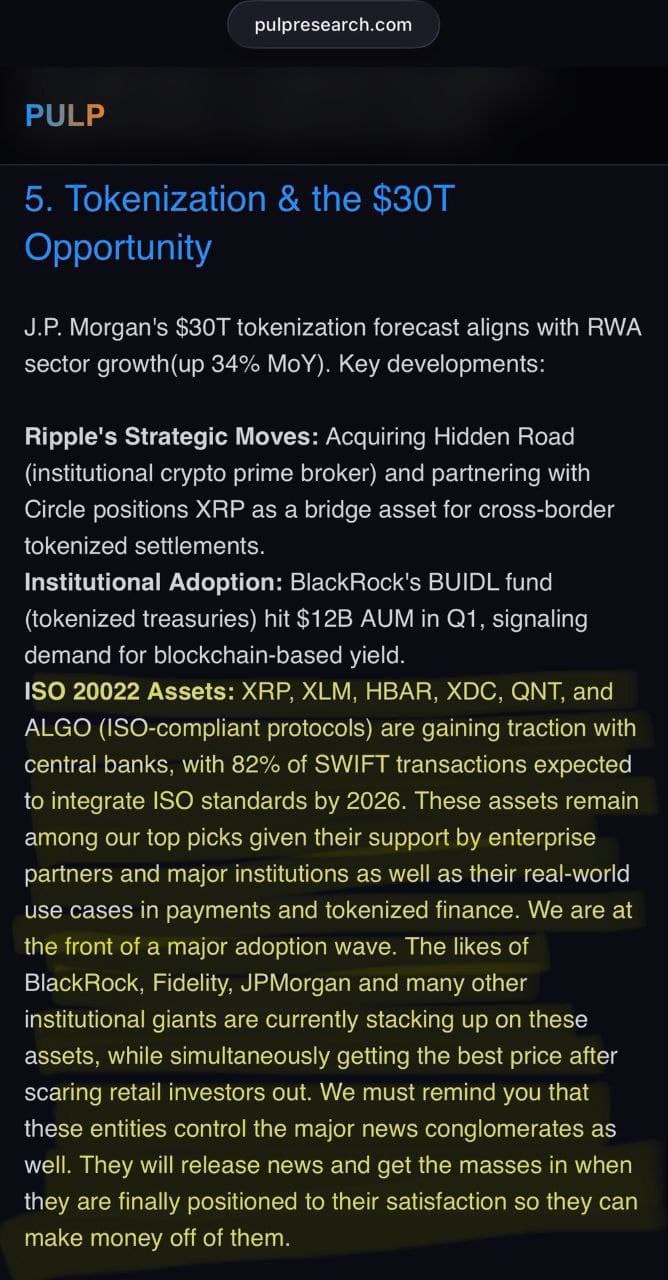
- Institutional investors are accumulating ISO 20022-compliant digital assets.
- The transition to ISO 20022 will impact 82% of SWIFT transactions by 2026.
- Major assets gaining traction include XRP, XLM, and ALGO.
In a striking move that could redefine global financial transactions, leading institutional investors are quietly accumulating ISO 20022-compliant digital assets. Financial powerhouses like BlackRock, Fidelity, and JPMorgan are strategically positioning themselves for what many analysts describe as a major adoption wave. This shift towards ISO 20022 standards is not just a trend; it represents a fundamental change in how financial transactions will be processed in the future.
The transition to ISO 20022 standards is poised to affect 82% of SWIFT transactions by 2026, signaling a colossal shift towards more efficient and interoperable systems. This transition will likely pave the way for enhanced cross-border payments, real-time processing, and improved data handling. As the financial landscape evolves, the implications of adopting these standards are profound, potentially revolutionizing how institutions and individuals conduct transactions.
Among the ISO-compliant protocols gaining traction are XRP, XLM, HBAR, XDC, QNT, and ALGO. These assets are increasingly being recognized for their potential to facilitate seamless financial transactions and address current limitations in the global payment ecosystem. Their adoption by institutional investors indicates a growing confidence in their utility and value, which could lead to increased market stability and liquidity.
However, it's essential to note that the substantial buying activity from these institutional giants may also have a short-term impact on retail investors. Many retail investors are being led into a state of fear, potentially allowing these larger entities to secure positions at favorable prices. The media narratives surrounding these assets can be orchestrated to manage public perception, often leading to retail investors buying high and selling low. This dynamic raises concerns about market manipulation and the ethical responsibilities of institutional investors.
Awareness of these dynamics is crucial. As these institutions wield significant influence over major news outlets, they can shape the narrative around these assets. Only when they have achieved their own strategic goals might they release positive news to attract retail investors once more. This cyclical pattern of influence underscores the importance of critical thinking and independent research for investors navigating this complex landscape.
In essence, while the landscape of digital assets is rapidly evolving, those who are aware of the trends and the behaviors of institutional players will be better equipped to navigate this new frontier. The future of finance may be significantly altered by this wave of adoption, and the implications are profound for retail investors and institutions alike. By understanding the motivations and strategies of these financial titans, investors can better anticipate market movements and make informed decisions in this transitioning environment.
Published by Banx Network. This article is part of the Banx decentralized media programme, powered by the BXE token on the XRP Ledger.



