
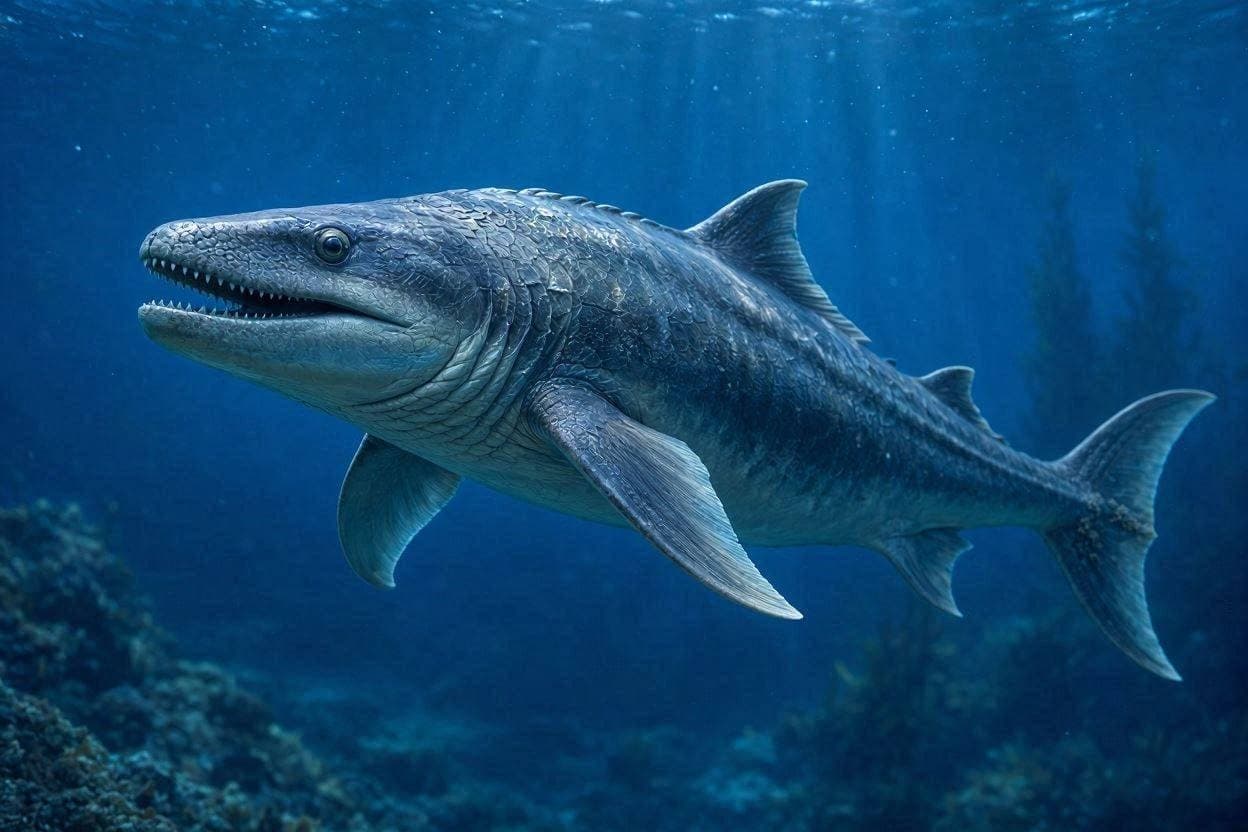
Time usually erodes the delicate details of life, leaving behind only bones and stone as testimony to ancient existence. But in rare instances, the fossil record offers a glimpse beyond the skeleton, preserving the soft tissues that once powered these prehistoric creatures. A stunning new discovery has unveiled the preserved organs of a marine reptile, providing an unprecedented look into the internal anatomy of animals that swam the oceans millions of years ago.
The specimen, identified as a type of ichthyosaur, was found in deposits known for their exceptional preservation quality. Unlike typical fossils where only hard parts survive, this specimen retained impressions of the heart, lungs, and digestive tract. Such soft-tissue preservation is exceedingly rare, requiring specific geological conditions that prevent decay and allow mineralization to capture fine structural details.
Scientists used advanced imaging techniques, including synchrotron radiation and CT scanning, to visualize these internal structures without damaging the fossil. The images revealed a large, four-chambered heart, suggesting that these marine reptiles had high metabolic rates similar to modern whales and dolphins. This finding challenges previous assumptions about their physiology, indicating they were warm-blooded and capable of sustained activity in cold waters.
The preservation of the lungs also offers insights into their diving capabilities. The structure suggests efficient oxygen storage, allowing the reptiles to remain submerged for extended periods while hunting. This adaptation would have been crucial for survival in the competitive marine ecosystems of the Mesozoic era, where speed and endurance were key to catching prey and avoiding predators.
Furthermore, the digestive tract contents provided clues about the animal’s last meal, revealing remnants of fish and cephalopods. This direct evidence of diet helps reconstruct the food web of the ancient ocean, showing how energy flowed through the ecosystem. It confirms that these reptiles were apex predators, playing a vital role in maintaining the balance of marine life.
The discovery underscores the importance of protecting fossil sites with high preservation potential. These locations are scientific treasure troves that can yield information impossible to obtain from skeletal remains alone. Researchers emphasize the need for careful excavation and conservation methods to maximize the scientific value of such rare finds.
This find also has implications for understanding the evolution of marine mammals. By comparing the anatomy of ichthyosaurs with modern cetaceans, scientists can identify convergent evolutionary traits—features that evolved independently in different lineages due to similar environmental pressures. It highlights the universal challenges of life in the ocean and the diverse solutions nature has devised.
The unveiling of marine reptile organs is a reminder of the hidden depths of the fossil record. As technology advances, we continue to peel back the layers of time, gaining a clearer picture of the lives that shaped our planet’s history long before humans walked the earth.
AI Image Disclaimer: Please note that the images in this piece are AI-generated illustrations created to depict the themes of paleontological discovery and ancient anatomy.
Sources: Nature, Smithsonian Magazine, BBC Science, National Geographic
Published by Banx Network. This article is part of the Banx decentralized media programme, powered by the BXE token on the XRP Ledger.



