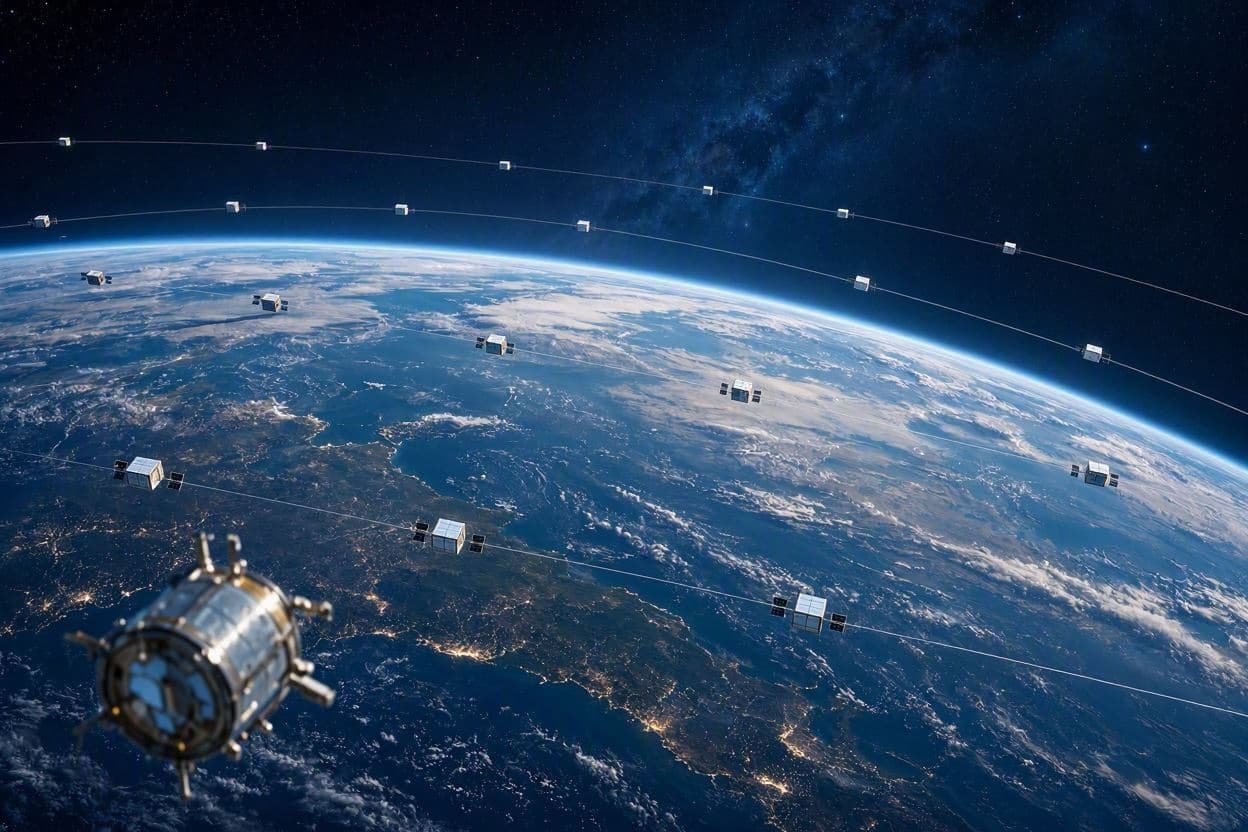
For centuries, humanity has looked up at the stars with wonder, seeking meaning in the distant lights. Today, however, our gaze has turned inward, as thousands of artificial eyes now orbit our planet, watching the Earth with unprecedented clarity. This shift from passive observation to active monitoring is driven by a convergence of private enterprise and artificial intelligence. While this technological leap offers profound benefits for understanding our changing world, it also introduces complex ethical and security challenges. It is a moment that invites us to reflect on the balance between transparency and privacy, and the responsibility that comes with seeing everything.
The proliferation of private satellite constellations has democratized access to space-based data. Companies like SpaceX, Planet Labs, and others have launched networks of small, cost-effective satellites that can capture high-resolution images of any point on Earth, almost in real time. This abundance of data is revolutionizing fields such as agriculture, disaster response, and climate science. Farmers can monitor crop health with precision, while emergency responders can assess damage from floods or fires within hours, saving lives and resources.
Artificial intelligence acts as the brain behind these orbital eyes, processing vast streams of imagery to identify patterns and anomalies. Machine learning algorithms can detect deforestation, track urban expansion, or predict weather events with speed and accuracy that human analysts cannot match. This synergy between hardware and software transforms raw data into actionable insights, enabling governments and organizations to make informed decisions quickly. It is a powerful tool for managing the complexities of modern life.
However, this capability comes with significant risks. The same technology that monitors environmental changes can also be used for surveillance, raising concerns about individual privacy and civil liberties. The ability to track movements, monitor private properties, or observe sensitive facilities creates potential for misuse by both state and non-state actors. The line between public benefit and intrusive observation is thin, and legal frameworks have struggled to keep pace with technological advancement.
Moreover, the sheer number of satellites contributes to space congestion and debris, posing threats to other spacecraft and future missions. The orbital environment is becoming crowded, increasing the risk of collisions that could create cascading fields of debris, known as Kessler Syndrome. This physical risk is compounded by the digital risk of cyberattacks on satellite networks, which could disrupt critical services or manipulate data. The vulnerability of this infrastructure is a growing concern for global security.
Ethical questions also arise regarding data ownership and access. Who controls the information gathered from space? Is it a public good, or a proprietary asset? The concentration of this power in the hands of a few private companies raises issues of equity and accountability. Ensuring that the benefits of Earth observation are shared broadly, rather than hoarded for profit or political advantage, is a crucial challenge for policymakers and industry leaders.
International cooperation is essential to address these challenges. Establishing norms for responsible behavior in space, protecting privacy rights, and managing orbital traffic requires dialogue among nations, corporations, and civil society. Treaties and regulations must evolve to reflect the new reality of a commercially driven space economy. Without such governance, the potential for conflict and misuse increases, undermining the very benefits these technologies offer.
Despite the risks, the potential for positive impact remains immense. Earth observation can help us tackle some of the most pressing issues of our time, from climate change to food security. By leveraging these tools responsibly, we can gain a deeper understanding of our planet and our place within it. The key lies in balancing innovation with caution, ensuring that technology serves humanity rather than controlling it.
The future of Earth observation holds both promise and peril. As private satellites and AI reshape how we see our world, we must navigate the associated risks with care and wisdom. Let us strive for a future where transparency serves the common good.
AI Image Disclaimer: Please note that any visual representations in this article are AI-generated illustrations created for conceptual clarity.
Sources: Nature The New York Times SpaceNews
Published by Banx Network. This article is part of the Banx decentralized media programme, powered by the BXE token on the XRP Ledger.