Havana, Cuba—Severe water shortages and widespread infrastructure collapse compounded mounting vulnerabilities across the island, leaving millions of residents struggling against crippled municipal distribution networks.
Decaying pumping stations, fractured distribution mains, and severe fuel scarcities paralyzed public water delivery systems across both urban neighborhoods and rural farming municipalities. Neighborhood taps remained dry for weeks at a time, forcing families to source water from secondary pipeline leaks and contaminated ground wells.
United Nations humanitarian monitors warned that the intersection of prolonged utility blackouts and broken hydraulic assets has severely compromised basic public sanitation standards nationwide. Local clinics reported rising concerns regarding waterborne ailments as hygiene supplies dwindled.
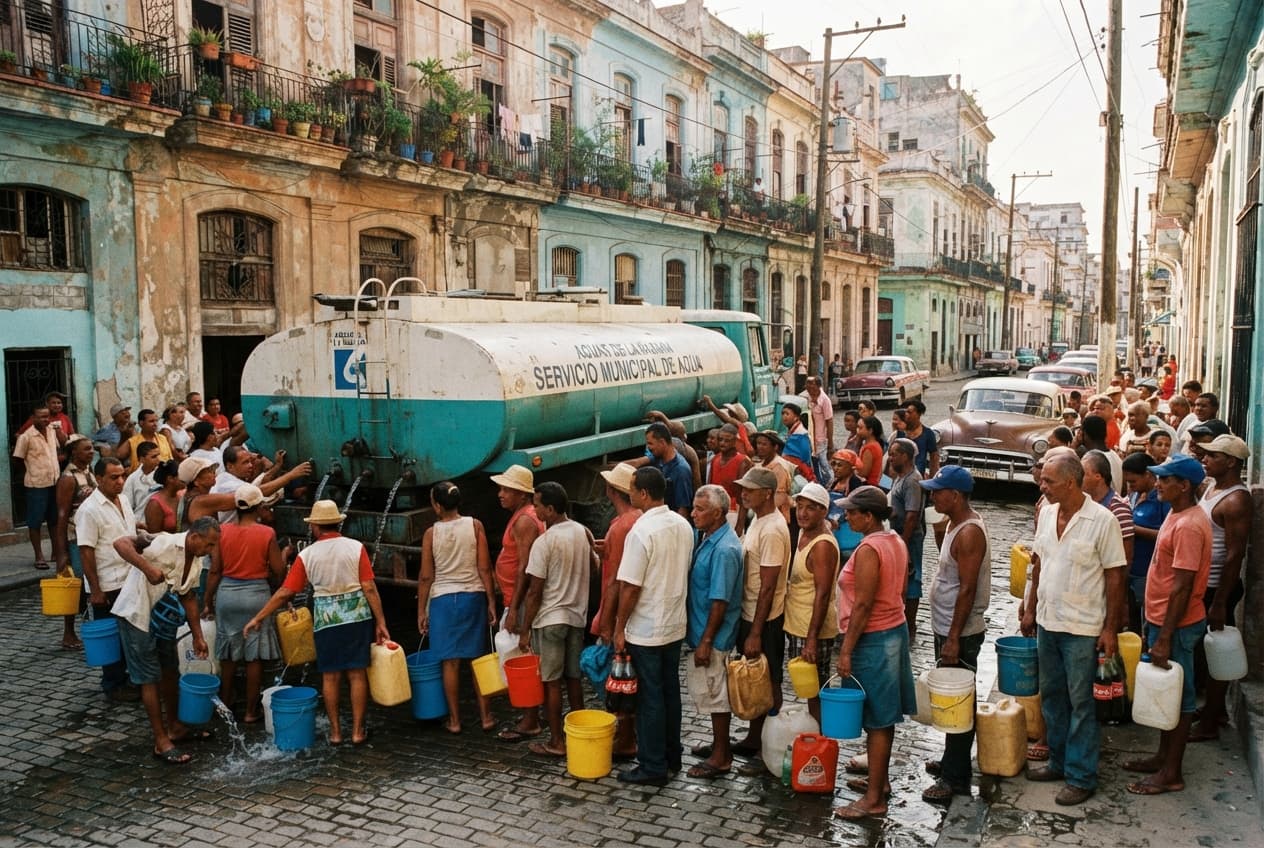
"We rely entirely on tanker truck deliveries that arrive intermittently every few weeks, leaving households to ration every single drop," explained Havana resident Elena Ramos while guarding a line of plastic containers.
Municipal utility crews worked around the clock with makeshift replacement parts to patch corroded iron pipes dating back decades. Technicians admitted that lack of access to imported electrical components and industrial lubricants prevents comprehensive system repairs.
International relief agencies continued coordinating emergency logistical support to deliver water purification tablets and portable pumping generators to critical healthcare facilities. Regional authorities activated alternative distribution protocols to supply vulnerable community centers.
Long queues of residents bearing buckets and plastic jugs remained a common sight outside municipal water distribution points as daylight faded. No immediate structural resolution is projected for the island's crippled hydraulic grid.
Published by Banx Network. This article is part of the Banx decentralized media programme, powered by the BXE token on the XRP Ledger.