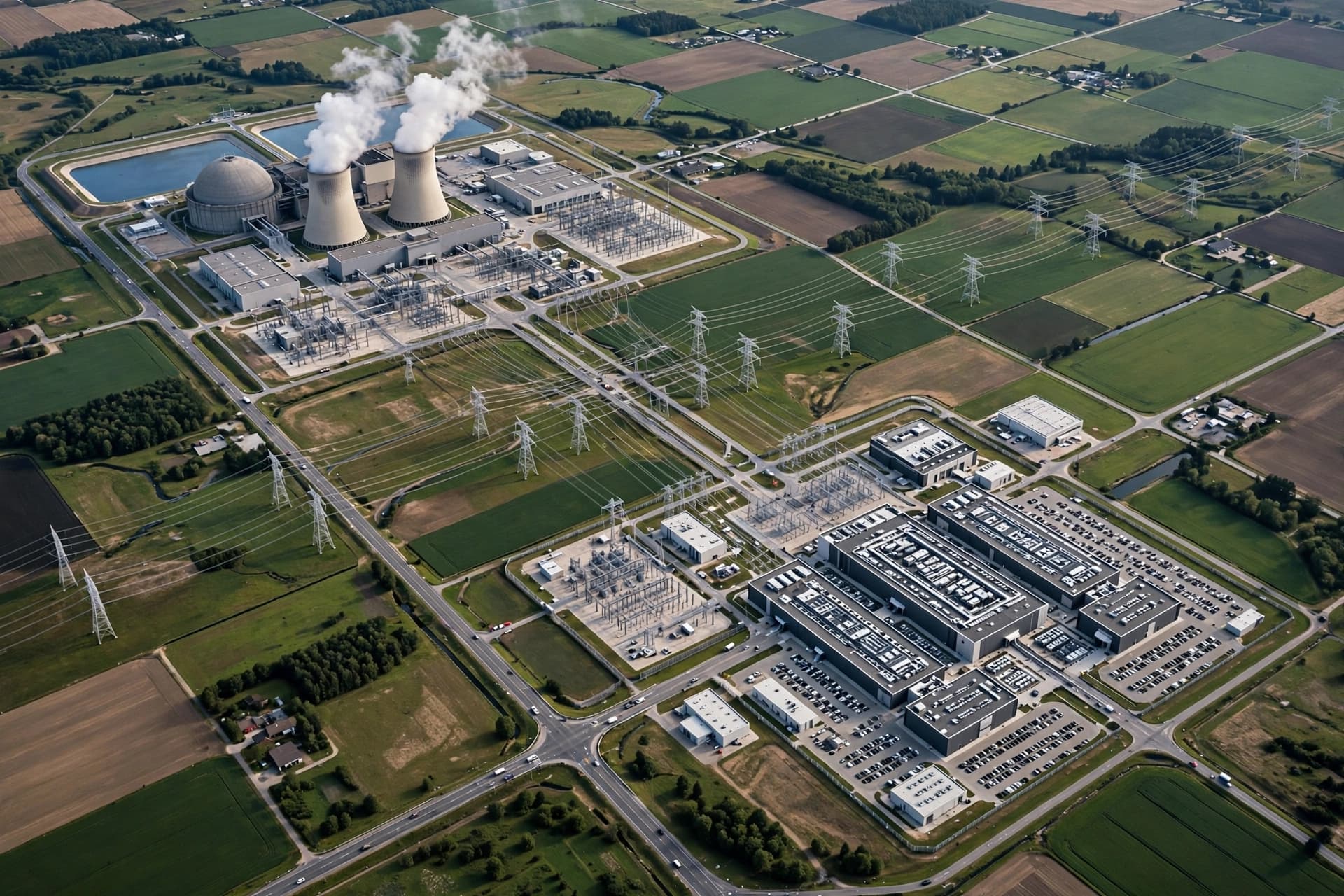
Artificial intelligence has become as much a capital race as a technological one. Behind every breakthrough model lies a vast physical foundation — chips, data centers, cooling systems, and energy supply chains.
Recent industry comparisons indicate that China’s total AI capital expenditure remains less than one-fifth of spending by top U.S. hyperscalers. Companies such as Microsoft, Amazon, and Google have collectively committed tens of billions of dollars annually toward AI infrastructure, including advanced semiconductors and large-scale data centers.
Hyperscalers — firms that operate massive cloud computing platforms — deploy capital at extraordinary scale. Their AI-related investments encompass GPU clusters, custom silicon development, network upgrades, and expanded server capacity to support training and inference workloads.
China’s technology ecosystem, led by major domestic firms and state-supported initiatives, has also accelerated AI development. However, aggregate capital outlays reportedly remain significantly below those of leading U.S. cloud providers. The gap reflects differences in access to advanced semiconductor technologies, capital market structures, and regulatory environments.
Spending levels matter in AI for a straightforward reason: compute intensity. Training frontier models requires immense processing power and sustained infrastructure expansion. Companies that invest aggressively can iterate faster, deploy larger systems, and capture enterprise demand at scale.
At the same time, capital efficiency varies. Some analysts argue that targeted optimization, open-source collaboration, and application-layer innovation can partially offset lower hardware spending. AI advancement is not purely a function of capital magnitude, though financial scale often accelerates momentum.
The disparity also underscores broader geopolitical dimensions of the AI race. Export controls, supply chain restrictions, and national industrial policies shape the contours of investment. Infrastructure buildout is now intertwined with strategic positioning.
For markets, AI capex has become a central narrative. Hyperscalers’ earnings calls increasingly highlight infrastructure spending as both growth driver and margin consideration. Investors track not just revenue from AI services, but the underlying capital commitments required to sustain them.
While China’s spending remains comparatively smaller by current estimates, AI development is dynamic. Government-backed initiatives, regional partnerships, and domestic semiconductor innovation could influence future trajectories.
In the global competition to build intelligent systems, capital is both fuel and signal. The current gap illustrates where the largest financial bets are being placed — and how infrastructure has become the foundation of technological leadership
Published by Banx Network. This article is part of the Banx decentralized media programme, powered by the BXE token on the XRP Ledger.