
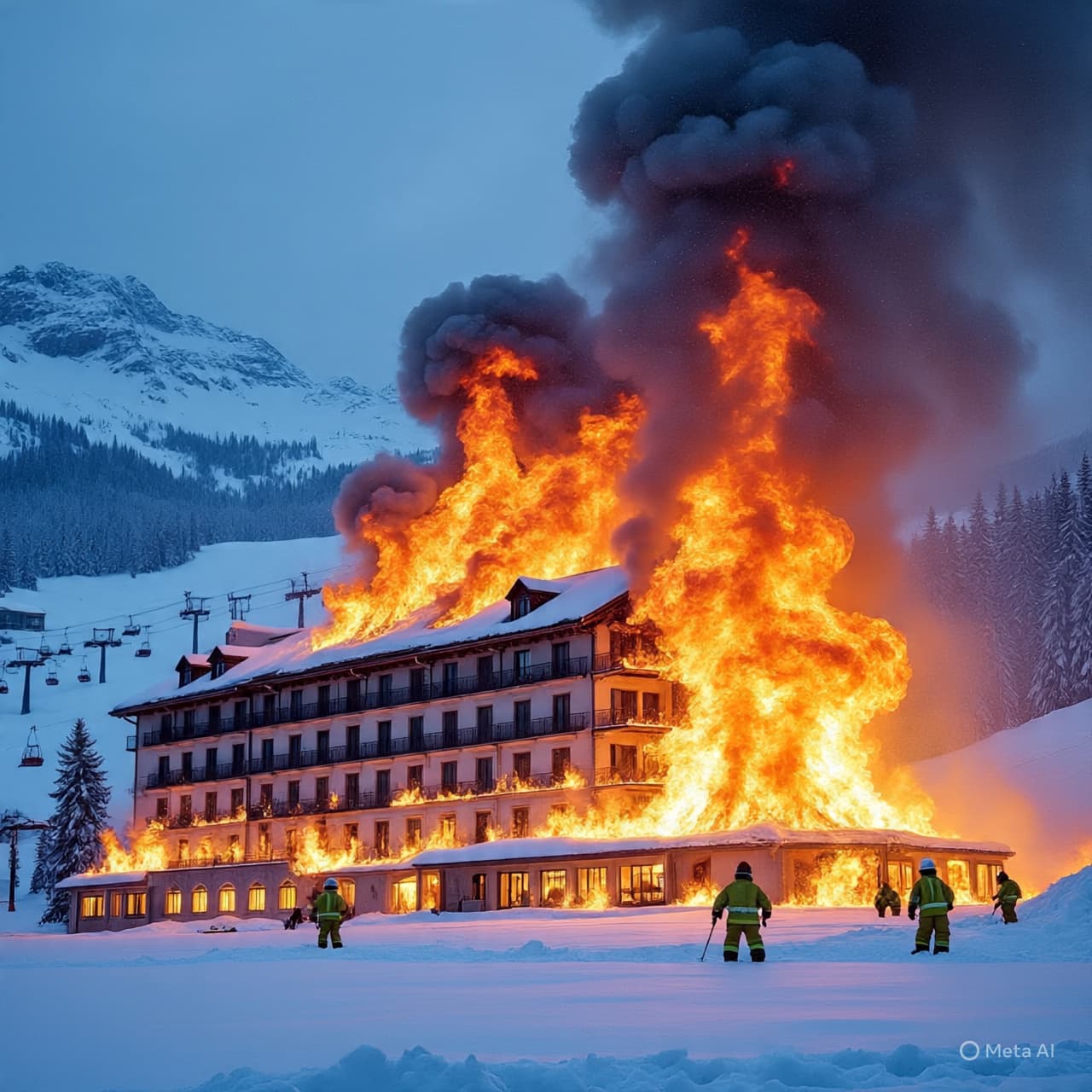
In the serene and snowy heights of the French Alps, where luxury and exclusivity meet the pure, unspoiled nature of the mountains, disaster struck in the most unexpected of places. Courchevel 1850, the prestigious ski resort known for its five-star hotels and affluent clientele, became the site of a terrifying inferno, sending shockwaves through the tight-knit world of winter luxury tourism. A massive fire engulfed one of its most renowned five-star hotels, leaving behind a trail of destruction, panic, and heartbreak. In an instant, the majestic alpine resort, typically a haven for the rich and famous, found itself at the mercy of flames that would transform its tranquil beauty into chaos and fear.
As the smoke continues to dissipate over the slopes of Courchevel, one question lingers in the frigid air: How does a place that epitomizes safety, comfort, and privilege become the stage for such a catastrophic event? What does this tragedy say about the hidden dangers of even the most carefully guarded havens, and what lessons can we draw from this fiery disaster?
Courchevel 1850 has long been synonymous with opulence. Its gleaming chalets, chic boutiques, and world-class ski slopes attract an elite clientele who seek not just the thrill of skiing but a sanctuary from the hustle and bustle of daily life. For many, a visit to this mountain retreat is the ultimate escape. The resort caters to the world's most discerning guests, offering everything from private ski instructors to Michelin-starred dining and indulgent spa treatments. But despite its reputation as a safe and controlled environment, the fire that ravaged one of its luxury hotels reminded everyone that no place—no matter how high above the world it may be—can ever be fully immune to the whims of nature and the unpredictability of disaster.
Details about the fire’s origins are still emerging, but the scale of the damage is already apparent. The hotel, a luxurious and iconic establishment, was known for its high-end services, attracting celebrities, business moguls, and wealthy vacationers. In the chaos, guests scrambled to evacuate, some with little more than the clothes on their backs, as flames tore through the structure, consuming its rich interiors and threatening to engulf everything in its path. Emergency responders, including local firefighters and rescue teams, rushed to the scene, working tirelessly to prevent further damage and ensure that as many lives as possible were saved.
Thankfully, while the material losses are immense, there have been no confirmed fatalities. Many guests managed to escape, though not without trauma, as the fire spread quickly and without warning. It’s a testament to the efficiency of the local emergency services and the hotel staff that there were no deaths, but the emotional toll on survivors and witnesses will likely linger far longer than the ashes of the fire.
This incident also sheds light on the risks that come with the development of luxury resorts in such remote, high-altitude regions. In places like Courchevel 1850, where weather conditions can change rapidly and natural disasters like avalanches and fires are always a concern, safety measures must be meticulously planned and executed. While the resort itself is equipped with top-notch facilities, questions are now being raised about the preparedness of such establishments in the face of sudden, unpredictable emergencies. Are there sufficient evacuation protocols? Do these luxury resorts have the right safety infrastructure to protect the people who visit them?
Moreover, the fire brings into stark relief the often invisible vulnerability of such exclusive destinations. While the media attention typically focuses on the glamorous aspects of such resorts—designer shopping, private jets, elite clientele—the darker realities, such as the safety risks and logistical challenges of operating in the remote mountains, often go unexamined. This fire is a reminder that behind the glittering facade of luxury, there lies an undercurrent of risk that no amount of wealth or privilege can fully mitigate.
Looking forward, the question remains: how will Courchevel 1850 rebuild, and what will this mean for the future of luxury alpine tourism? The resort has long prided itself on being a symbol of luxury and refinement, but the fire has thrown a shadow over that image. Rebuilding will take time, and questions about whether enough will be done to prevent similar disasters in the future will continue to linger in the minds of those who frequent these elite destinations.
As the embers of the fire at Courchevel 1850 continue to cool, the luxury ski resort and its inhabitants will no doubt face a long road to recovery. The emotional and material scars left by this devastating event will likely leave an indelible mark on the community. And yet, in the wake of disaster, there is a renewed focus on safety, preparation, and the fundamental question of whether luxury can ever truly be risk-free. While the tragedy was a cruel reminder of how unpredictable life can be, it also serves as an opportunity for reflection: how can we better protect those who visit these high-altitude retreats? As the resort rebuilds, so too will the conversation around safety in the luxury tourism industry, perhaps leading to a future where security and luxury coexist in ways that we haven’t yet imagined.
AI Image Disclaimer (Rotated Wording): "Images in this article are AI-generated illustrations, meant for concept only." "Visuals are created with AI tools and are not real photographs." "Illustrations were produced with AI and serve as conceptual depictions." "Graphics are AI-generated and intended for representation, not reality." Sources: BBC News Reuters Le Monde The Guardian France24
Published by Banx Network. This article is part of the Banx decentralized media programme, powered by the BXE token on the XRP Ledger.


