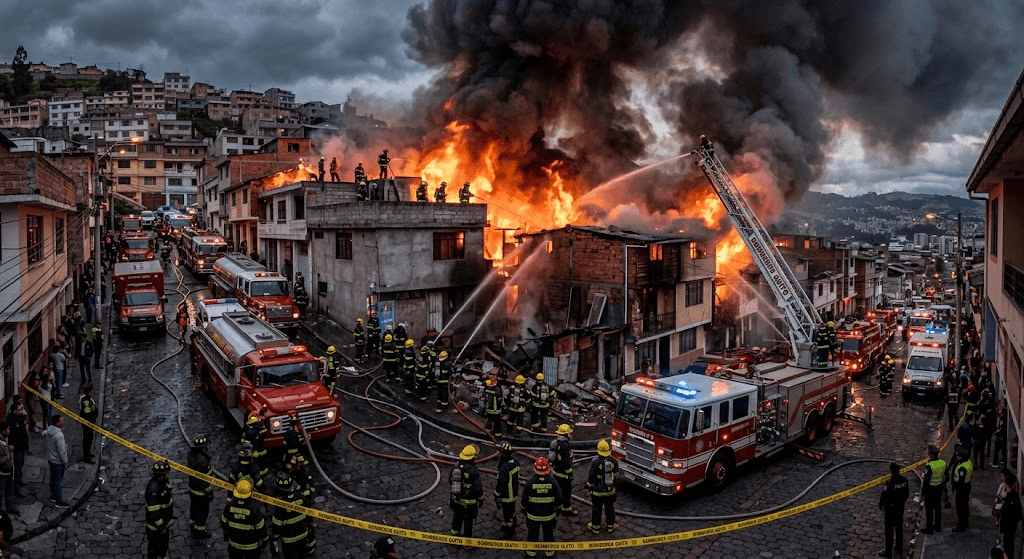
QUITO, Ecuador — A fast-moving fire swept through a densely populated urban sector of Quito, prompting the urgent deployment of nearly 60 firefighters and 14 emergency response vehicles to contain the escalating blaze. The emergency triggered widespread evacuations across the immediate perimeter as crews fought to keep flames from consuming surrounding residential structures.
The fire broke out in a high-density neighborhood characterized by narrow streets and tightly clustered housing. Strong wind gusts and combustible structural materials caused the flames to spread rapidly across adjacent properties, generating thick plumes of smoke visible across much of the capital. Alarmed residents flooded emergency hotlines as localized power grids were shut down to mitigate electrical risks.
The Benemérito Cuerpo de Bomberos de Quito dispatched multiple primary engines, water tankers, and specialized rescue units to establish containment lines. Operating in cramped alleys, firefighters laid extensive hose networks to deliver water directly to the core of the inferno while simultaneously cooling neighboring rooftops.
Medics and disaster response teams set up field triage centers to treat residents for severe smoke inhalation and minor burns. Emergency personnel coordinated orderly evacuations along designated safety corridors, ensuring vulnerable individuals and families were relocated away from the heat zone.
"Our tactical teams acted swiftly to lock down the perimeter and halt the fire’s advance toward adjacent multi-family units," reported a senior Quito Fire Department officer at the site. "Dense urban conditions require immediate, high-volume suppression efforts to protect life and property."
Municipal police and arson investigators have launched an inquiry to determine the exact origin and cause of the outbreak. Technical specialists are examining electrical junction points and interviewing eyewitnesses to rule out foul play or faulty municipal infrastructure. Structural engineers are conducting on-site evaluations to determine whether compromised buildings present a collapse hazard to nearby thoroughfares.
In response to the emergency, municipal authorities announced mandatory safety compliance audits for structures situated in high-density urban zones. City planners and emergency services pledged to accelerate infrastructure upgrades, including installing high-capacity hydrants along narrow access routes and enforcing strict fire-retardant building standards to reduce risk across Quito’s populated neighborhoods.
Published by Banx Network. This article is part of the Banx decentralized media programme, powered by the BXE token on the XRP Ledger.