Across parts of Indonesia, the dry-season landscape has been accompanied by another, less visible consequence of forest and land fires: a growing number of respiratory illnesses. The Health Ministry recorded 174,694 acute respiratory infection cases in fire-affected areas between August 18 and September 21, 2026.
Of that total, 40,363 cases involved children under five. The figures cover seven provinces affected by forest and land fires: Riau, Jambi, South Sumatra, West Kalimantan, Central Kalimantan, South Kalimantan and East Kalimantan.
The number represents cumulative reports rather than the number of patients currently receiving treatment. As of September 22, the Health Ministry said 4,533 cases remained active, while others had recovered or returned to normal health.
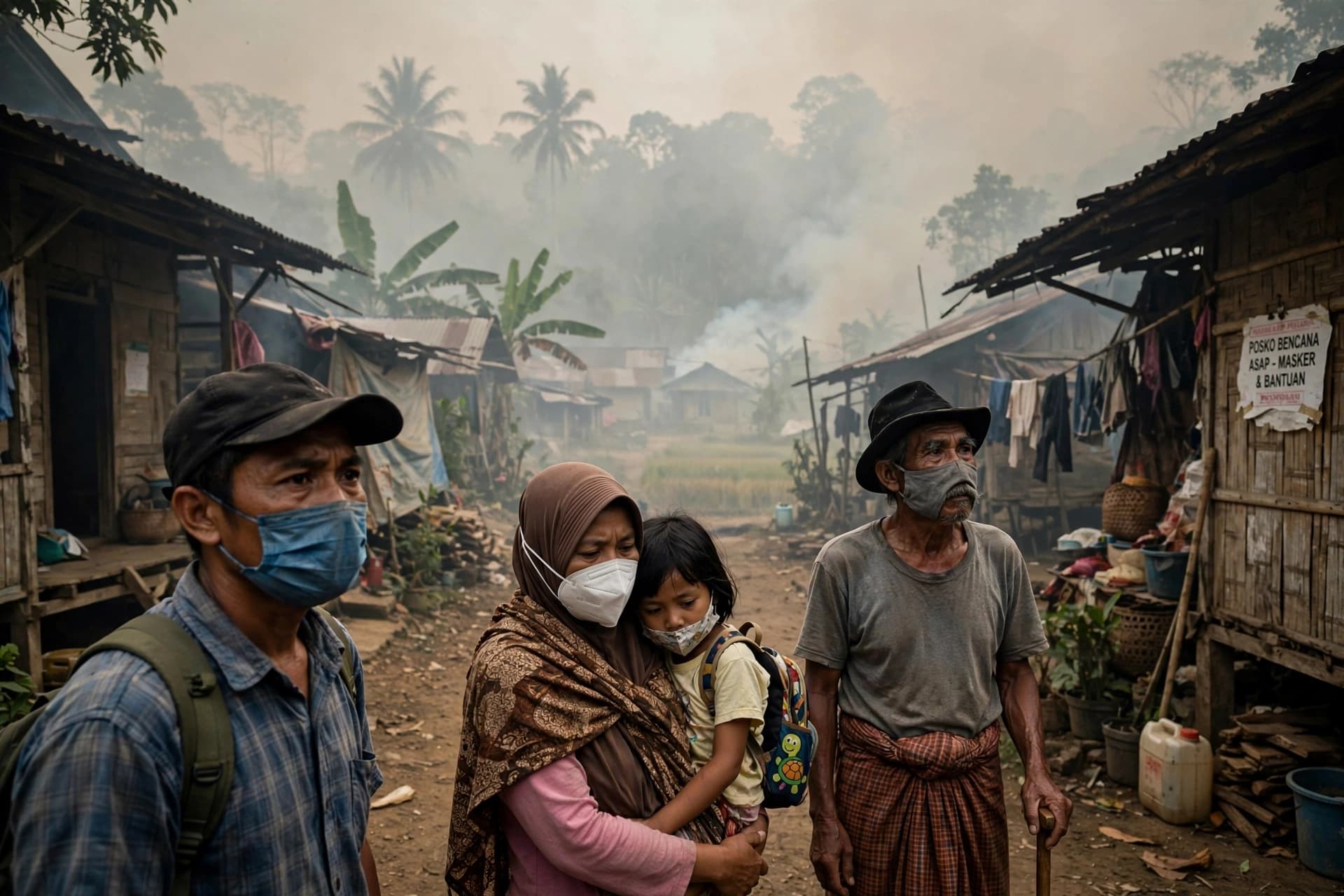
Smoke exposure can become a persistent presence during large-scale fires, especially when weather conditions allow pollutants to remain concentrated near the ground. For communities living close to affected areas, the changing quality of the air can influence ordinary routines, from outdoor work to children's activities.
Children are among the groups receiving particular attention from health authorities. The ministry has recommended that local governments consider distance learning when air quality deteriorates, with the aim of reducing children's exposure to smoke outdoors.
Health facilities have also been placed on heightened readiness. The ministry has strengthened health posts and hospitals while distributing medical supplies, including masks, oxygen concentrators and oxygen cylinders to affected areas.
The response has expanded beyond individual treatment. Health authorities are monitoring air quality, respiratory cases, medical-facility readiness and the availability of essential supplies. Public health laboratories have also been involved in air-quality testing.
The health response follows an earlier rise in reported respiratory cases. By September 16, the ministry had recorded more than 151,000 cases across seven provinces and 63 districts and cities, while deploying 1,898 healthcare workers to strengthen medical services in affected areas.
At the same time, the broader fire response has involved thousands of personnel and dozens of aircraft. The government reported that 64 aircraft and more than 54,000 personnel had been deployed to fight forest and land fires in different regions of Indonesia.
The latest health figures place the human impact of the fires alongside the physical landscape of burning forests and smoke-covered communities. As firefighting operations continue, health authorities are maintaining surveillance and medical support while urging residents in affected areas to reduce exposure when air quality deteriorates.
Image Disclaimer:
The illustrations were generated with AI and are conceptual visuals, not photographs of actual fire-affected communities.
Sources:
ANTARA News Ministry of Health of Indonesia ANTARA News English
Published by Banx Network. This article is part of the Banx decentralized media programme, powered by the BXE token on the XRP Ledger.