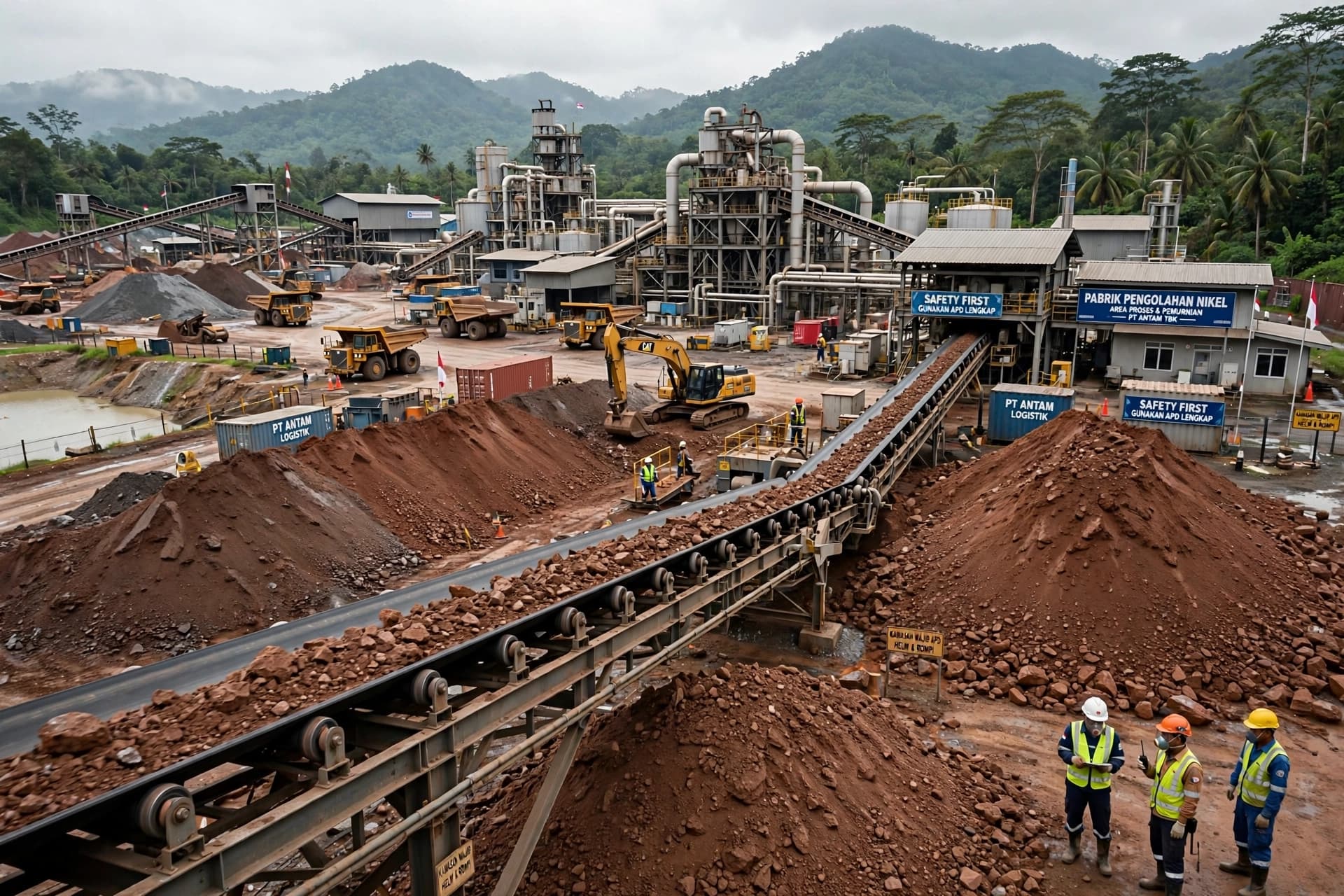
The proposed measure arrives after years of extraordinary growth. Indonesia transformed itself from a major nickel ore exporter into the center of a global processing industry after banning exports of unprocessed ore in 2020. The policy encouraged investment in smelters and processing facilities, tying more of the mineral’s value chain to the country itself.
That transformation has brought Indonesia enormous influence over the international nickel market. The country now accounts for more than 60% of global nickel production, making decisions in Jakarta increasingly important to stainless steel manufacturers, electric-vehicle supply chains and other industrial users around the world.
But abundance can also create its own tension. Processing capacity has expanded rapidly, while the availability of suitable ore is not unlimited. Reuters previously reported that Indonesia has been reducing mining quotas and considering measures designed to prevent reserves from being depleted too quickly.
The latest proposed moratorium therefore reflects a broader question about what comes after the first wave of downstream industrialization. The challenge is no longer simply how to attract investment. It is how to make sure the resources supporting that investment remain available long enough to sustain the industry.
This concern is especially visible in the distinction between different types of nickel processing. Some plants produce intermediate materials used in stainless steel, while other technologies are more closely connected to battery materials. Indonesian policymakers have been seeking to direct resources toward areas considered to offer greater value and longer-term strategic importance.
The market has already been watching Indonesia’s production policies closely. Earlier measures, including lower mining quotas and environmental controls, helped push nickel prices higher for a time, although the effect weakened as production and inventories remained substantial.
There are also practical pressures inside the industrial landscape. In September, PT Indonesia Morowali Industrial Park said water shortages linked to the year’s El Niño conditions had forced some smelters to reduce nickel pig iron production. The adjustment did not stop operations, but it showed how industrial capacity can be affected by environmental conditions beyond the mine itself.
For Indonesia, the proposed moratorium is therefore more than a question of construction permits. It reflects an attempt to place a measured boundary around an industry that has expanded rapidly, while giving policymakers room to reconsider how much ore should be directed toward different forms of processing.
The next chapter of Indonesia’s nickel story may be less about building as quickly as possible and more about deciding what should be built, where, and for how long. In a resource economy, sometimes the most consequential industrial decision is not opening another door, but choosing when to leave one closed.
AI Image Disclaimer This illustration is AI-generated for visual representation and should not be interpreted as an authentic photograph of the reported events.
Sources Reuters Indonesia Ministry of Energy and Mineral Resources Reuters Open Interest PT Indonesia Morowali Industrial Park
Published by Banx Network. This article is part of the Banx decentralized media programme, powered by the BXE token on the XRP Ledger.