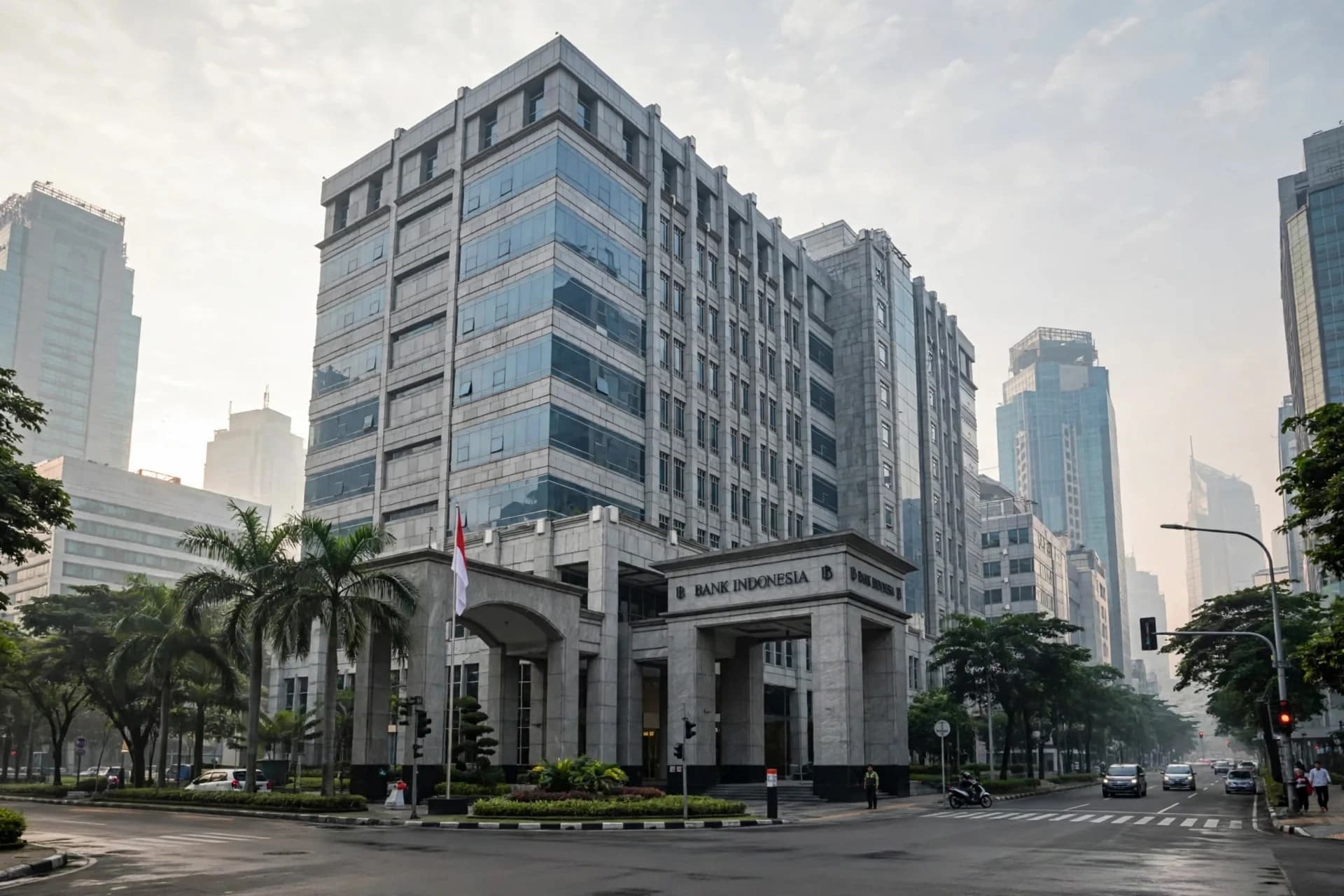
Bank Indonesia kept its benchmark seven-day reverse repurchase rate at 5.75% on September 23, maintaining the rate for a third consecutive meeting as policymakers continued to balance economic growth with financial stability. The decision came amid higher global energy prices and elevated international yields.
The decision was made at Bank Indonesia’s first monetary policy meeting since Destry Damayanti became governor earlier this month. The central bank also kept its deposit facility rate at 4.75% and its lending facility rate at 6.50%.
The rate decision had been broadly anticipated by financial markets. Reuters reported that 29 of 32 economists surveyed expected Bank Indonesia to keep the benchmark rate unchanged, making the September decision relatively consistent with expectations.
Behind the unchanged rate is an effort to maintain stability in the rupiah while continuing to support economic activity. Bank Indonesia has been using monetary and market instruments to manage currency pressures, particularly as global financial conditions remain unsettled.
International energy prices have also become part of the policy environment. Higher oil prices can affect Indonesia through import costs, inflation expectations and the country's external position, creating another consideration for monetary policymakers.
Global bond yields provide another layer of pressure. Changes in U.S. interest rates and Treasury yields can influence capital movements across emerging markets, including Indonesia. Maintaining domestic monetary stability therefore requires attention not only to domestic indicators but also to developments far beyond Jakarta.
At the same time, Bank Indonesia has continued to emphasize economic growth. The central bank's latest decision indicates that policymakers are maintaining room for economic activity while keeping an eye on inflation and exchange-rate movements.
The September decision also came as Indonesia's financial authorities continued to use other measures alongside the benchmark rate. Bank Indonesia has expanded incentives related to foreign-exchange hedging as part of efforts to strengthen the rupiah and improve market stability.
For businesses and households, a stable benchmark rate provides a relatively unchanged monetary environment. Borrowing costs do not automatically move in direct proportion to the policy rate, but the benchmark remains an important reference for financial markets and lending conditions.
For now, Bank Indonesia has chosen continuity rather than another rate adjustment. The next stages will depend on how inflation, the rupiah, economic growth, energy prices and global financial conditions develop in the months ahead.
Image Disclaimer:
Visuals are AI-generated and serve as conceptual representations of Indonesia’s monetary and financial environment.
Sources:
Reuters The Business Times The Edge Malaysia
Published by Banx Network. This article is part of the Banx decentralized media programme, powered by the BXE token on the XRP Ledger.