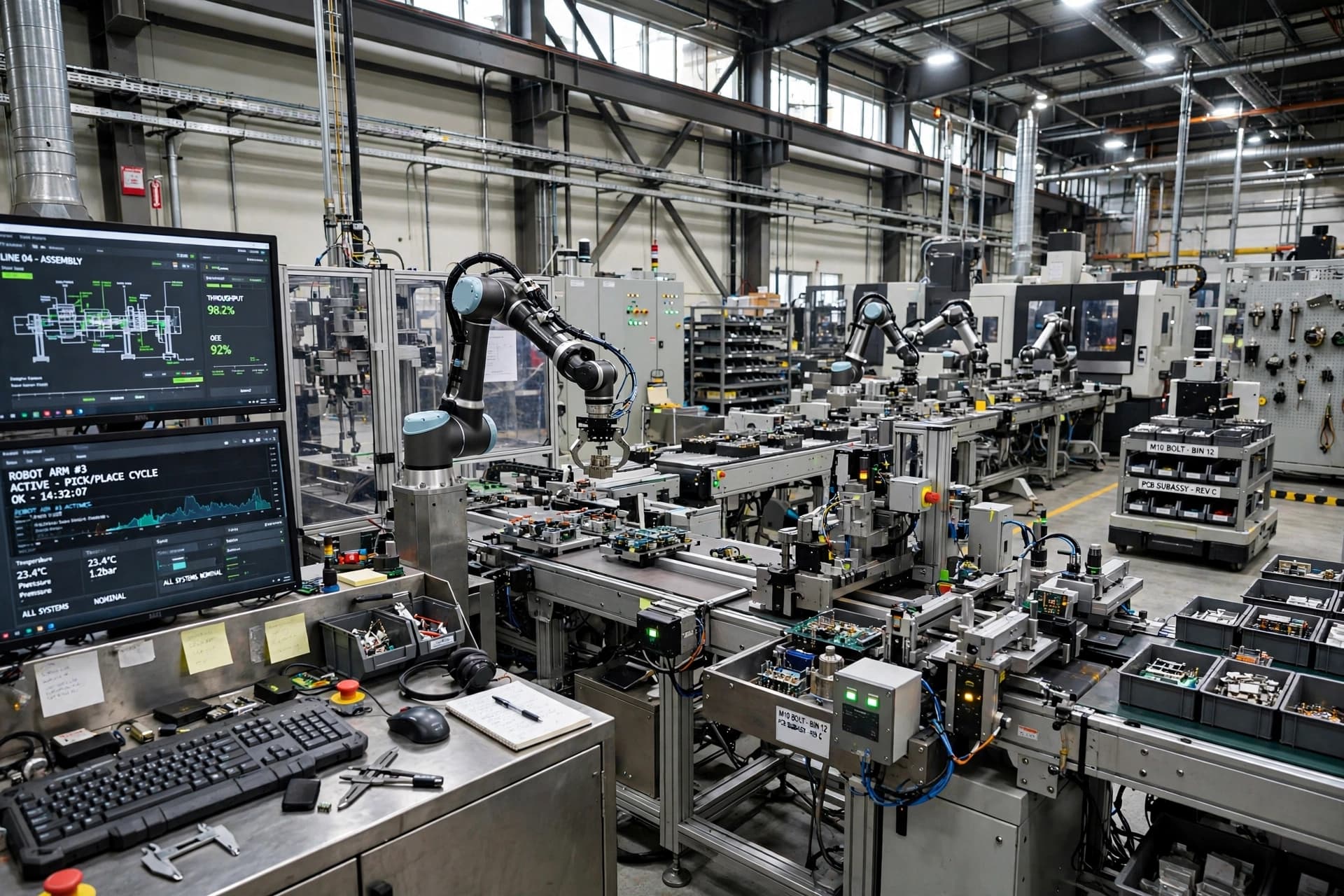
The United States has added India to the so-called “Pax Silica” group, a framework focused on strengthening cooperation in semiconductor supply chains and advanced technology production.
The move reflects Washington’s continued effort to build resilient networks among trusted partners in the global chip industry. Semiconductors have become central to economic competitiveness and national security, powering everything from consumer electronics to defense systems. In recent years, supply disruptions and geopolitical tensions have pushed governments to reassess how and where chips are designed, manufactured, and assembled.
India’s inclusion signals a deepening of technology ties between New Delhi and Washington. The two countries have steadily expanded cooperation in areas such as digital infrastructure, defense technology, and advanced manufacturing. Adding India to a semiconductor-focused grouping aligns with broader efforts to diversify production beyond traditional hubs and reduce vulnerabilities in concentrated supply chains.
While specific operational details of the “Pax Silica” framework have not been widely outlined, the initiative is understood to emphasize collaboration on research, talent development, investment facilitation, and supply chain transparency. For the United States, expanding the circle of partners supports a long-term strategy aimed at ensuring stable access to critical technologies.
India, for its part, has been actively pursuing policies to strengthen its domestic semiconductor ecosystem. The government has introduced incentives to attract chip fabrication plants, packaging facilities, and component manufacturers. Officials have repeatedly highlighted semiconductors as a strategic priority, both for economic growth and technological sovereignty.
Analysts note that India’s large engineering workforce and expanding digital economy make it an attractive partner in technology alliances. Although the country is still developing large-scale chip fabrication capacity, it plays an established role in chip design services and software engineering.
The broader geopolitical backdrop also shapes the significance of the announcement. Semiconductor supply chains have become increasingly intertwined with strategic competition among major powers. By bringing India into closer alignment, Washington appears to be reinforcing a network-based approach to technology security rather than relying solely on domestic production.
At the same time, India has traditionally maintained a multi-aligned foreign policy, balancing relations with multiple global powers. Participation in semiconductor cooperation frameworks does not necessarily signal exclusivity but rather reflects pragmatic economic engagement.
Industry observers suggest that the success of such groupings will depend less on symbolic membership and more on tangible outcomes, including investment flows, research collaboration, and streamlined regulatory processes. Building semiconductor capacity requires long timelines, significant capital, and sustained policy coordination.
The inclusion of India in the “Pax Silica” group underscores how chips have moved from being a purely industrial concern to a central pillar of diplomacy. As global demand for advanced technology continues to rise, partnerships around silicon are likely to shape not only markets, but also the architecture of international relations.
AI Image Disclaimer Some images accompanying this report may be AI-generated illustrations intended for contextual representation.
Published by Banx Network. This article is part of the Banx decentralized media programme, powered by the BXE token on the XRP Ledger.