
Key Highlights
- India is reassessing its investment in Chabahar Port due to US sanctions.
- The US sanctions waiver is set to expire on April 26, 2026.
- Discussions are ongoing about temporarily transferring India's stake to an Iranian entity.
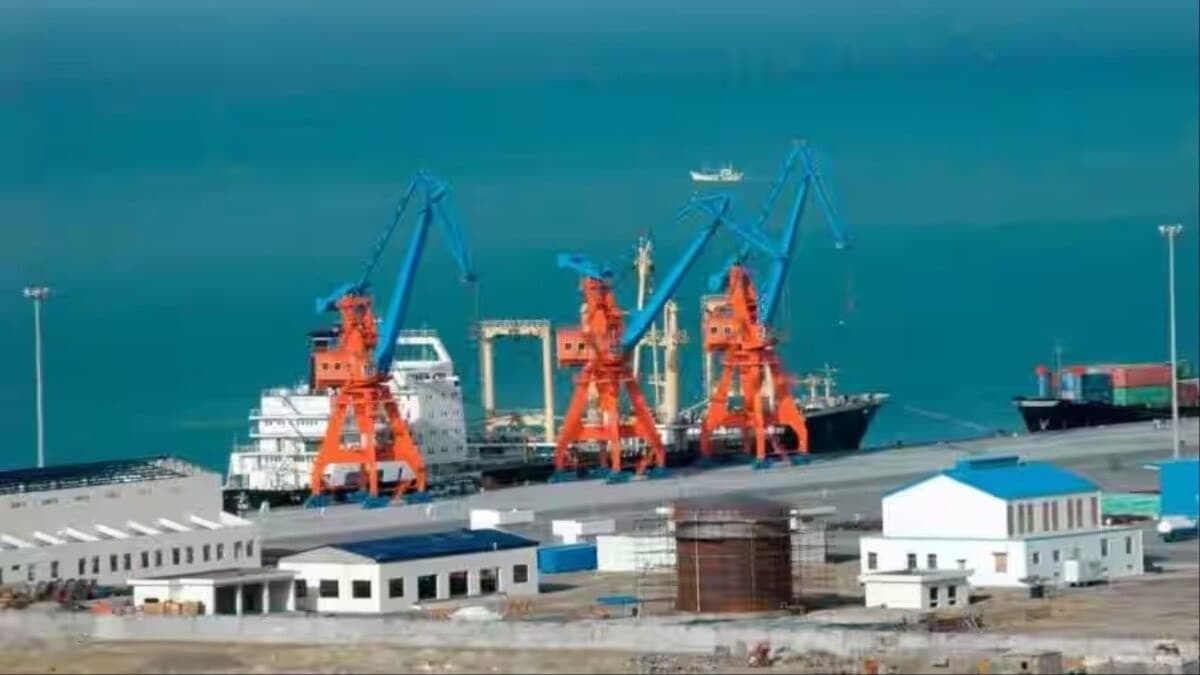
As the expiration date for the US sanctions waiver approaches on April 26, 2026, India is critically reassessing its investment strategy at Chabahar Port, a key logistical hub for trade routes to Afghanistan and Central Asia. This port has been central to India's efforts to enhance its influence in the region, particularly as it seeks alternatives to traditional trade routes that pass through Pakistan.
India's investment in Chabahar, estimated at around $120 million, has been safeguarded by waivers that exempted it from US sanctions since 2018. However, with rising tensions between the US and Iran and shifts in the US administration's foreign policy, the future of this waiver is increasingly uncertain. The geopolitical landscape is evolving, and India must navigate these complexities to protect its interests.
Reports indicate that Indian officials are engaged in discussions with both the US government and Iranian authorities to explore viable options moving forward. One of the strategies under consideration involves temporarily transferring India's stake in the port to a local Iranian entity. This approach would allow India to maintain some level of influence over the port's operations while adhering to US sanctions.
India's strategic interests in Chabahar extend beyond mere investment; the port serves as a counterbalance to China's expanding influence at Gwadar Port in Pakistan. By facilitating access to Central Asia, Chabahar is integral to India's broader objectives of enhancing regional connectivity and reducing reliance on traditional trade routes that involve Pakistan. This geopolitical maneuvering is crucial for India's long-term economic and strategic goals.
In recent years, India has leveraged Chabahar for significant humanitarian assistance to Afghanistan, underscoring its importance in regional geopolitics. As India navigates the intricate dynamics of international relations, officials have reiterated their commitment to not fully disengage from Chabahar. Instead, they are exploring ways to balance diplomatic pressures while fulfilling their regional commitments.
The stakes are high for India as it seeks to sustain its investments in Chabahar while adapting to the shifting landscape shaped by US-Iran tensions. Any substantial change in its investment strategy could have far-reaching implications for India's ambitions in regional connectivity and trade, potentially altering the balance of power in South Asia.
Published by Banx Network. This article is part of the Banx decentralized media programme, powered by the BXE token on the XRP Ledger.



