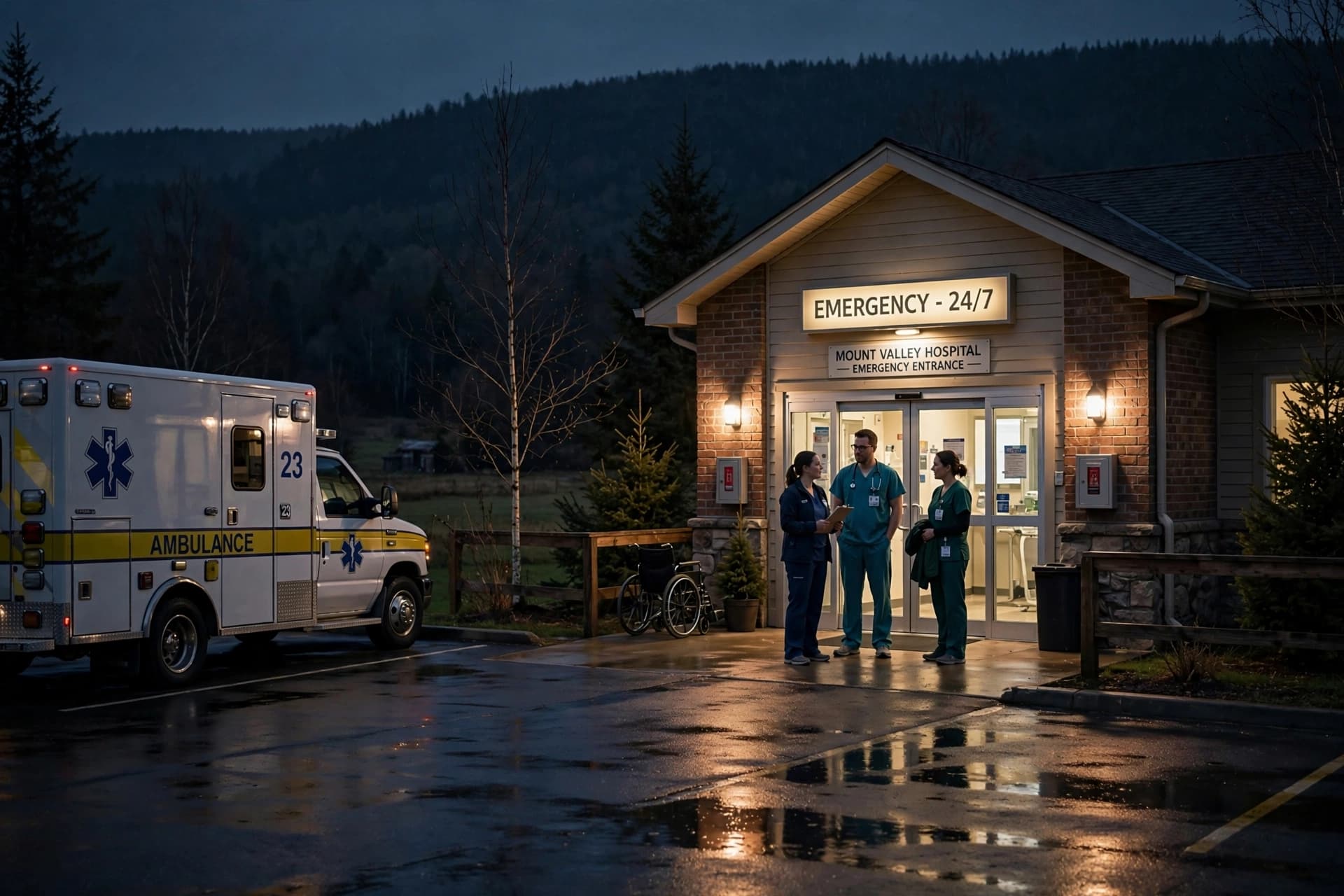
There is a particular weight that settles over a small prairie town when the hospital becomes the center of a nation's attention. In Wainwright, Alberta, the health center is not large, its emergency department holds six rooms, and its staff know their patients by name and by family. On Saturday evening, that small hospital received a call from the military base, and within five to ten minutes, the first victims began to arrive, their injuries severe enough that the medical director would later describe them as "quite extreme" . What followed was not a collapse but a rising, a community stretching itself to hold what had arrived.
Defence Minister David McGuinty told reporters in Ottawa on Tuesday that 33 members of the Canadian Armed Forces remain in hospital after the fire at CFB Wainwright, which killed four soldiers and injured dozens more . Initially, 39 soldiers were taken to hospital, at least 19 of them in critical condition, according to Alberta Premier Danielle Smith . McGuinty declined to comment on their current conditions out of respect for privacy but said he had met with military members and health-care workers in Wainwright, describing the situation as "delicate and evolving" .
The fire itself was known hours before it turned catastrophic. A grass fire was burning about a kilometer away from the training area, and officials considered it sufficiently under control that exercises continued Saturday afternoon . Then the wind shifted. Brigadier-General Wade Rutland later described the speed of the change with a kind of blunt astonishment: "It is not normal for a fire to move a kilometre in 30 to 60 seconds" . The flames swept into the path of Charlie Company of the 3rd Battalion, Princess Patricia's Canadian Light Infantry, a unit preparing for deployment to Latvia .
The response was immediate and improvised. Dr. Cheyanne Vetter, medical director of the Wainwright Health Centre, said staff placed two patients in each of the emergency department's six rooms, then turned the acute care floor into a functioning emergency room for the night . STARS air ambulance helicopters arrived as soon as it was safe, military medics delivered critical supplies, and housekeeping and pharmacy staff worked to free critical care providers to focus on their jobs . "Everyone rose to the occasion, above and beyond my expectations," Vetter said .
The dead have been identified: Sgt. Morgan Wong of Edmonton, Pte. Shaun Farrell of Prince Albert, Sask., Pte. Aidan Goulding of North Vancouver, and Hayden Lykkemark of Langley, B.C. . The wounded were cared for in four hospitals across Edmonton, Calgary, and Red Deer, with Code Orange protocols activated and later lifted . Prime Minister Mark Carney spoke with Premier Smith on Tuesday about additional support for victims and their families .
Three separate investigations are now underway, McGuinty said, and he declined to comment on the circumstances surrounding the fire . A board of inquiry will examine what happened, though Rutland warned that with this amount of casualties and complexity, it will not take a day or a week . For now, the focus remains on the 33 still in hospital, and on a small town that did what it could when the fire arrived.
AI Image Disclaimer: The visuals in this article are AI-generated and are intended for illustrative purposes only.
Sources: CBC News, CTV News, The Canadian Press
Published by Banx Network. This article is part of the Banx decentralized media programme, powered by the BXE token on the XRP Ledger.