

Key Highlights
- Communities play a crucial role in navigating uncertainty.
- Cultural change prompts re-evaluation of traditions and relationships.
- Experts emphasize the importance of local actions in fostering resilience.
In times of uncertainty, communities often emerge as the roots that hold societies together. As global challenges such as climate change, inequality, and political polarization intensify, the need for strong social bonds becomes increasingly evident. This sentiment is echoed in the works of Australian journalist Sarah Wilson, particularly in her book 'I Eat the Stars: How to Live Fully and Beautifully in a Collapsing World.' Wilson explores how modern societies grapple with overlapping pressures and the importance of preserving cultural values while adapting to change.
The conversation surrounding cultural change is not merely about loss; it also highlights what communities choose to protect. Throughout history, periods of upheaval have prompted individuals to reassess their relationships and traditions. This re-evaluation is crucial as it fosters a sense of belonging and purpose, which are vital during challenging times.
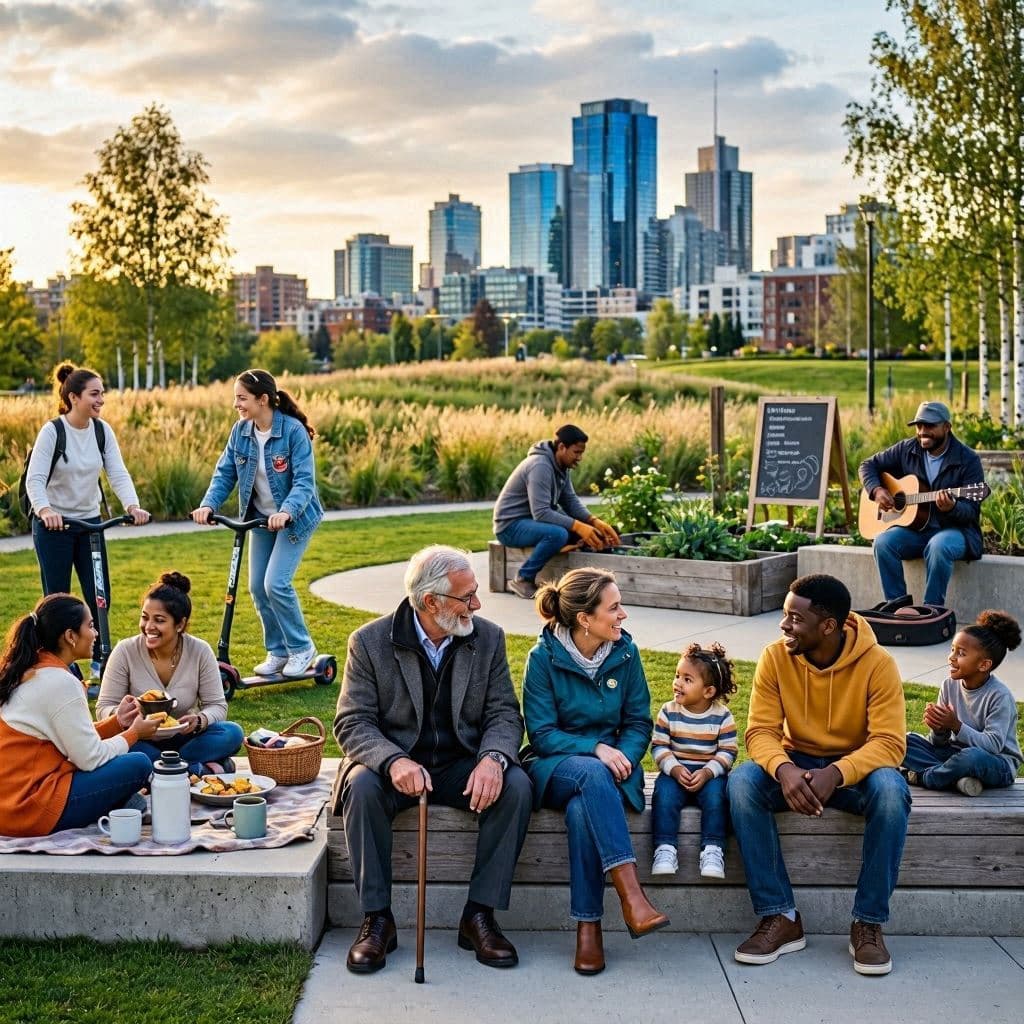
Experts in social resilience emphasize that strong communities are essential for navigating uncertainty. While global issues may seem daunting, local actions can significantly impact how societies respond. Maintaining social connections, participating in community activities, and supporting shared institutions are all ways individuals can contribute to resilience. These actions create a network of support that can help mitigate the effects of larger, systemic challenges.
Technology has also played a transformative role in how communities interact. Digital platforms have opened new avenues for connection, allowing people to engage with one another in unprecedented ways. However, these advancements come with their own set of challenges, including concerns about attention, trust, and the quality of human interaction. As societies evolve, the definition of belonging is continually reshaped by these technological influences.
The uncertainty that accompanies cultural change can evoke feelings of anxiety, as familiar patterns provide a sense of stability. Yet, history demonstrates that cultures are inherently dynamic, evolving over time while retaining elements from the past. This ongoing evolution is a testament to humanity's ability to adapt and innovate in the face of change.
At the heart of these discussions lies a fundamental question: how can individuals remain connected and purposeful during times of transition? The answer may not lie in predicting every challenge but rather in strengthening the relationships and values that enable communities to thrive. As societies confront complex pressures, the importance of resilience and adaptation cannot be overstated. The future may be uncertain, but the capacity for cooperation, creativity, and care remains a cornerstone of the human experience.
Published by Banx Network. This article is part of the Banx decentralized media programme, powered by the BXE token on the XRP Ledger.




