There are moments in scientific endeavor that feel like standing on a shoreline at dawn — watching faint light exchange shy glances with the dark horizon, and sensing that something vast is stirring beyond sight. The universe, in all its immensity, has long held its mysteries close, and among the most profound is the force we call dark energy, the enigmatic agent that seems to be pushing galaxies ever farther apart. For years, scientists have listened to the clues carried in starlight and the silent drift of cosmic structure, and now a long, patient project has begun to put some of those clues in place like luminous pebbles on a beach.
The Dark Energy Survey (DES), a multinational scientific collaboration that spent six years peering into a swath of southern skies, has released its most comprehensive analysis to date of how the cosmos has expanded over time. Working with the Dark Energy Camera at a high‑altitude observatory in Chile, researchers compiled observations of hundreds of millions of galaxies, charting their distribution, shapes, and distances with a care matched only by the patient strokes of an artist’s brush across an immense canvas.
What makes this effort remarkable is not merely the sheer volume of data collected — though that alone borders on the breathtaking — but the way the survey has combined multiple methods to reveal the subtle narrative of expansion. By bringing together measurements of supernova explosions, the clustering of galaxies, and the faint warping of light as it travels through the cosmic web, scientists have achieved the tightest constraints yet on the history and behavior of the universe’s growth. These patterns, like threads in an intricate tapestry, tell a story both familiar and gently surprising, confirming the broad picture of a universe driven to accelerate outward by a repulsive force while also refining the details of how that acceleration has unfolded over billions of years.
Yet as with any profound story, there is elegance alongside nuance. The results are consistent with the broad frameworks cosmologists have developed, yet they highlight regions where the fine print of theory and observation must be read more carefully. In some respects, the dark energy that seems to pervade space acts much like a cosmic tide, pushing galaxies apart and shaping the large‑scale structure of matter. At the same time, the new constraints invite deeper questions about the exact nature and origin of that force, reminding us that even answers can be a kind of beginning.
Among the voices reflecting on this work, scientists emphasize both achievement and the long arc of inquiry that still stretches ahead. Such large surveys are not just about filling in data points, but about crafting a dialogue between theory and observation — a dialogue that encourages humility as much as insight. The sky, vast and patient, offers its clues one pattern at a time, and it is through careful attention that we learn to listen.
In this calm convergence of data and reflection, the Dark Energy Survey has provided a richer portrait of our universe’s expansion history — a portrait that reinforces much of what we thought we knew while inviting us to look more closely at what we still do not yet fully understand. The universe continues to unfold its tale, and with every careful survey, we turn another page.
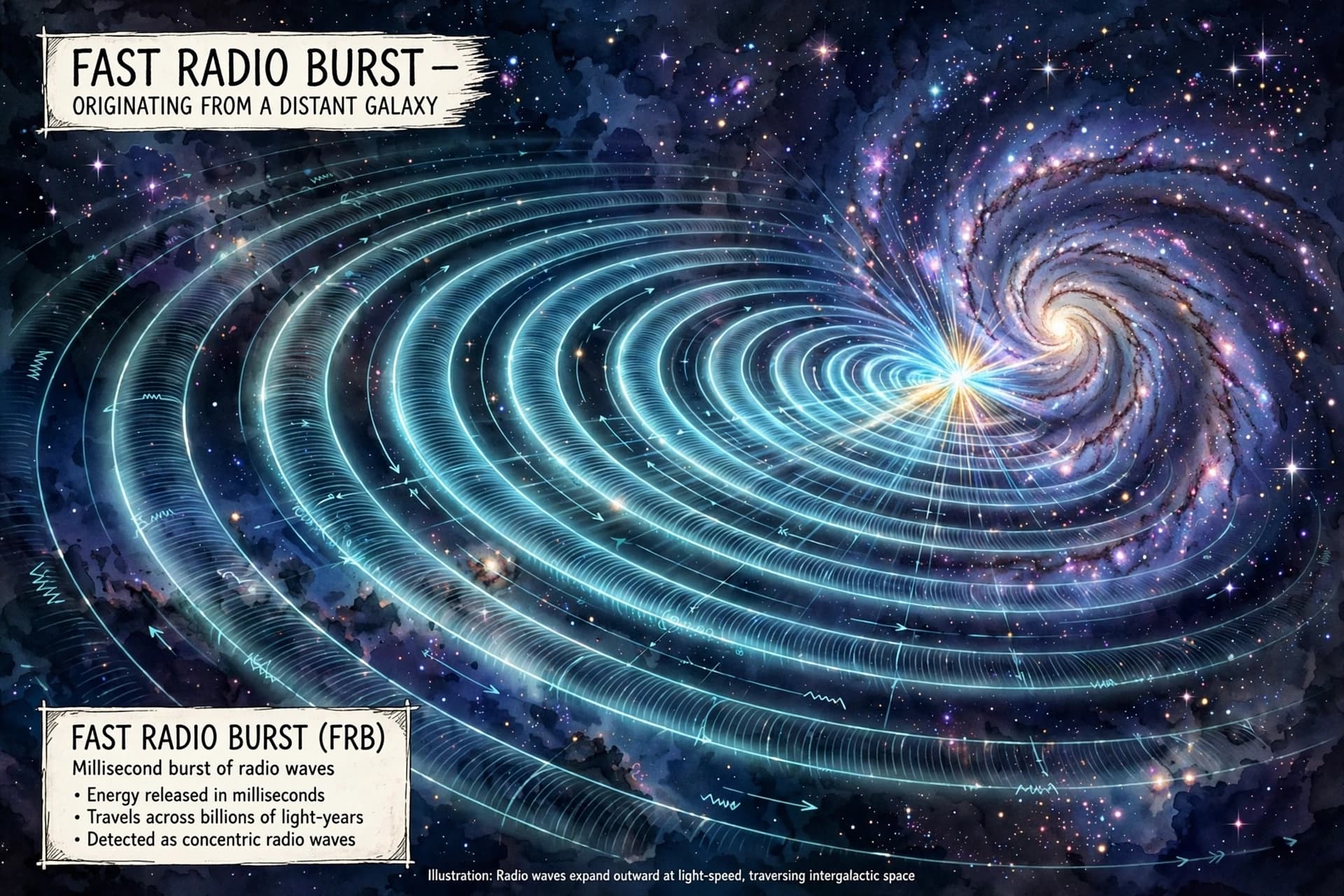
AI Image Disclaimer Graphics are AI‑generated and intended for representation, not reality.
Media sources covering the topic:
Astronomy Magazine Astronomy.com Universe Today Fermilab / UC Chicago press coverage Space.com reporting on DES results
Published by Banx Network. This article is part of the Banx decentralized media programme, powered by the BXE token on the XRP Ledger.