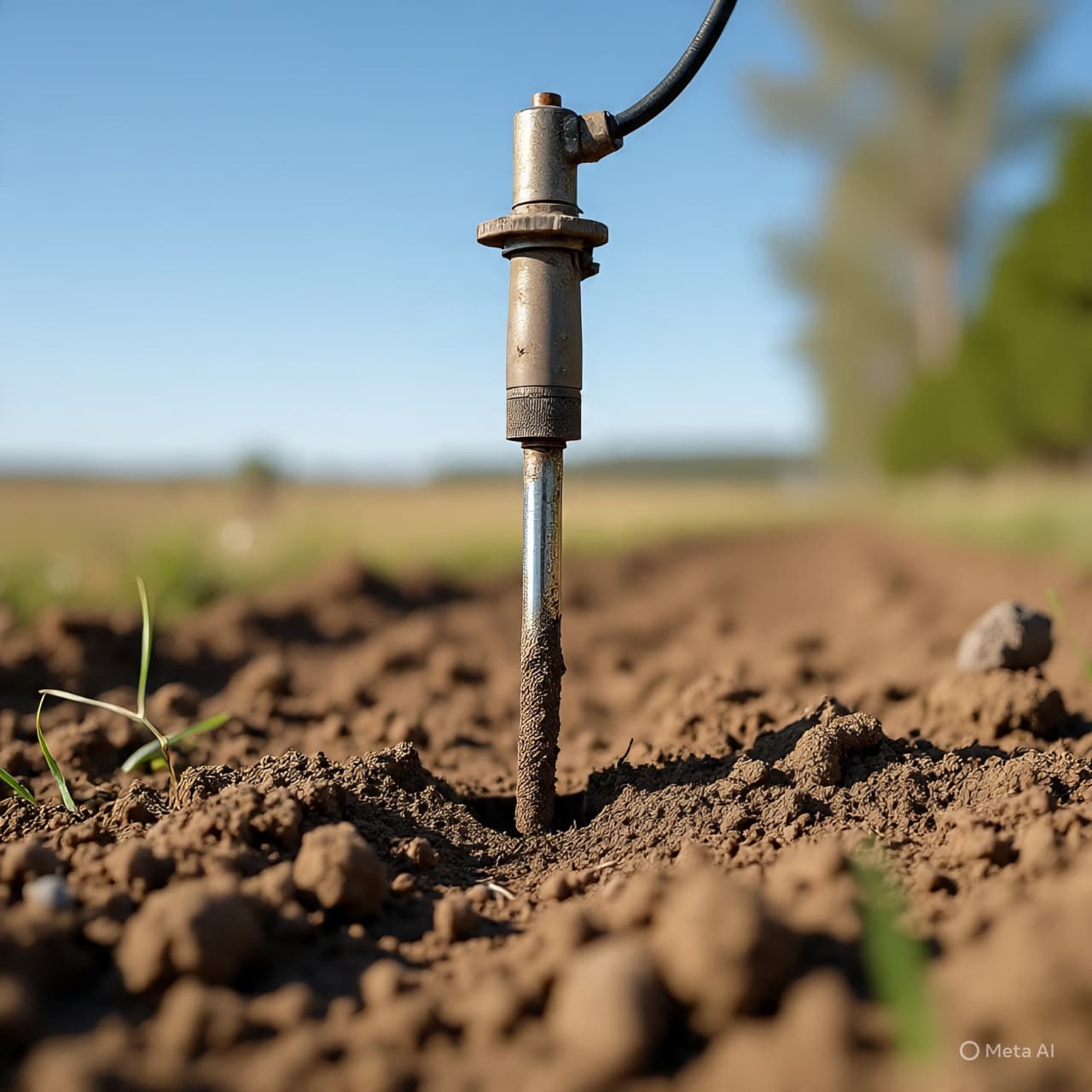
There are places beneath our feet that feel ancient and quiet, spaces filled with activity so subtle that only the most attentive ear might suspect a world alive within. If we imagine Earth as a great orchestra, then most of its instruments have been overlooked — hidden beneath grass, roots, and walking feet. Now, a growing group of researchers suggests we should not only see the soil, but listen to it as well, inviting humanity to turn its attention to the gentle symphony below ground.
In a new review published in Trends in Ecology and Evolution, scientists from around the world outline a field known as soil ecoacoustics, which draws on principles of sound ecology to record the tiny vibrations and noises generated by soil organisms and processes. Just as an acoustic survey might capture the songs of birds in a forest canopy, soil ecoacoustics captures the whispers of life underground — the hum of earthworms tunneling, the tap of beetle larvae burrowing, and even the subtle sounds of water moving through pores in the earth.
In these “soil soundscapes,” there is meaningful information about biodiversity and ecosystem health. Healthy soils — rich in life and structure — tend to produce a more varied and vibrant acoustic profile than degraded soils, scientists have found in field experiments from woodlands to agricultural lands. This method mirrors listening to a heartbeat to assess human health: subtle changes in rhythm can reveal much about what lies beneath.
The researchers argue that such sound-based monitoring could complement traditional methods, which often involve digging up soil, costly DNA analysis, or other invasive practices. Soil ecoacoustics, by contrast, can be less disruptive and potentially more scalable, capturing data from many landscapes with minimal disturbance. Already, studies show that different ecosystems produce distinct acoustical signatures, suggesting that “listening” could become a valuable tool for land managers and scientists alike.
Yet, as with any emerging field, there are challenges. Sound travels differently through clay than sand, and separating biological sounds from abiotic vibrations — like cracking soil or flowing water — adds complexity to analysis. Researchers emphasize the need for global standards and shared methods so that recordings from different regions can be compared meaningfully. They also call for an open research network to encourage collaboration and data sharing across continents.
This gentle call for a global effort is rooted in a broader consideration: that soil health underpins so much of Earth’s resilience. Soil supports food systems, stores carbon, and regulates water cycles, and yet roughly three-quarters of the world’s soils are now considered degraded. By tuning into the soil’s acoustic signals, scientists hope to better detect and track changes in biodiversity, restoration, and ecosystem responses to disturbance.
In the quiet hum of the earth below, there may be more to learn about our planet’s health than we once imagined — if we are willing to listen.
In straightforward scientific terms, an international team led by researchers at Flinders University has published a review proposing soil ecoacoustics as a new approach to monitor biodiversity and ecosystem health by capturing underground sounds and vibrations. The study highlights applications across various landscapes, identifies technical hurdles such as sound transmission differences in soil types, and calls for a global research network and standardized methods to enhance comparability and utility of acoustic soil data.
AI Image Disclaimer “Illustrations were produced with AI and serve as conceptual depictions.”
Sources Phys.org, Xinhua, Grist, The Guardian, Earth.com.
Published by Banx Network. This article is part of the Banx decentralized media programme, powered by the BXE token on the XRP Ledger.