
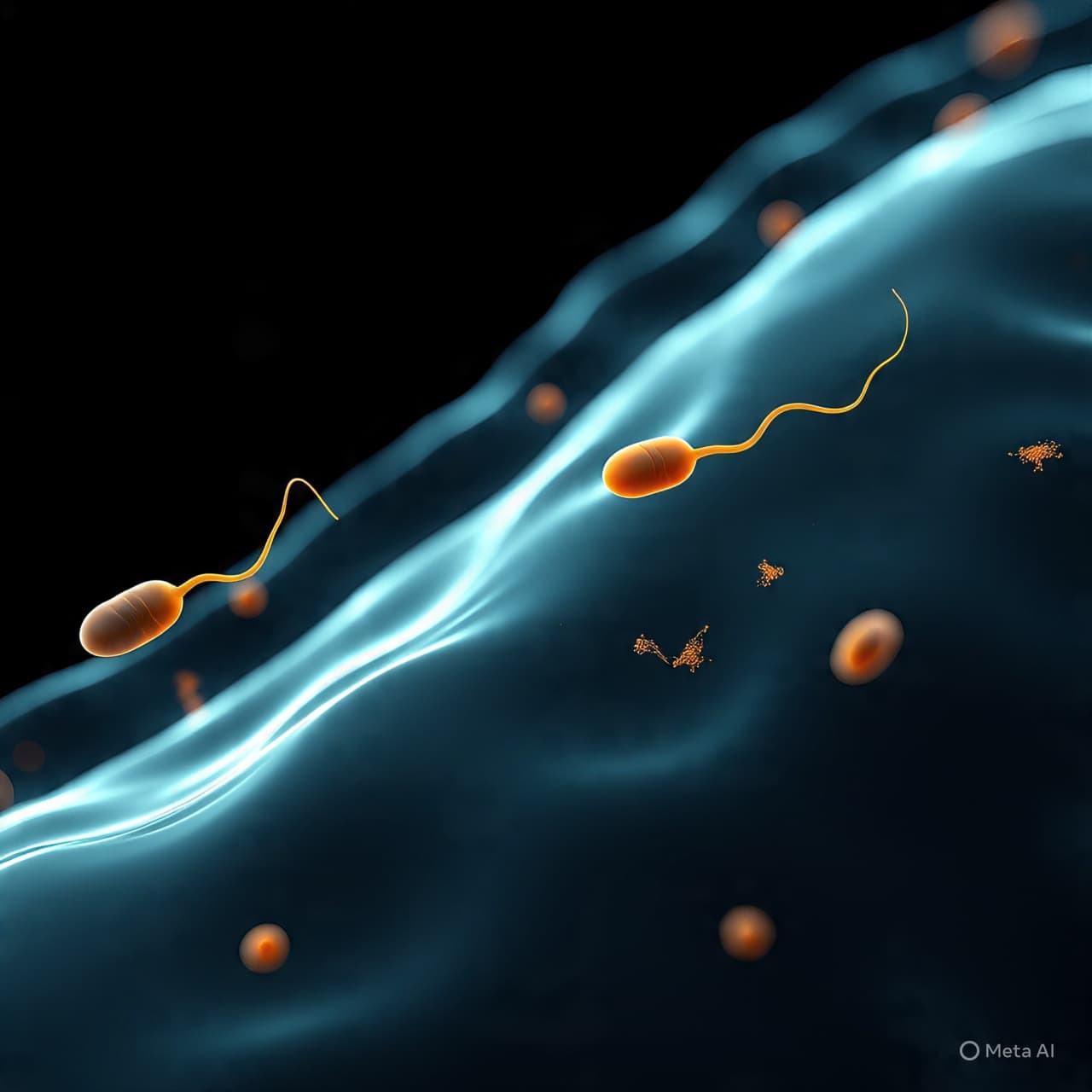
Key Highlights
- Microgravity alters sperm cell navigation, impacting reproduction.
- Research conducted aboard the International Space Station.
- Findings contribute to understanding life in space.
The exploration of life beyond Earth has opened new avenues of scientific inquiry, particularly in the field of Space Biology. One of the most intriguing areas of research focuses on how microgravity affects the movement of sperm cells, a critical factor in understanding reproduction during long-duration space missions. Recent studies conducted aboard the International Space Station (ISS) have shed light on this phenomenon, revealing that while sperm cells remain viable in microgravity, their ability to navigate toward an egg is significantly impaired.
On Earth, sperm cells rely on gravity to guide their movement through fluid environments. The gravitational pull creates gradients that help direct these cells toward their target. However, in the near-weightless conditions of space, this reliable navigation system begins to falter. Researchers have observed that sperm cells, while still active, exhibit altered movement patterns when exposed to microgravity. The clarity of direction diminishes, transforming what was once a guided journey into one marked by uncertainty.
Studies published in journals such as NPJ Microgravity indicate that the changes in sperm movement are not solely due to the cells themselves but are influenced by the surrounding environment. In microgravity, the behavior of fluids differs significantly from that on Earth, affecting how chemical signals are distributed. Without the stabilizing influence of gravity, these signals may diffuse more uniformly, losing the gradients that typically provide orientation for sperm cells.
This phenomenon is closely linked to a process known as chemotaxis, where sperm cells detect and follow molecular cues released by the egg. On Earth, these cues create directional pathways that guide sperm toward their destination. In the microgravity environment of space, however, these pathways become less defined, complicating navigation and potentially impacting reproductive success.
Moreover, the conditions of space—such as exposure to radiation—may further influence cellular function over time, adding complexity to how reproduction might occur beyond our planet. As research continues, these findings are crucial for understanding the implications of human presence in space and the biological continuity of life.
Organizations like NASA are actively supporting these investigations, recognizing that as human exploration extends further into the cosmos, understanding reproduction in microgravity becomes essential. The ability to navigate these challenges is not just about survival; it is about ensuring the continuation of life in environments vastly different from Earth.
Despite the challenges posed by microgravity, the mechanisms of sperm movement persist. What changes is the framework that supports these processes—the environmental constants that once made direction possible. This underscores the delicate balance that life maintains, adapting to altered conditions with quiet resilience.
In summary, while sperm cells remain viable in microgravity, the disruption of their navigational abilities poses significant questions for future space missions. As researchers continue to explore these dynamics, the findings will play a pivotal role in shaping our understanding of life beyond Earth and the potential for human reproduction in space.
Published by Banx Network. This article is part of the Banx decentralized media programme, powered by the BXE token on the XRP Ledger.



