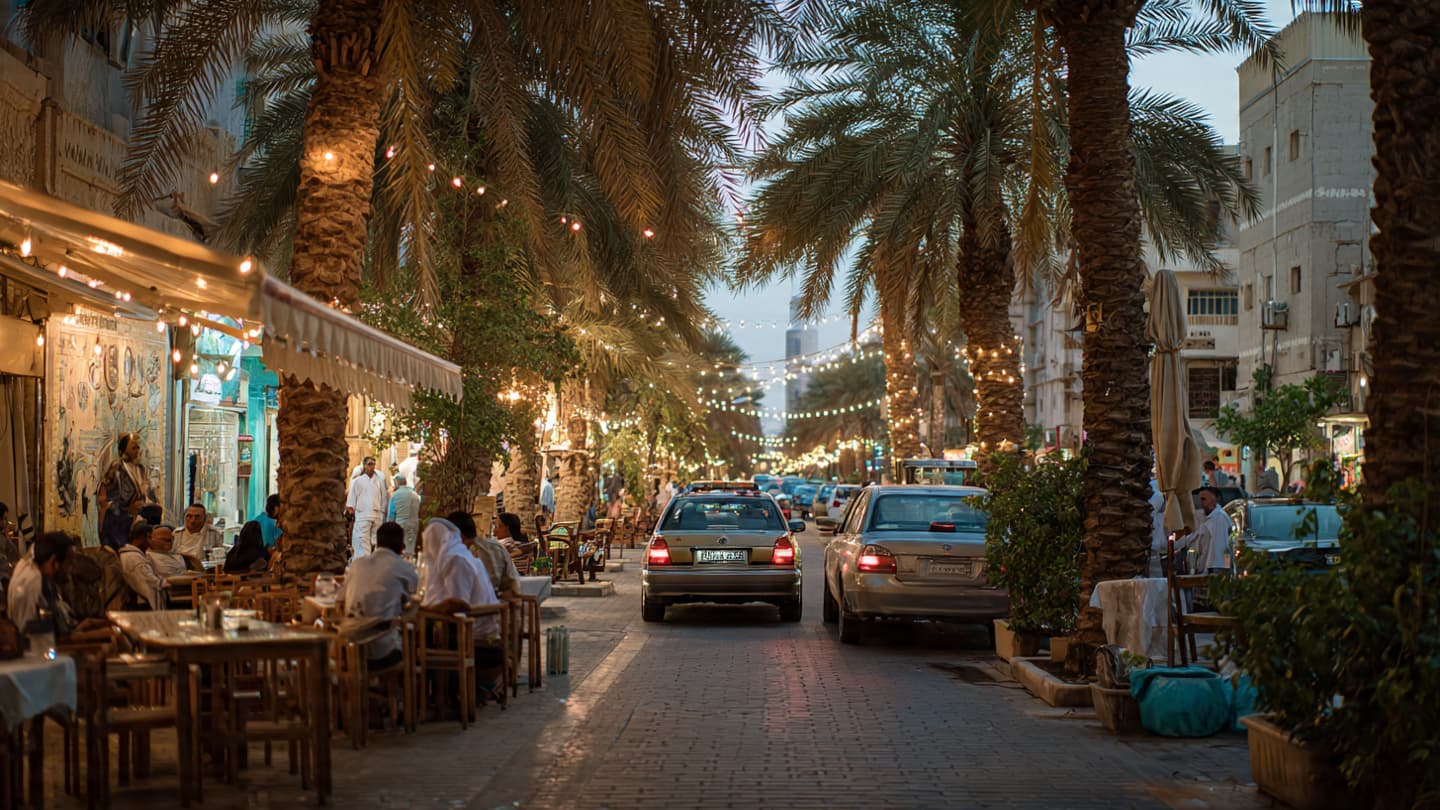
Evening descended softly over the Persian Gulf, where ships moved through darkening waters beneath scattered lights from ports and oil terminals. In Manama, café terraces filled slowly as the heat loosened its grip after sunset, while security vehicles continued their quiet patrols through wide boulevards lined with palms and glass towers. Across the region, there lingered the unusual stillness that sometimes follows confrontation — not peace exactly, but the temporary hush that arrives when uncertainty pauses long enough for people to listen for what may come next.
A ceasefire involving Iran appeared to be holding after days of heightened regional tension, even as neighboring Bahrain announced the detention of dozens of individuals suspected of links to Iran’s Revolutionary Guard networks. The developments unfolded together like parallel currents in the Gulf: one suggesting restraint, the other reflecting how deeply mistrust continues to shape the region’s political atmosphere.
Bahraini authorities stated that the arrests followed investigations into suspected militant coordination and alleged external connections tied to Iran’s Islamic Revolutionary Guard Corps. Officials described the detainees as part of efforts to undermine national security, though full details surrounding the accusations remained limited in public statements. The arrests revived familiar anxieties inside Bahrain, where sectarian tensions and regional rivalries have long intersected with domestic politics.
For years, the narrow stretch of water separating Iran from the Arab Gulf states has carried more than commerce and shipping routes. It has also carried suspicion, strategic competition, and the memory of unresolved conflicts stretching across generations. Bahrain, home to the U.S. Navy’s Fifth Fleet and positioned close to Iran’s southern coastline, has frequently occupied a sensitive place within that wider geopolitical map.
Yet even amid the arrests, the broader regional mood appeared tempered by cautious relief that recent hostilities had not escalated further. The ceasefire, fragile and closely watched, seemed to be holding through another day. In cities across the Gulf, ordinary rhythms cautiously resumed: cargo moved through ports, financial markets steadied, and evening traffic once again crowded coastal roads.
The region has become deeply familiar with these cycles of escalation and pause. Tension rises suddenly — through drone strikes, naval incidents, political threats, or proxy confrontations — before diplomacy, exhaustion, or strategic calculation slows events back toward uneasy equilibrium. Rarely does the underlying anxiety disappear completely. Instead, it settles into the architecture of daily life, shaping security checkpoints, foreign policy speeches, and the guarded language used by officials across the Middle East.
In Tehran, public messaging surrounding the ceasefire reflected restraint mixed with vigilance. Iranian leaders have continued to frame regional pressures through the language of sovereignty and resistance, while Gulf governments remain wary of Tehran’s influence across neighboring states. The relationship between Iran and Bahrain has been especially delicate over the years, complicated by accusations of interference, sectarian politics, and shifting alliances among regional powers.
Still, for many people living along the Gulf coast, geopolitics often arrives indirectly — through economic uncertainty, military presence, interrupted travel, or the quiet tension that enters public spaces during moments of instability. Fishermen continue launching boats before dawn. Families gather beneath waterfront lights in the evening heat. Office towers remain illuminated late into the night as traders and officials monitor developments that could shift markets or security conditions overnight.
In Manama, the arrests carried symbolic weight beyond the immediate legal process. Bahrain has repeatedly emphasized internal stability as central to its national identity, particularly after periods of unrest during the past decade. Security operations tied to alleged foreign influence therefore resonate deeply within the country’s political narrative, reinforcing longstanding fears about external destabilization in a region where domestic and international pressures often blur together.
Meanwhile, diplomats across the Gulf and beyond continue watching whether the ceasefire evolves into something more durable or merely represents another temporary interruption in a broader cycle of confrontation. Much depends on calculations made far from public view — in military command rooms, intelligence briefings, and carefully negotiated back-channel conversations that rarely appear in headlines.
As midnight approached along the Gulf shoreline, the sea itself remained calm, broken only by distant ship lights and the sound of waves moving against harbor walls. The ceasefire had survived another day. Bahrain’s security crackdown had added another layer of caution to an already tense regional landscape. And across the warm coastal cities of the Gulf, life continued in that familiar balance between normal routine and the awareness that stability here is often measured not by certainty, but by how long the quiet lasts.
AI Image Disclaimer These visuals were generated with AI technology and are intended for illustrative purposes only.
Sources
Reuters Associated Press Al Jazeera BBC News Financial Times
Published by Banx Network. This article is part of the Banx decentralized media programme, powered by the BXE token on the XRP Ledger.