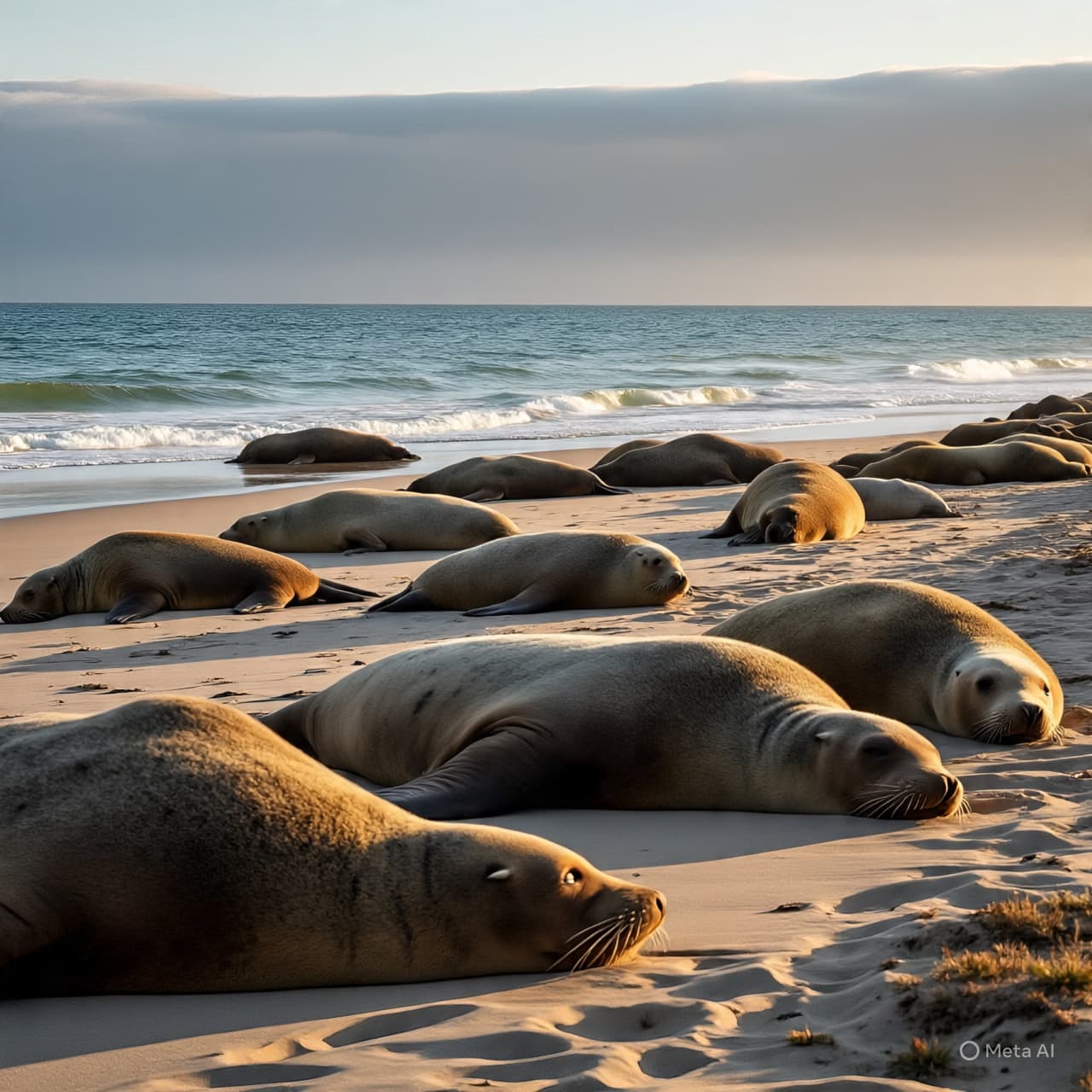
There are places where nature’s rhythms feel timeless: the rolling surf, the steady dawn, the gathering of huge elephant seals on a remote beach. On South Georgia Island in the South Atlantic, that rhythm had been reliable for decades—a vast breeding colony of southern elephant seals, more than half of the global breeding population of the species, depending on that cycle. But in recent years a new and unexpected force has entered their realm: the highly pathogenic avian influenza virus, H5N1 (clade 2.3.4.4b).
In late 2023, the virus arrived on South Georgia after having travelled across seabirds and marine mammals in South America. Researchers from the British Antarctic Survey conducted aerial drone surveys on three of the island’s major breeding beaches (St Andrews Bay, Hound Bay, Gold Harbour) comparing counts from 2022 to 2024. What they found was stark: a decline of around 47% in breeding female elephants seals, amounting to an estimated 53,000 fewer females present for the 2024 breeding season.
The implication is serious. Female southern elephant seals are the core of colony renewal: they give birth, nurture pups, and sustain the next generation. With nearly half of them gone, the ripple effects will be felt for years. Many pups were lost too—either directly succumbed to infection or through maternal abandonment when the mother was sick.
What makes this situation especially unsettling is how it challenges previous assumptions. These seals breed in dense colonies on wide beaches, generally remote and isolated from many of the threats that land mammals face. Yet the virus found a way: perhaps through seabird-to-mammal spillover, and possibly mammal-to-mammal transmission.
For a species that can live over 20 years and may take several years to mature, the loss of entire cohorts, especially breeding females, sets the stage for long-term decline. The study suggests that even if no further mass losses occur, recovery could take decades.
And yet, the picture is not one of immediate extinction. The South Georgia population remains large compared to some of the smaller colonies elsewhere. But the scale of the die-off is a wake-up call—a reminder that even remote, seemingly safe ecosystems are vulnerable to emerging diseases.
AI Image Disclaimer: “Illustrations were produced with AI and serve as conceptual depictions.”
Sources: The Guardian, El País, British Antarctic Survey, University of California-Davis, Nature Portfolio
Published by Banx Network. This article is part of the Banx decentralized media programme, powered by the BXE token on the XRP Ledger.