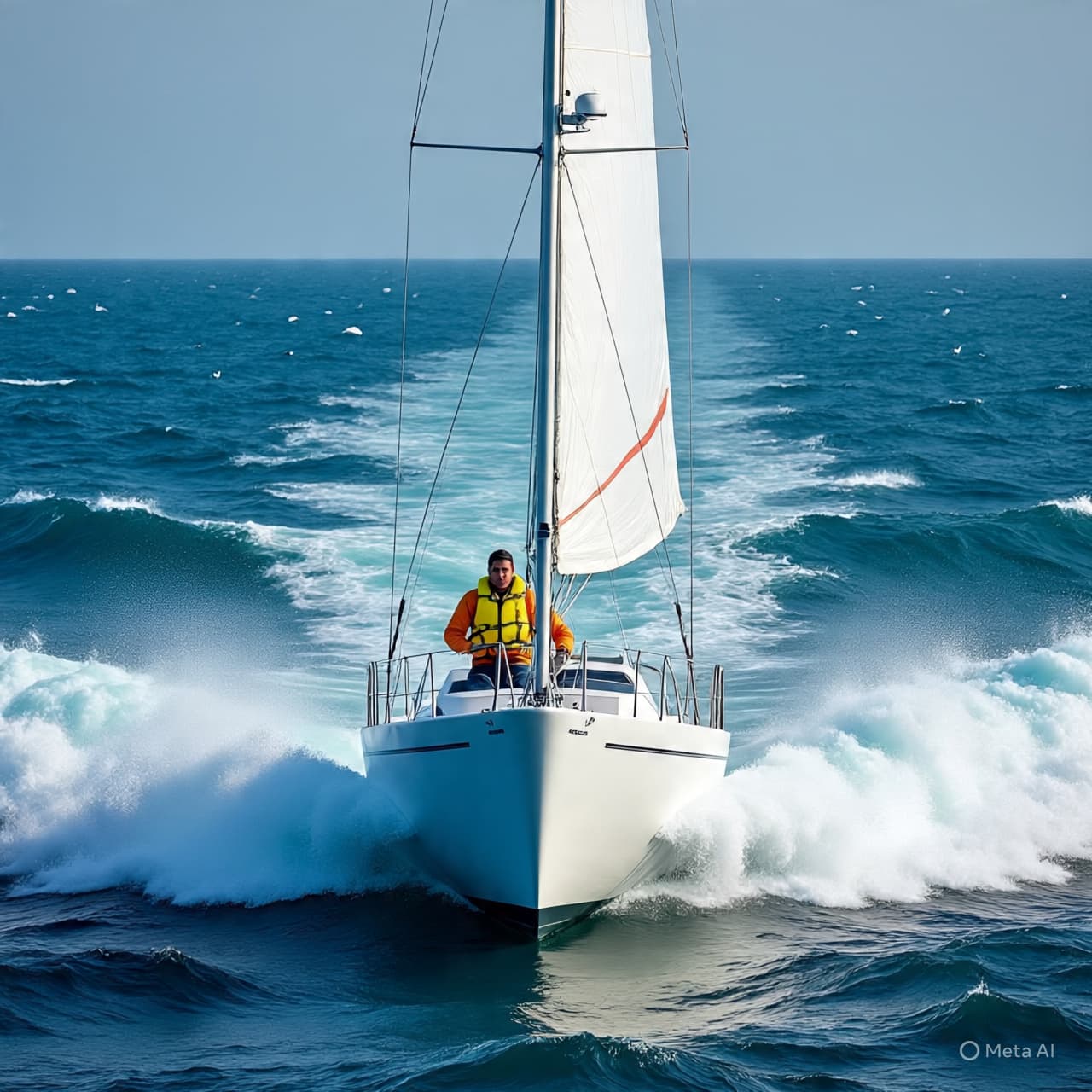
There are vessels that seem almost as alive as the people who dream of them, crafted to harness wind and water in a partnership of patience and precision. An Open 60 class yacht — built for one person to sail around the world — carries not just sails and systems, but stories of daring, endurance and deep human resolve. In that tradition stands Hexagon, once steered by seasoned skipper Graham Dalton, a boat whose legacy is stitched into the fabric of solo ocean racing.
In the early years of the 21st century, when long‑distance solo challenges were a proving ground for sailors and machines alike, Hexagon emerged from the drawing boards of Owen Clarke Design. This 60‑foot IMOCA vessel — tailored to both the rigors of the ocean and the precision of a solo campaign — embodied the aspiration of its campaigners, including Dalton, whose passion for offshore races took him to some of the most punishing waters on the globe.
An Open 60 is not merely a boat; it is a companion in solitude, a testament to the companionship between human and hull. Designed to be sailed single‑handed, such yachts are stripped of unnecessary comforts, their interiors shaped by strategy and survival. Every line, every sail and every piece of equipment is configured to help a sailor read wind and wave, to endure hours of darkness and the capricious temperament of the deep blue.
Hexagon’s own story intersects with the broader narrative of offshore racing. Launched in 2001 by Southern Ocean Marine in New Zealand, she first entered the fray under Dalton’s command in races such as the Around Alone, a circumnavigation that pushes solo sailors to confront fatigue and uncertainty with equal measure. While not every leg ended in triumph, Hexagon’s presence in the fleet reflected both ambition and the ethos of relentless challenge.
Over time, Hexagon passed through different hands and races, becoming known in various forms — including under names like Rosalba and Pindar — as it continued to compete in events such as the Route du Rhum and the Transat Jacques Vabre. Each campaign added layers to her story, a tapestry woven from victories, near misses, and the deep salt of countless seas.
For those who know the world of solo ocean racing, the Open 60 class represents both technical finesse and emotional endurance. The boats themselves are marvels of design, balancing speed with survivability, and sailors like Dalton see in them not just steel, carbon, and sailcloth, but companions in conditions that test every fiber of resolve.
More than two decades since its construction, Hexagon’s journey echoes the evolution of the class and its campaigns. While ocean racing technology continues to advance — with newer hull shapes, foils, and navigational systems — the legacy of boats like Hexagon remains a touchstone for enthusiasts, historians, and aspiring sailors alike. Those who study her path see not just a vessel’s record, but a chronicle of human aspiration charted across the wide and changing sea.
Today, Hexagon stands as a reminder of how single‑handed offshore racing shapes character as much as competition. The vessel’s various refits, name changes, and continued presence in the IMOCA sphere reflect both care and the enduring appeal of these iconic yachts. In the grand arc of ocean‑going narratives, Hexagon’s tale belongs to a generation of boats that carried sailors into places where wind and wave are both guide and adversary.
AI Image Disclaimer Illustrations were produced with AI and serve as conceptual depictions.
SOURCE CHECK
Credible mainstream/niche sources with information related to Graham Dalton’s Owen Open 60, Hexagon (sailing yacht) include:
Wikipedia Boat and Yacht Sail‑World The Daily Sail Boating New Zealand
Published by Banx Network. This article is part of the Banx decentralized media programme, powered by the BXE token on the XRP Ledger.