
Key Highlights
- Increased maritime activity in the Taiwan Strait reflects rising geopolitical tensions.
- Civilian vessels are used by China to assert claims without military confrontation.
- The situation complicates Taiwan's response strategies and international relations.
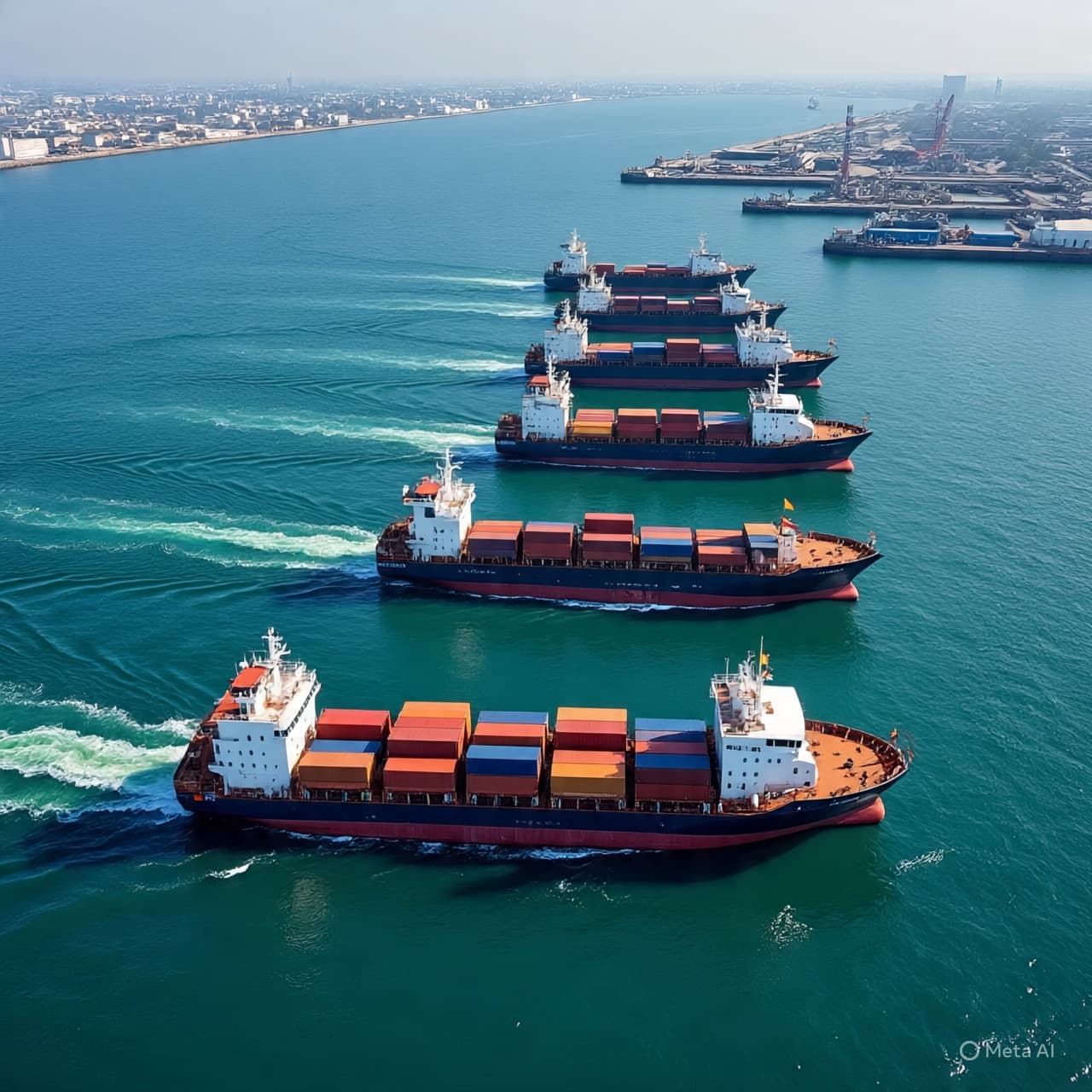
The Taiwan Strait, a critical maritime corridor for global trade, has become a focal point of rising geopolitical tensions, particularly between China and Taiwan. Recent observations indicate that civilian vessels, including cargo ships and fishing fleets, are increasingly being utilized by China to assert its claims over Taiwan without resorting to overt military confrontation. This strategy, often referred to as 'pressure without escalation,' involves a persistent increase in maritime activity that tests the boundaries of Taiwan's territorial claims and complicates its response strategies.
In this context, the presence of commercial vessels in contested waters takes on a dual significance. While these ships may appear to operate under the guise of normal trade and commerce, their movements are often interpreted within a broader strategic framework. Analysts note that the cumulative effect of these activities creates a shifting landscape where the distinction between civilian and military actions becomes increasingly blurred. For Taiwan, this poses a unique challenge: how to assert control over its waters while avoiding an overreaction that could escalate tensions.
The dynamics in the Taiwan Strait are further complicated by the involvement of state-backed enterprises. Some vessels engaged in activities such as sand dredging or infrastructure development are linked to Chinese government interests, raising questions about the true nature of their operations. This blending of private commerce with national policy reflects a sophisticated approach to exerting influence, where gradual changes in the maritime environment can have significant strategic implications.
As these tensions unfold, the international community remains watchful. The Taiwan Strait is not only vital for regional security but also for global trade, making any shift in its stability a matter of international concern. The presence of civilian vessels as instruments of pressure introduces a new variable into an already sensitive geopolitical environment, where economic activities are intertwined with strategic intent.
Observers have characterized these actions as part of a broader 'gray zone' strategy, where ambiguity serves as a tool for achieving objectives without crossing the threshold into open conflict. In this realm, the absence of overt military force does not equate to a lack of pressure; rather, it reflects a different methodology for shaping outcomes. The challenge for Taiwan lies not only in responding to these maritime activities but also in defining their nature and intent.
In summary, the situation in the Taiwan Strait exemplifies the complexities of modern geopolitical interactions, where civilian vessels play a crucial role in asserting national claims and testing boundaries. As China continues to employ this strategy, the implications for Taiwan and the broader international community remain significant, underscoring the need for careful monitoring and strategic responses to evolving maritime dynamics.
Published by Banx Network. This article is part of the Banx decentralized media programme, powered by the BXE token on the XRP Ledger.



