
Key Highlights
- U.S. and Israeli airstrikes on Iran lead to flight cancellations.
- Airlines reroute flights to avoid newly risky airspace.
- Increased tensions impact global aviation safety and schedules.
In the wake of recent U.S. and Israeli airstrikes targeting Iranian facilities, airlines across the Middle East and beyond have begun to cancel or reroute flights. This sudden shift has transformed previously busy air corridors into zones of uncertainty, as carriers scramble to adjust their operations in response to heightened geopolitical tensions.
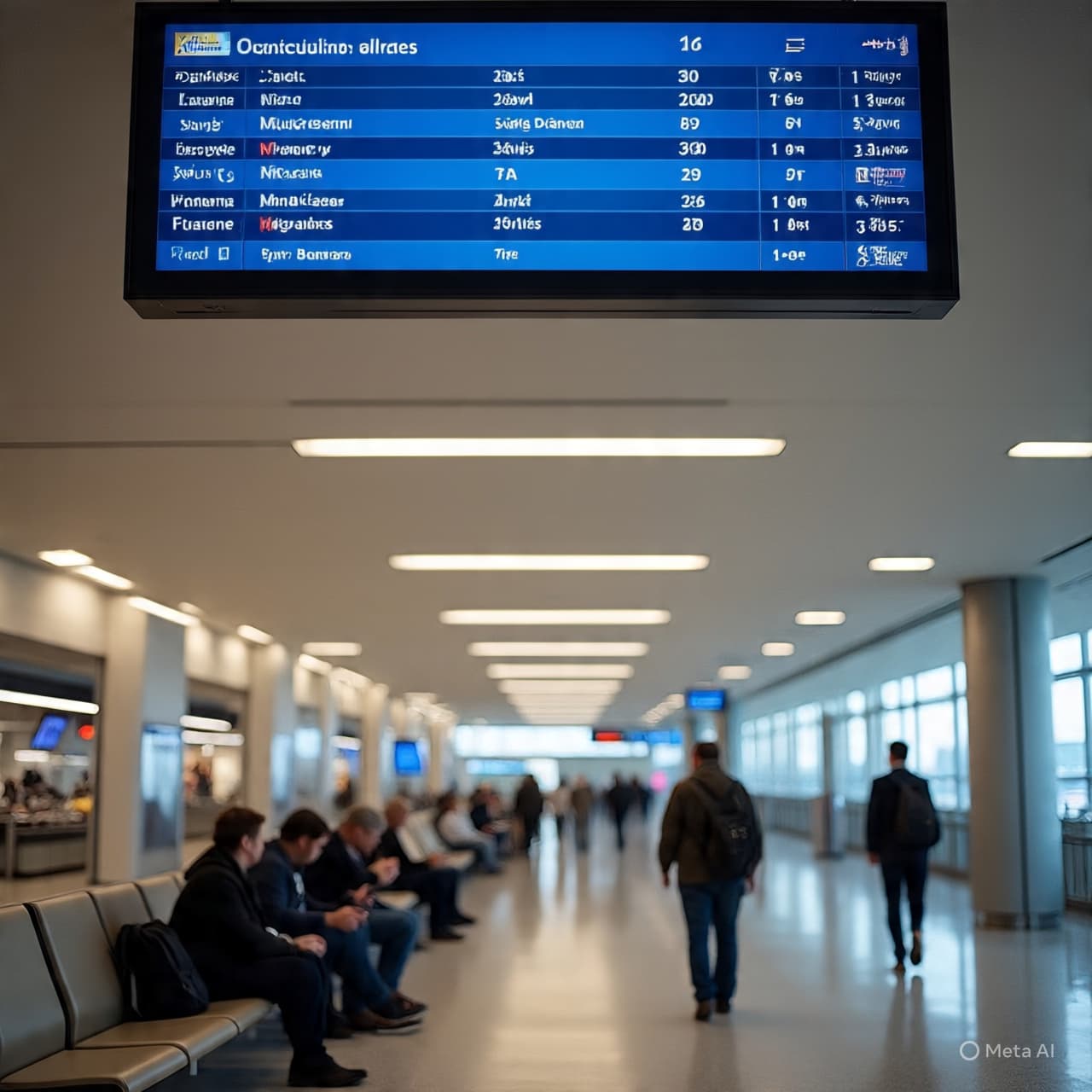
The strikes, confirmed by officials from both the U.S. and Israel, represent a significant escalation in the ongoing conflict in the region. As a result, airlines have announced suspensions of flights to and from several cities, while others have diverted aircraft mid-route, opting for longer, safer paths. International aviation authorities have issued advisories urging heightened vigilance, prompting airports from the Gulf to Europe to update their schedules as passengers watch their flights vanish from departure boards.
Airspace over the Middle East is among the busiest in the world, linking Asia, Europe, and Africa. Even minor disruptions can have far-reaching consequences, extending flight times, increasing fuel costs, and straining airline schedules. Airlines typically plan their routes months in advance, but the rapid onset of conflict forces them to make swift decisions based on real-time intelligence and safety assessments.
Passengers at major transit hubs like Dubai, Doha, and Istanbul have found themselves in a state of limbo, waiting for updates and rebooking options as the situation unfolds. While the disruption may be inconvenient for travelers, for airlines and regulators, it is a necessary recalibration of routes to prioritize safety over timeliness.
In recent years, the aviation industry has become accustomed to navigating geopolitical shifts, from conflicts in Eastern Europe to missile exchanges in various regions. Each incident underscores the fragile balance between mobility and security, as airlines must adapt to changing circumstances that can alter global travel patterns overnight.
Military analysts warn that further escalation could lead to prolonged restrictions in certain flight corridors. Aviation tracking data indicates that aircraft are already skirting Iranian airspace or taking longer routes over the Arabian Peninsula. These adjustments not only add hours to long-haul journeys but also serve as a reminder that even distant conflicts can have a direct impact on travelers.
Governments are urging calm while closely monitoring the situation, and diplomatic channels remain active despite the shifting military postures. Airlines have reiterated that their decisions are guided by international safety standards and real-time intelligence, emphasizing their commitment to passenger safety.
As evening descends upon airport terminals, flight boards begin to stabilize, though some routes remain blank. Crews are preparing revised flight plans, and passengers are adjusting their expectations. Above the clouds, aircraft continue to trace new paths—curved, cautious, and deliberate.
In moments like these, the dual nature of the sky becomes evident: it is both open and shared, yet shaped by the forces at play on the ground. Flights will eventually resume where possible, and routes will be restored as safety assessments allow. For now, the choreography of global travel moves with measured restraint, reflecting a world where even the air must pause when tensions rise.
Published by Banx Network. This article is part of the Banx decentralized media programme, powered by the BXE token on the XRP Ledger.



