
Key Highlights
- Urban foraging in Christchurch has become a community practice.
- Many fruit trees are declining due to lack of maintenance and ecological changes.
- The future of these trees is uncertain amid urban regeneration efforts.
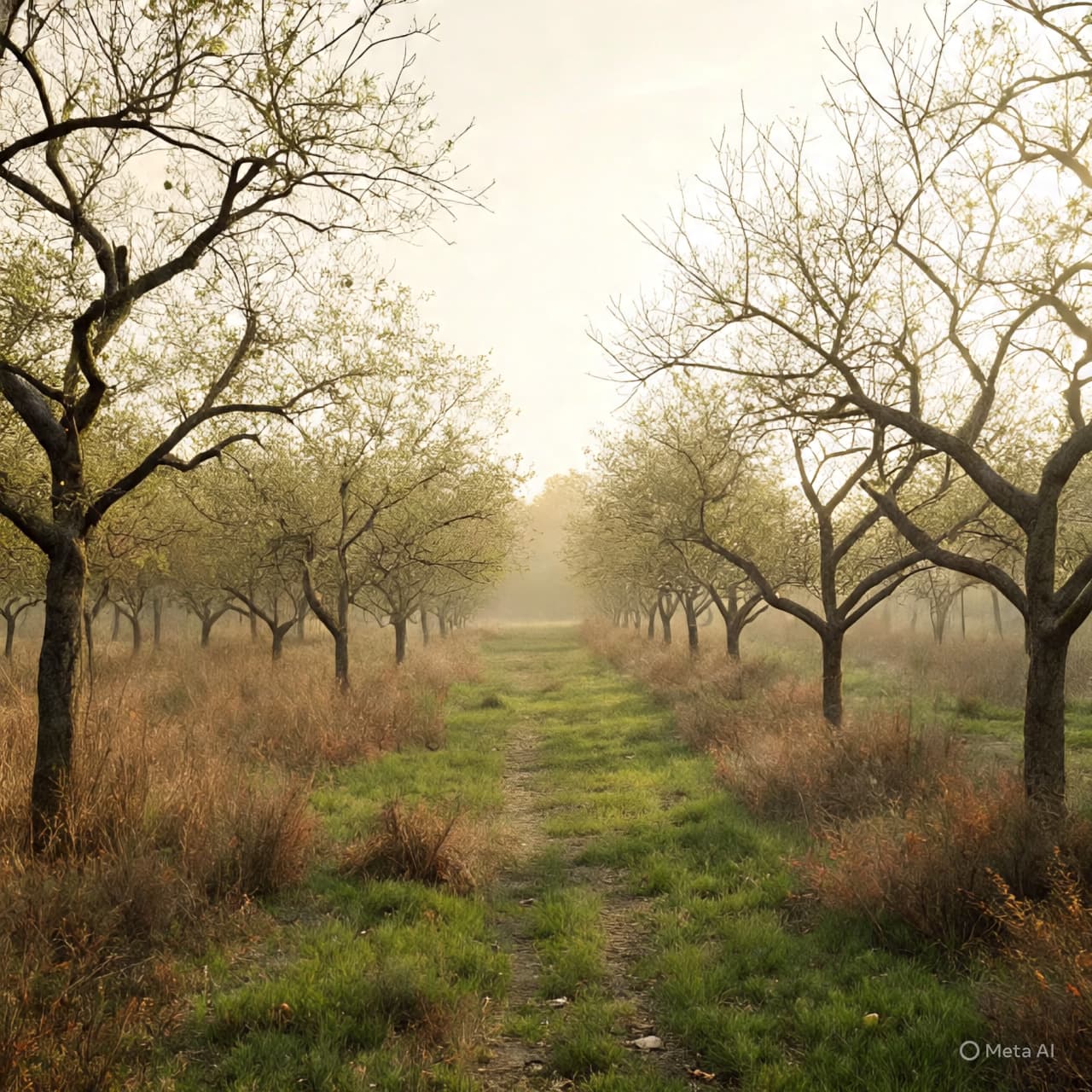
In the long, open stretches of Christchurch’s red zone, where streets no longer lead to front doors and fences remember boundaries that no longer stand, the land has learned to hold silence in a different way. Grass moves where houses once stood. Wind follows the old lines of neighborhoods. And here and there, trees remain—quiet witnesses to what has passed and what has slowly changed.
These trees, many of them fruit-bearing, have for years offered something unexpected. In a place defined by absence, they became a kind of quiet abundance. Apples, plums, quinces, feijoas—remnants of private gardens that drifted into public life, their branches bending toward anyone willing to reach. Foraging, once incidental, became part of the rhythm of the red zone, a gesture of continuity in a landscape reshaped by earthquake and removal.
The origins of this landscape lie in the aftermath of the 2010 and 2011 earthquakes, when thousands of homes were cleared and large areas of land were deemed uninhabitable. What remained was a broad corridor along the Avon River, where vegetation—both native and introduced—was often left in place, including many fruit and nut trees that once marked the edges of suburban life.
Over time, these trees formed an informal network of food sources. Community groups mapped them, and local initiatives encouraged residents to gather what grew freely. Foraging became not only practical but symbolic—a way of re-entering a landscape that had lost its homes but not its capacity to nourish. The city itself embraced the idea, promoting an “edible garden” ethos where food could be grown and shared across public spaces.
But as seasons pass, the balance has begun to shift. Reports and local observations suggest that some of these foraging trees are now in decline. The reasons are not singular. Time, first of all, has its quiet say. Trees once tended by residents now grow without care—unpruned, sometimes diseased, sometimes simply reaching the end of their natural lives. Without the small, routine acts of maintenance that sustain orchards, branches thin and yields lessen.
There are other pressures too, less visible but no less present. In some instances, fruit has been taken in ways that strain the informal ethic of shared abundance. Past reports have pointed to trees being stripped more heavily than intended, occasionally even for commercial purposes, altering the delicate balance between use and preservation.
At the same time, the land itself is changing again. Plans for ecological restoration and regeneration continue to reshape the red zone, with efforts to return parts of it to wetlands and native habitats. In this gradual transformation, the role of introduced fruit trees becomes uncertain—whether they will be preserved as part of a layered history, or quietly replaced as the landscape moves toward a different ecological vision.
What remains, for now, is a space in transition. The trees still stand, though some more lightly than before. Their fruit still appears with the seasons, though perhaps less abundantly, less predictably. And those who walk the red zone still find them, though the act of gathering has taken on a different tone—less certain, more attentive.
It is a landscape that continues to shift between memory and intention. Between what was planted for private lives and what is now shared, however briefly, in public space. Between growth and fading, abundance and restraint.
Christchurch City Council continues to promote urban foraging and edible planting across the city, while long-term regeneration plans for the red zone are underway. The future of the remaining fruit trees forms part of ongoing discussions about land use, restoration, and community access.
Published by Banx Network. This article is part of the Banx decentralized media programme, powered by the BXE token on the XRP Ledger.



