There are moments in science when the boundary between the seen and the unseen begins to soften, not in a sudden revelation, but in a gradual sharpening of perception. What once required inference and approximation becomes something closer to observation—though still mediated, still carefully interpreted.
Researchers are now turning to quantum biosensors to explore the inner workings of cells, using tools that operate at scales where conventional measurement reaches its limits. These sensors draw on principles of quantum mechanics, allowing scientists to detect extremely subtle changes in magnetic fields, electrical signals, or molecular interactions within biological systems.
Inside a cell, countless processes unfold simultaneously. Proteins fold and unfold, signals pass from one molecule to another, and energy is transferred in carefully regulated steps. These activities, though fundamental, are often difficult to observe directly without influencing the system itself. Quantum biosensors offer a way to detect these processes with a level of sensitivity that approaches the limits of what can be measured, bringing a new clarity to previously hidden dynamics.
The strength of these sensors lies in their ability to register minute changes. At the scale of molecules, even the smallest shift can carry meaning—an alteration in a protein’s structure, a fluctuation in a chemical signal, or a change in the local environment of a cell. By capturing these signals, researchers can begin to map the internal activity of cells with greater precision than before.
This approach does not replace existing methods, but extends them. It adds another layer of observation, one that complements established techniques in biology and medicine. Where traditional tools provide a broader view, quantum biosensors offer a more focused perspective, narrowing in on the fine details of cellular behavior.
The implications of this work extend across multiple areas of research. Understanding how cells function at this level can inform studies of disease, development, and response to treatment. It allows scientists to observe how cells react to stimuli in real time, potentially revealing patterns that were previously difficult to detect.
There is also a sense of careful balance in this work. The goal is not simply to observe, but to do so without disrupting the systems being studied. The sensitivity of quantum sensors makes this possible, enabling measurements that are both precise and minimally invasive.
In this way, the research reflects a broader movement in science—toward tools that allow for deeper observation without altering the subject. It is a quiet progression, one that builds on decades of development in both physics and biology, bringing the two fields into closer alignment.
As these technologies continue to develop, they may open new pathways for understanding life at its most fundamental level. The inner workings of cells, once hidden behind layers of complexity, become more accessible, not through simplification, but through refinement of how they are observed.
Researchers have developed quantum biosensors capable of detecting extremely small changes within cells, allowing for detailed observation of cellular processes. The technology may help advance understanding in biology and medicine by revealing internal cellular activity with greater precision.
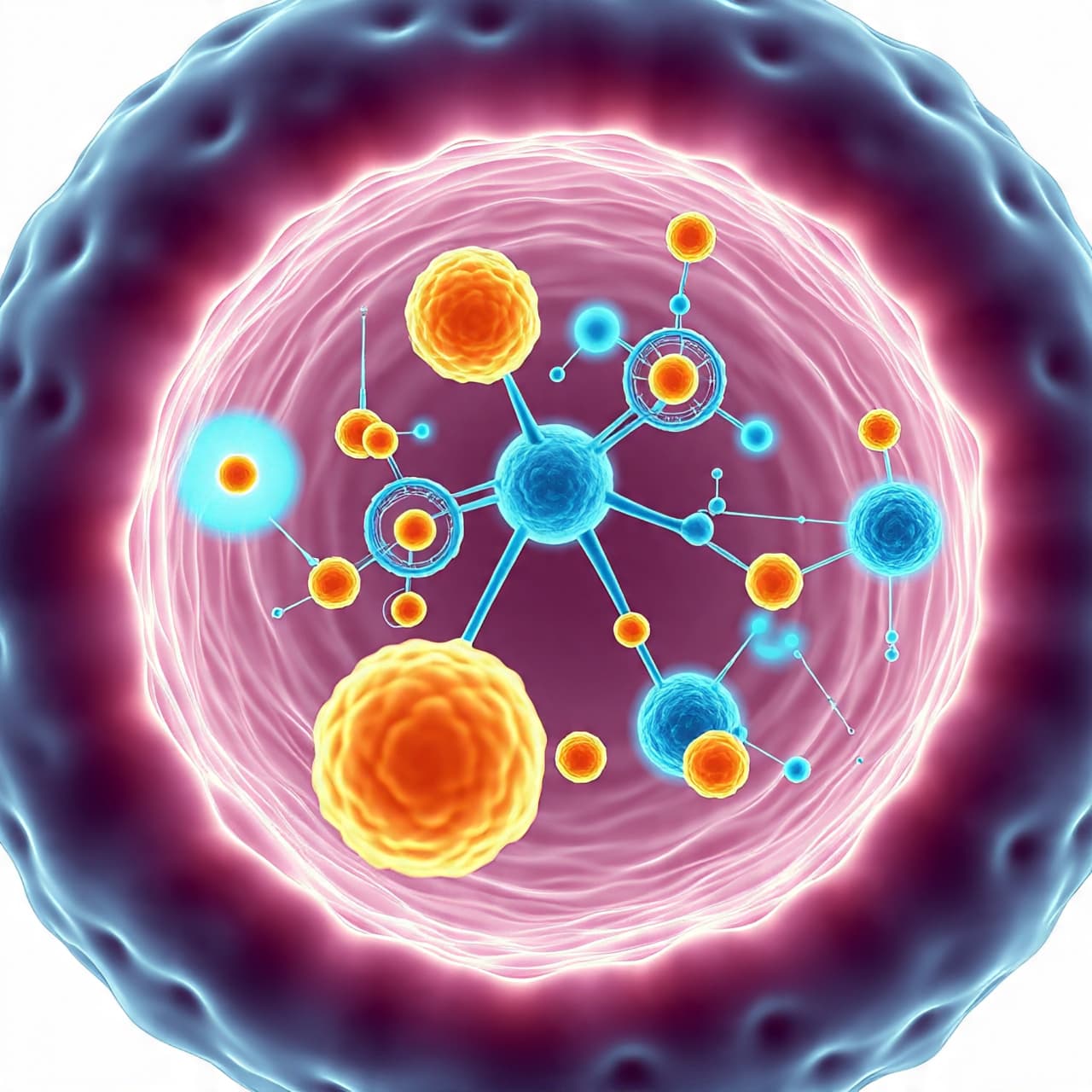
AI Image Disclaimer These visuals are AI-generated and intended as conceptual representations.
Sources Nature Science MIT Technology Review BBC News IEEE Spectrum
Published by Banx Network. This article is part of the Banx decentralized media programme, powered by the BXE token on the XRP Ledger.