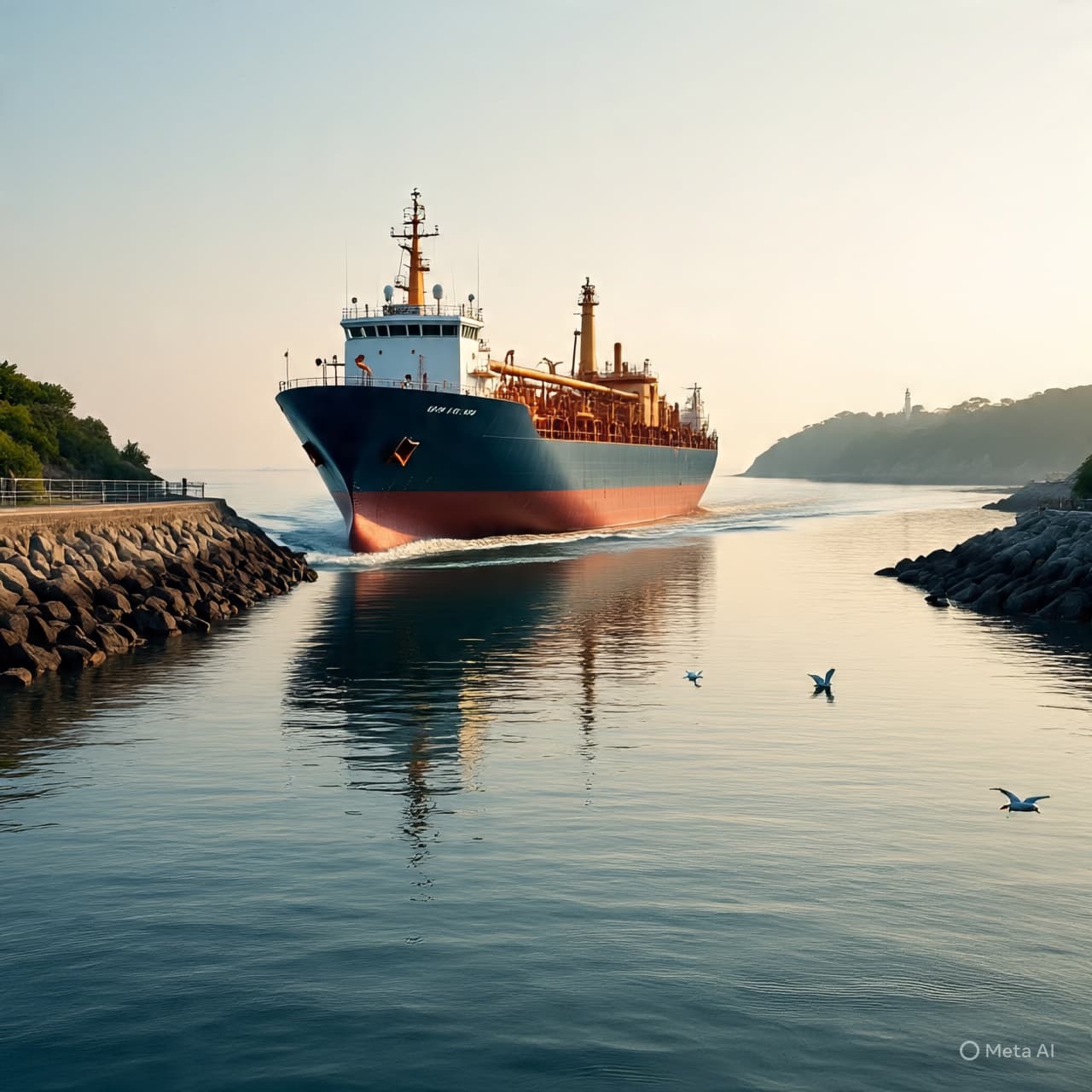
Morning light touches the surface of the sea in fragments, scattering across waves that move with quiet persistence. In the narrow passage of the Strait of Hormuz, ships trace slow, deliberate paths, their journeys guided by coordinates yet shaped by forces far beyond the horizon. It is a place where geography feels almost like conversation—each movement observed, each pause noted.
In recent days, that conversation has extended into political dialogue, as Keir Starmer and Donald Trump discussed the need to ensure the Strait remains open, following heightened tensions that have raised concerns about potential disruption. Their exchange reflects a shared recognition of the waterway’s central role in the global flow of energy and commerce, even as the circumstances surrounding it remain uncertain.
The Strait, bordered by Iran and Oman, carries a significant portion of the world’s oil shipments each day. Its importance lies not only in volume but in vulnerability—a narrow corridor through which much of the global economy quietly passes. When its openness is questioned, the implications extend far beyond the region, touching markets, industries, and the everyday calculations of distant societies.
In their discussion, Starmer and Trump emphasized the necessity of stability in these waters, framing access as both an economic and strategic priority. While details of specific measures remain limited, the tone suggests an alignment around the principle of maintaining free navigation, a cornerstone of international maritime practice.
Yet beneath this agreement lies a more complex landscape. The Strait has long been a focal point of tension, where regional dynamics and global interests intersect. Statements from Iranian officials in recent weeks have underscored their willingness to respond to perceived threats, including the possibility of restricting passage under certain conditions. In this context, calls to “reopen” or secure the Strait carry both immediate urgency and deeper historical resonance.
Naval presence in the region continues, with vessels from multiple nations maintaining patrols that are as much symbolic as they are practical. These ships move along established routes, their presence signaling commitment while also serving as a reminder of the delicate balance that governs the area.
For observers, the dialogue between Starmer and Trump reflects an ongoing effort to navigate this balance—to assert stability without provoking escalation, to ensure continuity without overlooking risk. It is a process that unfolds not only through action but through language, where each statement contributes to the broader atmosphere of expectation and response.
Meanwhile, the ships continue their passage. Tankers, container vessels, and support ships move steadily through the Strait, their journeys largely uninterrupted even as the conversation around them grows more intense. The physical reality of the waterway remains constant, even as its symbolic weight shifts.
As the day advances and the light changes, the Strait holds its quiet rhythm. The discussions in distant capitals, though significant, exist alongside this enduring movement—a reminder that global systems often depend on places that appear, at first glance, unchanged.
In the end, the call to keep the Strait of Hormuz open is both a practical necessity and a reflection of a wider concern. It speaks to the interconnectedness of economies and the fragility of the routes that sustain them. For now, the passage remains open, its waters carrying the world’s cargo forward, even as the questions surrounding it continue to gather just beyond the horizon.
AI Image Disclaimer These images are AI-generated and serve as visual representations, not real photographs.
Sources Reuters BBC News Financial Times Al Jazeera Bloomberg
Published by Banx Network. This article is part of the Banx decentralized media programme, powered by the BXE token on the XRP Ledger.