
Key Highlights
- Recent missile displays by Iran signal escalating US-Iran tensions.
- Military parades serve both domestic and international audiences.
- The digital era amplifies the impact of military imagery on global perceptions.
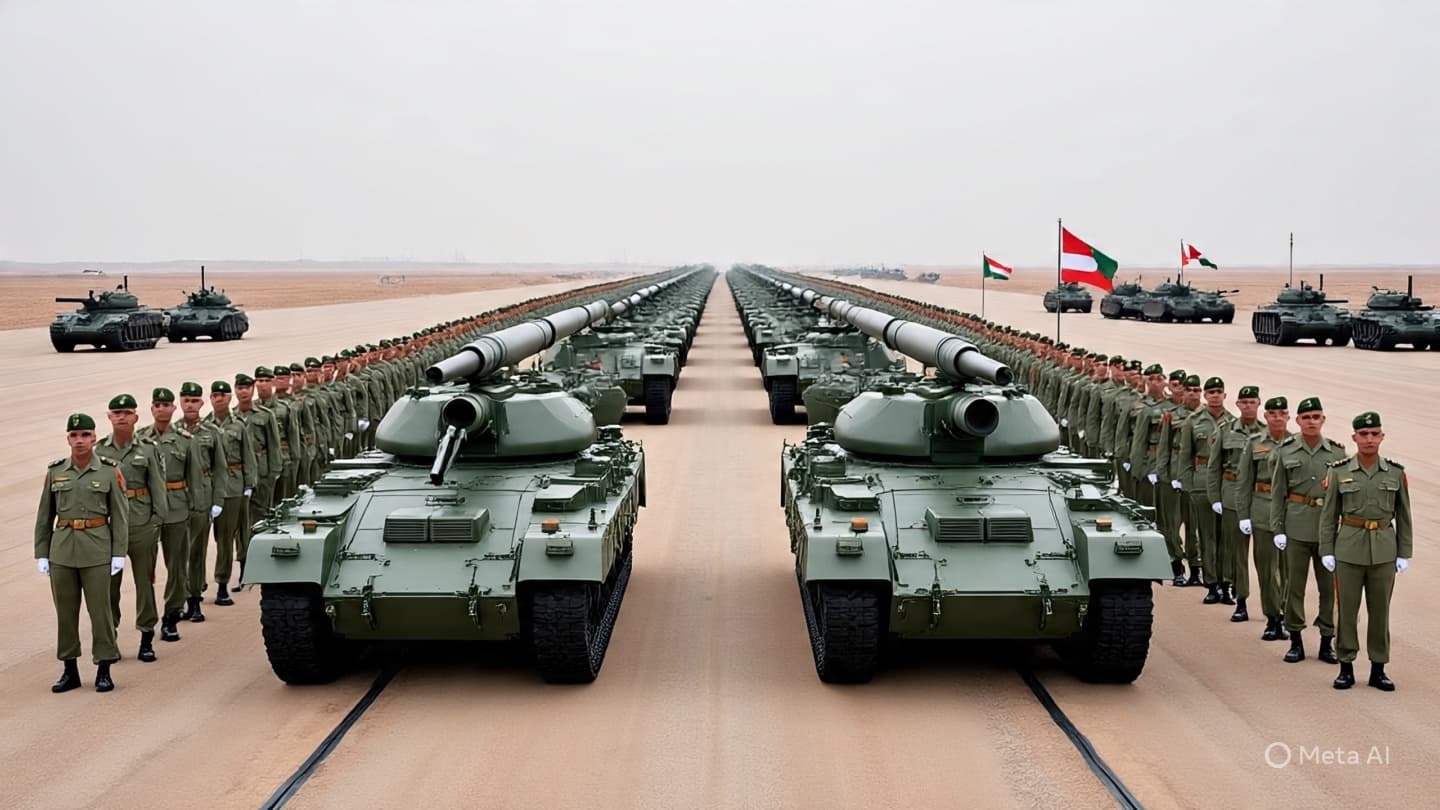
Recent developments in the escalating US–Iran confrontation have added another layer to an already charged geopolitical landscape. Live updates from the region include footage shared by Iran’s embassy channels depicting a missile parade, a display presented within a broader context of heightened military signaling and ongoing friction between Tehran and Washington. This imagery is part of a long-standing pattern where military capability and national posture are communicated through both formal diplomatic channels and visual demonstrations.
The footage showcases organized formations and missile systems presented in a ceremonial context, underscoring both technical capacity and strategic messaging. These developments come amid sustained tensions between the United States and Iran, shaped by years of disputes over nuclear policy, regional influence, sanctions, and security incidents across the Middle East. While direct large-scale confrontation has not materialized, the relationship between the two states remains defined by periodic escalations and carefully managed deterrence.
Military parades and public displays of defense capability in Iran are not new phenomena. They often coincide with national commemorations or periods of heightened regional tension, serving both domestic and international audiences. Domestically, such displays are framed as demonstrations of sovereignty and technological resilience. Internationally, they are interpreted within the broader calculus of deterrence and signaling.
The sharing of footage through diplomatic or state-linked channels adds another dimension to this communication. In the digital era, images of military assets circulate rapidly, shaping perceptions across borders in real time. What was once confined to physical observation now extends into global information networks, where interpretation can be as influential as the event itself.
In Washington, policy responses to Iranian military signaling typically unfold through a combination of public statements, diplomatic coordination with allies, and monitoring of regional security dynamics. These responses are often calibrated to avoid immediate escalation while maintaining strategic pressure, reflecting the complex balance that defines US policy in the region.
Meanwhile, across the Middle East, regional actors observe these exchanges through their own security lenses, as shifts in US–Iran dynamics often carry implications for broader stability, energy routes, and alliance structures. The interconnected nature of the region means that even symbolic displays can reverberate across multiple geopolitical layers.
Analysts note that such moments tend to reinforce existing patterns rather than immediately alter them. Military displays, diplomatic messaging, and media circulation form a continuous loop of signaling, interpretation, and response—each element contributing to a broader atmosphere of managed tension. Within this environment, the concept of “live updates” reflects the pace at which geopolitical information now travels. Events are no longer static points in time but unfolding narratives, constantly reframed as new visuals, statements, or reactions emerge.
As the situation continues to develop, the underlying structure of US–Iran relations remains unchanged in its fundamentals, even as its expressions shift. The missile footage, the diplomatic responses, and the broader regional context all exist within a system defined by both restraint and recurrence. The horizon remains active—not in sudden rupture, but in repeated signals, each one adding to a long, unfinished conversation between distance and proximity, deterrence and declaration.
Published by Banx Network. This article is part of the Banx decentralized media programme, powered by the BXE token on the XRP Ledger.



