

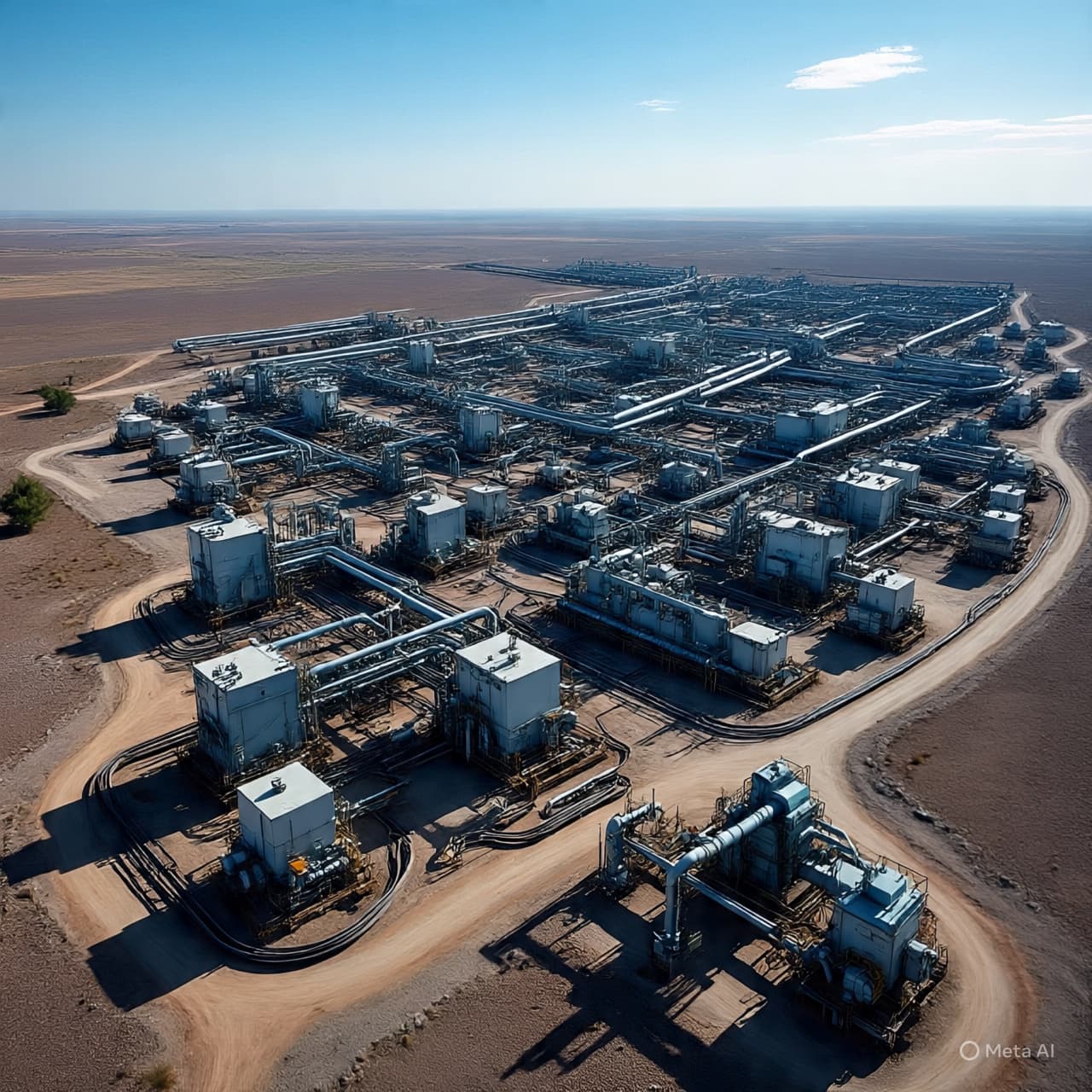
Key Highlights
- Australia has approved a new coal seam gas expansion, igniting debate over energy policy.
- Critics liken the decision to 'lighting a cigarette while trying to quit,' highlighting the tension between ambition and reality.
- The expansion reflects economic priorities and energy security concerns amid calls for cleaner energy.
[The Tension in Energy Policy]
In recent public discourse, the intersection of ambition and reality in energy policy has become increasingly pronounced. This is particularly evident in Australia, where the government has approved a new coal seam gas expansion. Critics have drawn a vivid metaphor, comparing this decision to 'lighting a cigarette while trying to quit,' which encapsulates the struggle between the nation's energy needs and its environmental aspirations. This metaphor serves not only to critique the decision but also to illustrate the complexities inherent in energy policy.
[Coal Seam Gas: A Contested Resource]
Coal seam gas has long been a contentious element of Australia's energy landscape. Proponents argue that it is a vital energy source that supports economic activity and provides stability within existing energy systems. Conversely, environmental advocates raise alarms about the potential emissions and ecological impacts associated with coal seam gas extraction. This duality presents a significant challenge for policymakers, who must navigate the competing demands of economic growth and environmental sustainability.
[The Approval's Implications]
The recent approval of the coal seam gas expansion reflects a set of priorities influenced by various factors, including economic considerations and energy security. Governments often find themselves operating within constraints that may not be immediately apparent to the public. While there is widespread support for transitioning to cleaner energy sources, the reality is that many countries, including Australia, still rely heavily on established energy resources. This reliance complicates the path toward a sustainable energy future.
[Critics and Supporters Weigh In]
Critics of the expansion express concern that such approvals reinforce a dependency on fossil fuels, which they argue should be gradually phased out. They contend that each new project undermines the long-term goals of reducing emissions and transitioning to renewable energy. The metaphor of quitting becomes particularly poignant here, as it highlights the difficulty of aligning immediate actions with overarching environmental objectives. Critics fear that progress may become uneven when steps forward are accompanied by decisions that seem regressive.
Supporters of the expansion, however, adopt a more pragmatic perspective. They argue that energy systems do not transform overnight; rather, they evolve through various stages. In this view, the expansion is not a retreat from ambition but rather a necessary step in a gradual transition toward cleaner energy. This perspective emphasizes the importance of maintaining energy security while developing alternative resources.
[The Ongoing Dialogue]
What emerges from this situation is not a clear resolution but rather an ongoing dialogue about the balance between urgency and feasibility in energy policy. Conversations surrounding energy transition are rarely straightforward; they are shaped by new developments, shifting priorities, and an evolving understanding of what is achievable. The metaphor of quitting resonates deeply, as it reflects the reality that change is often a process marked by inconsistencies and setbacks.
In summary, Australia's approval of a new coal seam gas expansion has sparked significant debate about the future of its energy policy. While critics argue that it contradicts the country's commitment to reducing emissions, supporters view it as a pragmatic step in a complex transition. The conversation continues, reflecting the intricate balance between ambition and reality in the pursuit of sustainable energy solutions.
Published by Banx Network. This article is part of the Banx decentralized media programme, powered by the BXE token on the XRP Ledger.




