When we think of deserts, we picture endless stretches of sand and stone under a blazing sky, where life seems to have chosen silence over song. In the Atacama Desert, one of Earth’s driest and most forbidding landscapes, that image has long held sway. Rainfall here can be measured in millimeters per decade rather than years, and some weather stations have recorded virtually no precipitation for lifetimes of human memory.
Yet beneath this austere surface, and woven into its whisper-quiet soils, life persists in unexpected abundance. Recent research led by international scientists reveals that far from being a biological void, the Atacama is a tapestry of hidden lifeforms — tiny organisms that thrive where few others can.
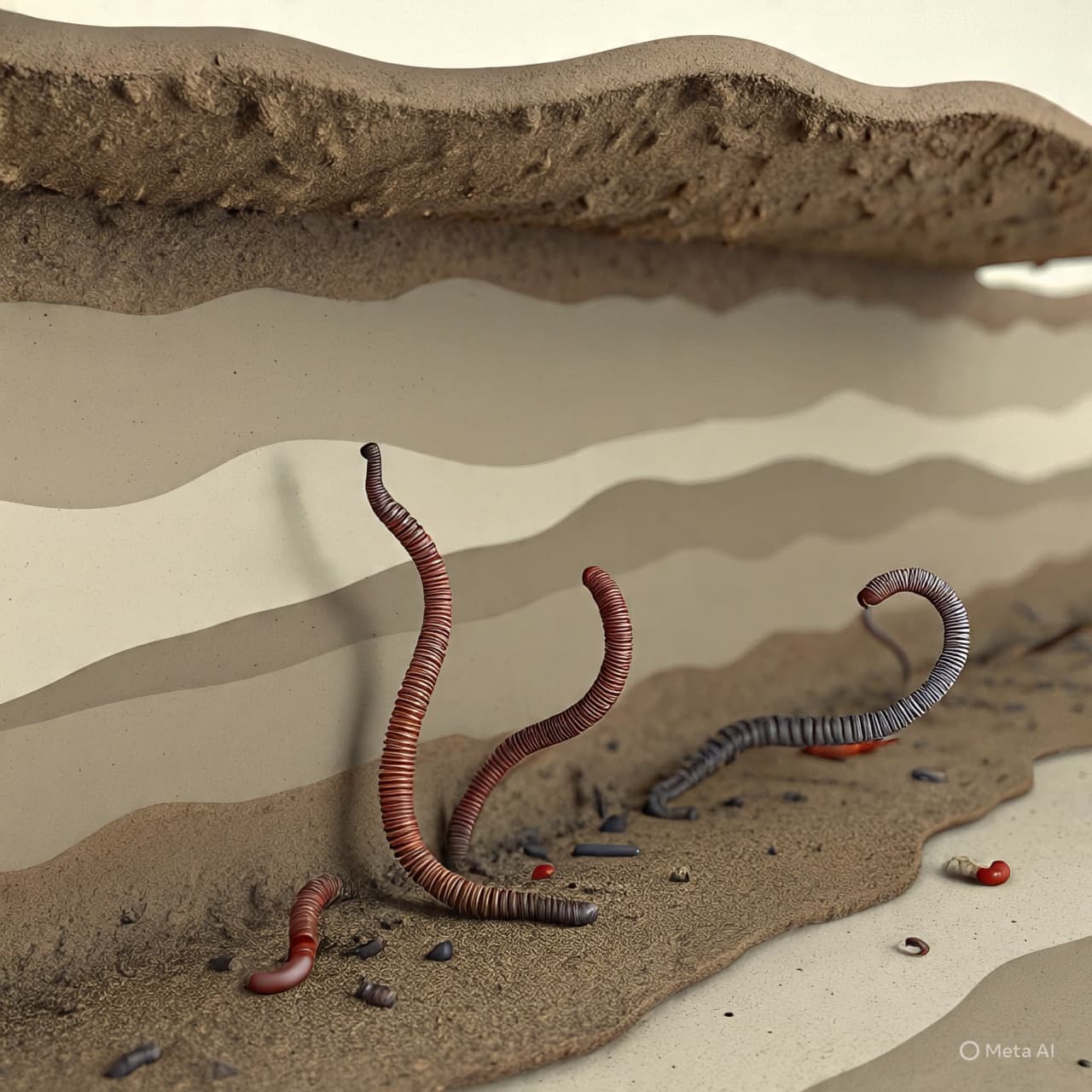
At the heart of this discovery are nematodes, microscopic soil-dwelling worms that are among the most ubiquitous lifeforms on Earth. Though the desert’s arid air and saline soils might seem hostile to such creatures, researchers found thriving communities across varied elevations and micro-habitats within the Atacama. In higher and slightly more humid zones, the diversity of species was notably greater, while in the harshest reaches some species adopted unusual survival strategies, such as asexual reproduction, a potential advantage when mates are rare or conditions are extreme.
In this landscape where moisture is precious and unpredictable, even tiny shifts in elevation or soil chemistry can create pockets where life manages to eke out an existence. The nematodes were found not just in isolated patches, but across a range of soil environments — from salt flats to sandy dunes — each community a testament to biological resilience.
These findings subtly reshape how scientists think about ecosystems in extreme environments. The Atacama, often compared to the surface of Mars for its hyper-aridity and mineral composition, has been a testing ground for astrobiology and models of how life might survive beyond Earth. That multicellular animal life thrives here suggests that the boundaries of life are broader, and perhaps more adaptable, than once assumed.
Moreover, understanding the subtle gradients that support biodiversity in such a harsh setting may offer insights into soil ecosystem dynamics elsewhere, including areas facing increasing dryness due to climate change. Where tiny organisms endure, they contribute to nutrient cycling and soil structure — foundations of broader ecological networks.
The discovery of rich nematode communities in the Atacama also prompts reflection on the desert’s hidden rhythms. In a place where rain is vanishingly rare, life persists not in grand gestures but in quiet adaptations — a slow, patient negotiation with the environment. The desert’s silence, then, is not emptiness, but a different kind of life speaking in subtle, resilient ways.
Researchers have documented surprisingly diverse and thriving soil nematode communities across environmental gradients in the Atacama Desert, indicating that multicellular life persists even in one of Earth’s driest regions. The study underscores how moisture, elevation, and extreme conditions shape biodiversity and suggests broader implications for understanding life in extreme environments.
AI Image Disclaimer Visuals are created with AI tools and are not real photographs.
Sources ScienceDaily University of Cologne research release Phys.org background reporting Nature Communications Earth.com context on desert microbes
Published by Banx Network. This article is part of the Banx decentralized media programme, powered by the BXE token on the XRP Ledger.