
Key Highlights
- Bolivia's lithium reserves are among the largest globally, prompting new industrial initiatives.
- The Bolivian government has opened bidding rounds for international investors in lithium extraction.
- Local communities express both hope and caution regarding the industrialization of their land.
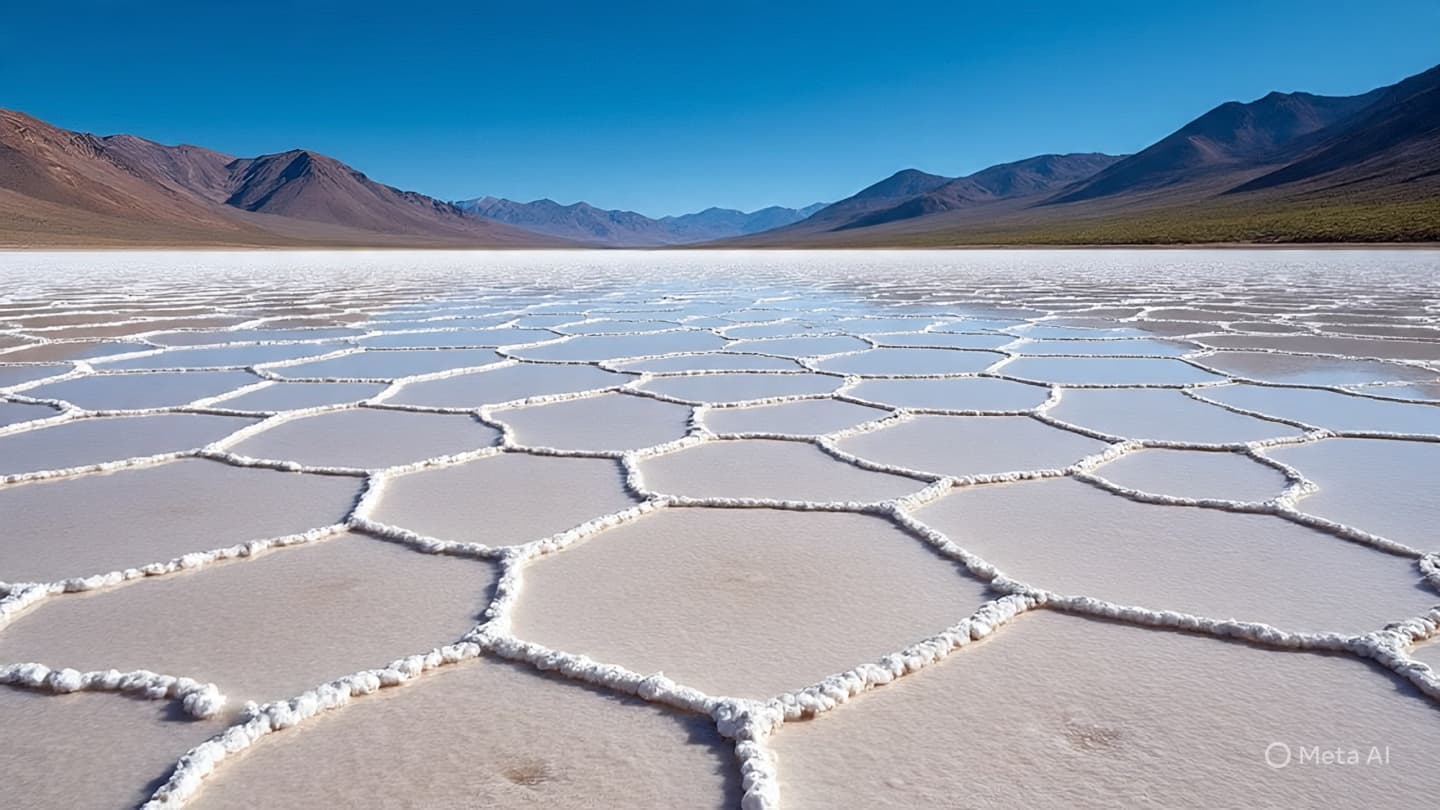
The Salar de Uyuni is a place where the horizon is not a line, but a suggestion, a shimmering boundary where the brilliant white of the salt crust dissolves into the infinite blue of the high-altitude sky. In this landscape of extremes, silence is a physical presence, broken only by the occasional whistle of the wind across the crusted earth. It is here, in the stillness of the Altiplano, that the world is looking for the pulse of the future, buried deep within the lithium-rich brines that lie beneath the surface.
There is a peculiar tension in this vast expanse, a contrast between the ancient, geological pace of the salt flats and the frantic, modern demand for the minerals they contain. To walk across the Salar is to feel the weight of time, yet one cannot ignore the arrival of the machinery that signals a new chapter in the story of the land. It is a transition from a place of pure, untouched reflection to one of vital industrial significance, where the earth’s oldest elements are called upon to power the newest technologies.
The quest for lithium is often framed in the language of necessity, a vital component in the global shift toward a greener, more electrified existence. Yet, in Bolivia, this pursuit is also a narrative of hope and sovereignty, an opportunity to transform a wealth of natural resources into a sustainable future for its people. The brine pumps and evaporation ponds are more than just infrastructure; they are symbols of a nation reaching for a place at the center of the global energy transition.
As the sun sets over the Andes, the salt flats take on a spectral quality, turning shades of violet and pink that defy the harshness of the environment. In this light, the industrial footprint seems small, almost tentative, against the sheer scale of the landscape. It is a reminder that while our need for energy is great, the land itself possesses a dignity and a permanence that must be respected and preserved even as its riches are extracted.
The local communities, who have lived in the shadow of these mountains for generations, observe these changes with a mixture of caution and anticipation. For them, the salt is not just a mineral resource, but a part of their identity, a landscape that has shaped their customs and their survival. The dialogue between the needs of the global market and the rights of the local inhabitants is a delicate dance, played out in the thin, cold air of the highlands.
There is a quiet intensity to the work being done here, a sense that the stakes are high not just for Bolivia, but for a world desperate for alternatives to fossil fuels. The lithium beneath the salt is a bridge to a different kind of world, one where the movement of cars and the lighting of homes is tied to the chemistry of the earth rather than the burning of carbon. It is a profound shift, and its epicenter is located in one of the most remote and beautiful places on the planet.
In the laboratories and planning offices, the talk is of percentages, purity, and production yields, yet the human element remains at the core of the endeavor. The engineers and workers who brave the elements on the Salar are the pioneers of this new frontier, navigating the technical challenges of extraction in an environment that is as unforgiving as it is magnificent. Their efforts are the invisible threads connecting the quiet Altiplano to the bustling cities of the distant north.
The Bolivian government has officially opened new bidding rounds for international investors to partner in the extraction and processing of lithium from its vast salt flats. This move aims to accelerate the industrialization of the country’s reserves, which are among the largest in the world. By establishing these partnerships, Bolivia seeks to secure its role as a key supplier in the global battery market while ensuring that the economic benefits support national development goals.
Published by Banx Network. This article is part of the Banx decentralized media programme, powered by the BXE token on the XRP Ledger.



