

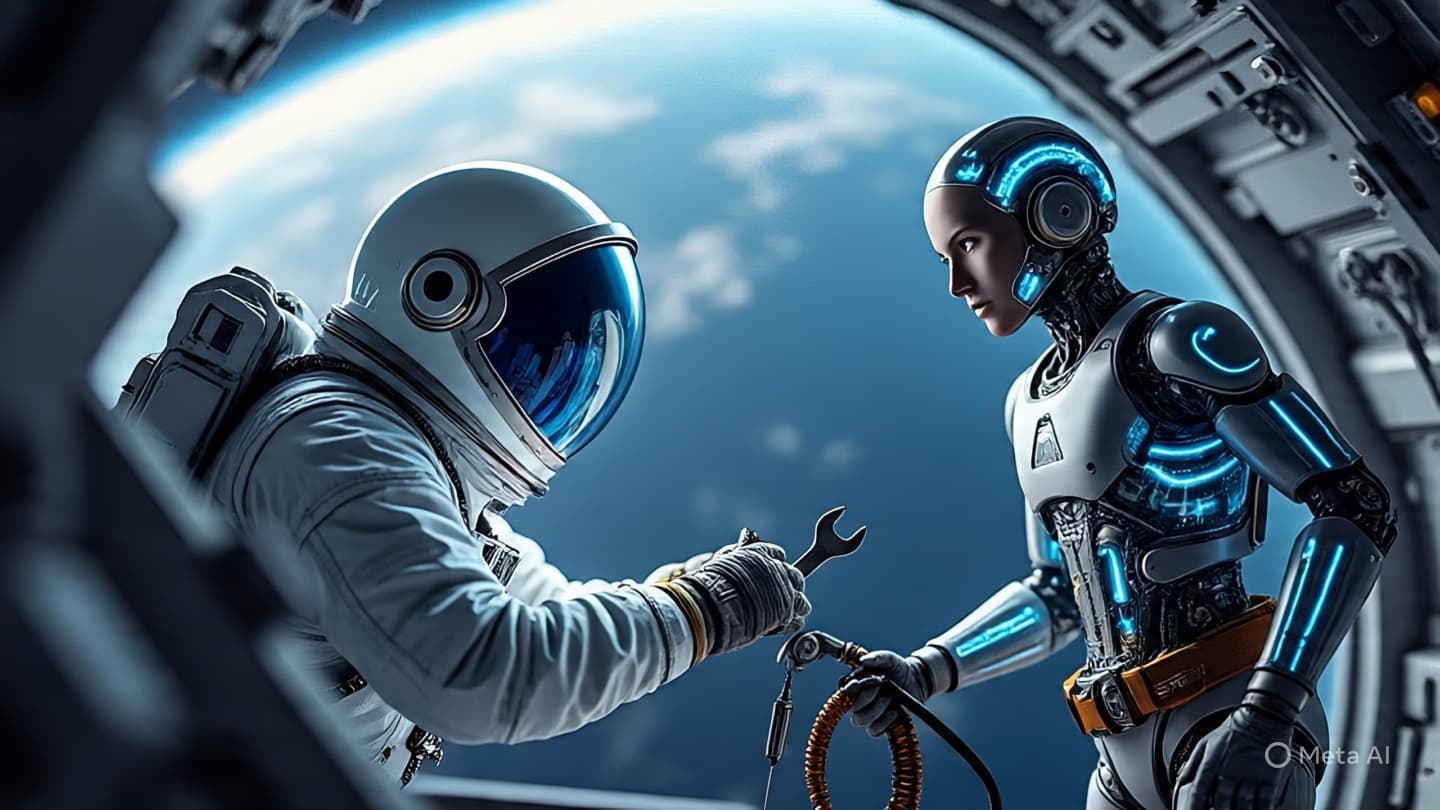
Key Highlights
- AI and robotics enhance human roles in space exploration.
- Automation allows astronauts to focus on complex decision-making.
- Organizations like NASA integrate AI for mission planning.
The vastness of space has always represented the pinnacle of human ambition and endurance. As humanity ventures beyond Earth’s atmosphere, each step taken is laden with significance, and every decision made carries profound consequences. In this silent expanse, technology has emerged not merely as a substitute for human effort but as a steadfast ally in the quest for knowledge and exploration.
Recent discussions within the aerospace community indicate that artificial intelligence (AI) and robotics are set to strengthen this partnership rather than diminish the human element in space exploration. Experts in the field assert that while automation continues to evolve, the presence of humans remains crucial to the design and execution of long-term missions. This perspective underscores a collaborative approach where technology complements human capabilities.
AI systems are increasingly being deployed to handle vast amounts of data, assist in navigation, and monitor spacecraft systems in real time. By automating routine tasks, these systems enable astronauts and mission control teams to concentrate on more complex decision-making processes. This shift not only enhances operational efficiency but also allows for a more strategic approach to mission challenges.
Robotics plays an equally vital role, particularly in environments that pose significant risks to human safety. Robotic explorers are capable of operating on distant planets, conducting repairs in extreme conditions, and performing preliminary surveys prior to human arrival. This capability is essential for ensuring that missions can proceed safely and effectively, expanding the horizons of exploration.
Rather than viewing these technologies as replacements for astronauts, they should be seen as extensions of human capability. By enabling safer missions and reducing risks, AI and robotics broaden the scope of what can be achieved in space. This collaborative model reflects a significant shift in how space agencies, including NASA and its international partners, approach exploration.
Organizations are increasingly integrating AI into mission planning, utilizing tools such as autonomous landing systems and predictive maintenance. These innovations are designed to support human crews, emphasizing the importance of human intuition, adaptability, and creativity—qualities that remain challenging to replicate in machines. In unpredictable environments, the ability to respond to unforeseen circumstances is often as critical as technical precision.
As missions progress toward the Moon, Mars, and beyond, the dynamic between human presence and technological support continues to evolve. The overarching goal is not to replace humans but to create a synergy that leverages the strengths of both. In this unfolding narrative of space exploration, AI and robotics are emerging not as competitors but as trusted instruments, empowering humanity to reach further while remaining at the forefront of its own journey.
AI Image Disclaimer: Some visuals in this article are AI-generated to illustrate future space scenarios and may not reflect real missions.
Published by Banx Network. This article is part of the Banx decentralized media programme, powered by the BXE token on the XRP Ledger.




