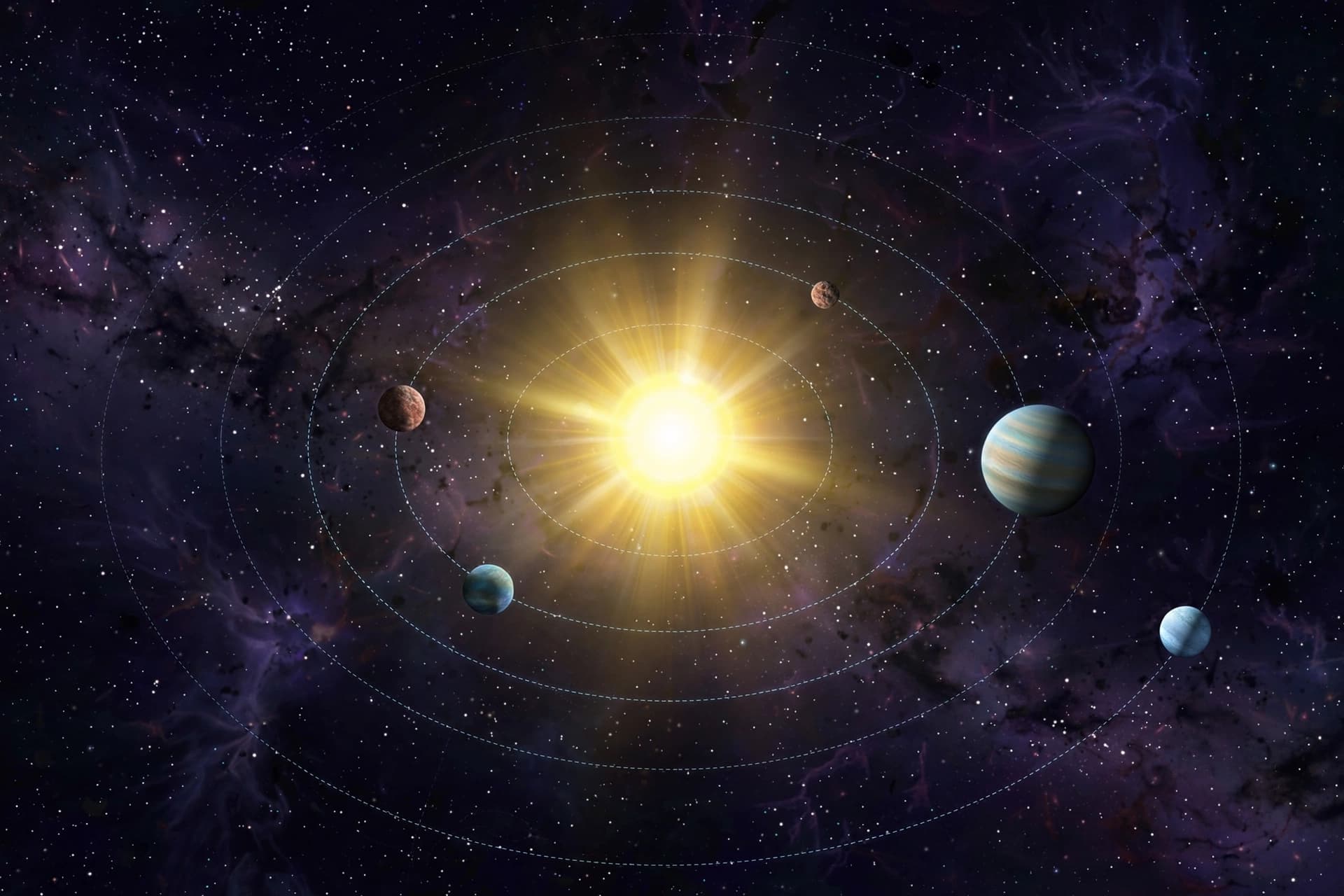
There are moments in science that feel like listening to an old echo in a great hall — familiar, distant, and resonant with unanswered questions. For decades, humanity has turned its gaze outward into the night sky, charting the slow march of planets and the swift dance of comets. Yet, amid this celestial choreography lie countless rocky wanderers — asteroids whose paths weave near Earth’s orbit, many of them still unknown and unseen by our instruments. In recent discussions among astronomers and policymakers, a new plan from NASA has begun to take shape, not in headlines splashed across front pages, but in thoughtful briefings about planetary defense and discovery.
Planetary defense is a term that evokes both imagination and caution: the gentle stewardship of our planet’s safety in the face of cosmic rocks that have, over billions of years, danced with gravity and chance. Scientists estimate that thousands of these near-Earth asteroids — especially mid-sized ones capable of significant regional impact — remain undetected. These are not the massive bodies that might end continents, but objects whose hidden orbits could one day intersect with Earth’s in unexpected ways. The gaps in our knowledge have prompted NASA to propose an intensified effort to find and catalog as many of these objects as possible before we experience surprise.
The scale of the unknown is both staggering and humbling. At recent scientific gatherings, NASA’s acting Planetary Defense Officer noted that an estimated 15,000 “city-killer” asteroids — those roughly 140 meters or larger — could be out there without confirmed locations. Such objects, if they struck Earth, might cause significant regional devastation; yet the pathways that could lead them here remain uncharted. This realization underscores not only the challenges of detecting dim, fast-moving bodies against the dark of space but also the importance of refining our tools and strategies.
NASA’s discussions include strengthening its planetary defense architecture and investing in missions and systems like the upcoming Near-Earth Object Surveyor (NEO Surveyor), a dedicated space-based infrared telescope designed to find and track asteroids independent of reflected sunlight. By observing heat signatures, NEO Surveyor aims to uncover objects that are otherwise nearly invisible to ground-based optical telescopes — particularly those that approach from directions close to the Sun’s glare. This mission is envisioned to fill crucial gaps and help achieve long-standing goals, including discovering the majority of potentially hazardous asteroids over the coming decade.
The effort to find missing asteroids is not only technical but philosophical: it asks what it means to be prepared in a universe where our Earth’s neighborhood is both familiar and still mysterious. It invites reflection on patterns we have yet to see and forces us to imagine watching an unseen dance, waiting for rocks whose orbits we do not yet know. Yet within that challenge lies human curiosity, patience, and a growing network of global collaboration, methods, and tools.
Looking to the future, NASA and international partners continue to refine strategies for detection and tracking, blending space-based observatories with ground networks, and applying advanced computing to parse celestial motion. In doing so, they weave together decades of astronomical knowledge with new technological frontiers. It is a gentle reminder that even in the vast expanse of space, where so much remains uncharted, humanity’s quest to understand and protect remains steadfast — quietly persistent, thoughtfully engaged, and ever hopeful.
In recent announcements, NASA reaffirmed its broader planetary defense strategy, emphasizing detection, tracking, and characterization of near-Earth objects as core priorities in safeguarding Earth over the long term. The agency’s plan includes expanded use of infrared telescopes, enhanced ground surveys, and collaborations across nations and scientific communities to ensure that the hidden neighbors of our solar system become known friends rather than unforeseen intruders.
AI Image Disclaimer Visuals are created with AI tools and are not real photographs.
Sources Kids News Economic Times science reporting New York Post science section The Times science briefing Associated planetary defense science reporting
Published by Banx Network. This article is part of the Banx decentralized media programme, powered by the BXE token on the XRP Ledger.