
Key Highlights
- Discovery:An 800-year-old Crusader sword found off Israel's Carmel coast.
- Historical Context:The sword dates back to the 12th or 13th century, linked to the Crusades.
- Archaeological Significance:The find highlights the region's rich maritime history and ongoing archaeological efforts.
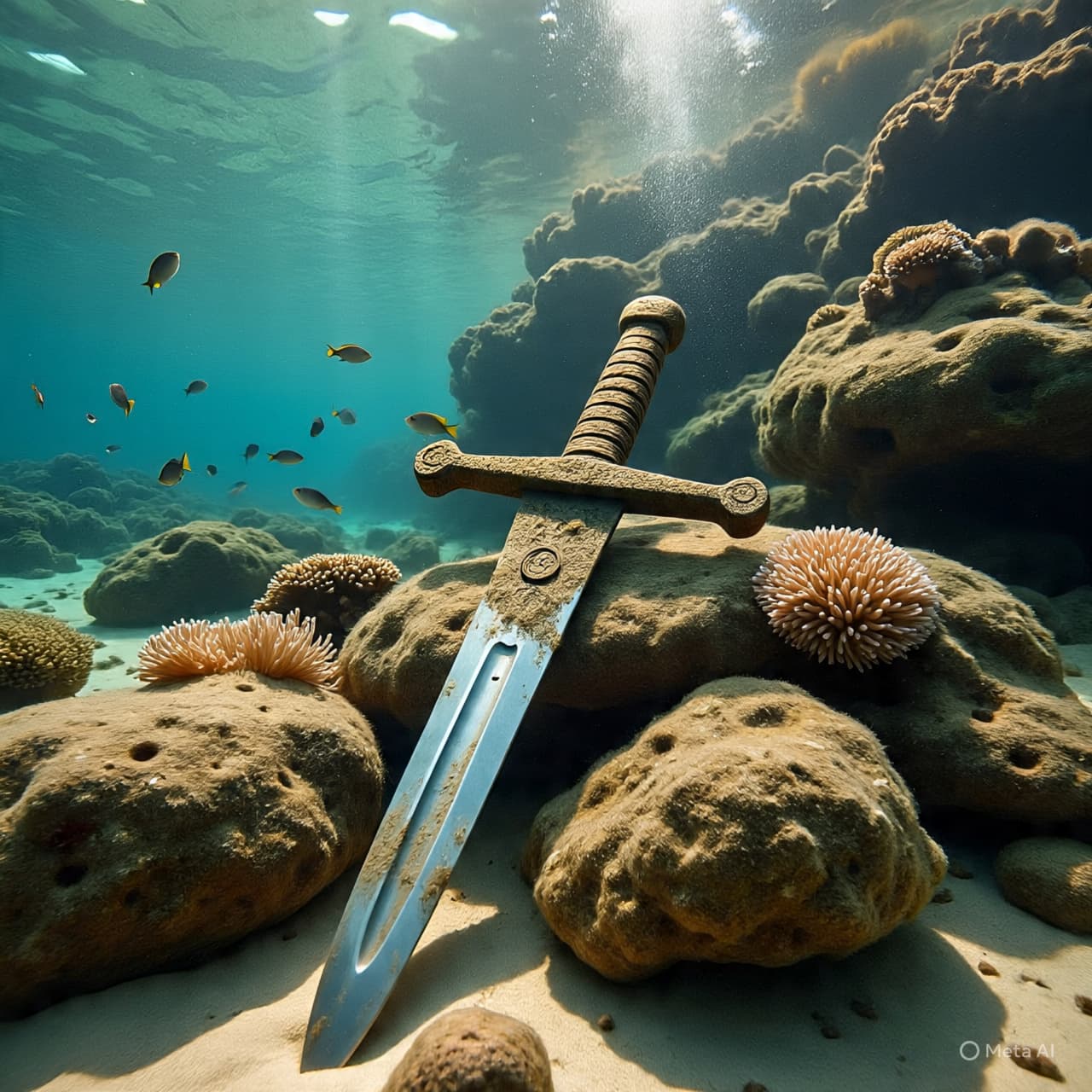
An extraordinary discovery has emerged from the depths of the Mediterranean Sea along Israel’s Carmel coast: an 800-year-old sword, believed to be from the Crusader era. This remarkable artifact was spotted by a student swimming near the ancient harbor ruins of Atlit, where it lay partially concealed among the rocks. Its angular shape, distinct from the natural marine environment, piqued the student’s curiosity, leading to the identification of a significant historical relic.
Marine archaeologists later confirmed that the sword, encrusted with marine growth and sand, is likely a weapon from the 12th or 13th century, a period marked by intense conflict as European knights and local powers vied for control of the Levantine coastline. The Israel Antiquities Authority, alerted to the find, promptly retrieved and stabilized the sword, which measures nearly a meter in length—consistent with the armaments used by Crusader knights.
The location of the discovery is particularly poignant, situated near the ruins of Atlit Castle, a 13th-century stronghold constructed by the Knights Templar. This fortress once served as a crucial maritime outpost, safeguarding trade routes and facilitating pilgrimages. Over the years, the surrounding seabed has yielded numerous artifacts, including anchors and ceramics, which collectively narrate the story of a bustling maritime hub that once thrived along the coast.
Historians often describe the Crusader period as a complex tapestry woven with conflict, commerce, and cultural exchange. The sword, though silent now, represents a tangible connection to that era. Its journey from a medieval forge to its current resting place reflects the broader historical narrative of the region, encompassing battles, trade, and the relentless passage of time.
Underwater archaeology in Israel is heavily influenced by natural elements, such as shifting sands and seasonal storms, which can reveal artifacts that have long remained hidden. The Mediterranean Sea, with its unique conditions, both preserves and challenges these historical treasures. Saltwater affects metal differently than dry land, leading to a distinct preservation process that can yield fascinating insights into the past.
For the student who first discovered the sword, the experience was driven by curiosity rather than conquest. The glimmer beneath the water's surface hinted at a rich history waiting to be uncovered. For archaeologists, this sword provides invaluable material evidence of a time often recounted through historical texts and legends. Its craftsmanship and design will be meticulously studied, offering a new perspective on events that shaped the region.
As conservation efforts begin, the sword is expected to be displayed in a museum, where it will be viewed through glass rather than submerged in water. Visitors will have the opportunity to reflect on a past that feels both distant and immediate, as the Mediterranean continues its slow dialogue with the shore. Beneath its waves, countless other artifacts await discovery, serving as reminders that history is not lost but rather patiently awaits those who seek to uncover it.
Published by Banx Network. This article is part of the Banx decentralized media programme, powered by the BXE token on the XRP Ledger.



