In the complex chessboard of the Middle East, where alliances shift as easily as desert winds, one constant has remained: the presence of U.S. military power. Over the years, the United States has become a key player, its combat power scattered across the region like pieces waiting to be moved in a game with no clear end. The question, however, is not whether the U.S. is present—it is, without a doubt. The question is: How much power does it actually have on the ground right now? The answer is less clear, a mosaic of military installations, strategic alliances, and a shifting narrative of interventionism versus restraint.
At first glance, the U.S. combat presence in the Middle East appears formidable. U.S. bases stretch across the region, from the deserts of Iraq to the coastal waters of Bahrain. In total, around 60,000 American troops remain stationed in various countries, poised to respond to any crisis that arises. But, as with all power, the question lies not only in numbers but in influence. How well can these forces adapt to the region’s changing dynamics?
The U.S. military’s traditional combat strength in the Middle East has long been built around its air superiority, naval assets, and rapid deployment capabilities. The U.S. Fifth Fleet, stationed in Bahrain, is a symbol of the American presence in the Persian Gulf, a powerful force capable of projecting power across vast distances. Additionally, the ability to conduct airstrikes and reconnaissance operations via advanced drones and fighter jets gives the U.S. unmatched reach. But despite this vast infrastructure, there is an undeniable shift in how these forces are used. Over the past few years, the U.S. has increasingly focused on counterterrorism efforts and bolstering the defense of strategic allies rather than engaging in large-scale ground combat operations.
This shift reflects a broader trend toward more strategic, measured engagement in the region. The U.S. military, wary of getting caught in prolonged conflicts as it did in Iraq and Afghanistan, has largely pivoted to advisory and support roles. In countries like Syria and Iraq, American forces continue to provide training, intelligence sharing, and logistical support to local forces. This strategy, however, is fraught with its own challenges. While local partners may benefit from U.S. backing, they often lack the cohesion, resources, or political will to face the challenges posed by adversaries like Iran or ISIS.
Yet, despite a less hands-on approach, the U.S. still maintains a significant deterrent presence. With its vast intelligence-gathering network, highly advanced technology, and ability to conduct precision strikes, the U.S. remains a formidable power in the region. However, the narrative surrounding U.S. military engagement has become more complicated. There are those who argue that the U.S. is overstretched, its combat readiness undermined by years of low-intensity conflict and a reluctance to commit to large-scale military operations. Others contend that the U.S. needs to maintain its presence to ensure regional stability, prevent the rise of adversaries like Iran, and secure vital trade routes.
The truth, as always, lies somewhere in between. The U.S. military’s combat power in the Middle East today is less about overt dominance and more about strategic influence. It’s a question of presence, precision, and readiness—ready to respond to a crisis but no longer looking to dictate the entire course of events.
The U.S. combat power in the Middle East is a complex and evolving entity. While it may no longer have the same overwhelming force it once did, its presence remains a critical part of the region's geopolitical landscape. As the Middle East continues to change, the role of U.S. forces will undoubtedly adapt. Whether it will be through direct action, support to allies, or intelligence operations, one thing is clear: the U.S. will remain an important, if sometimes discreet, player in the region for the foreseeable future.
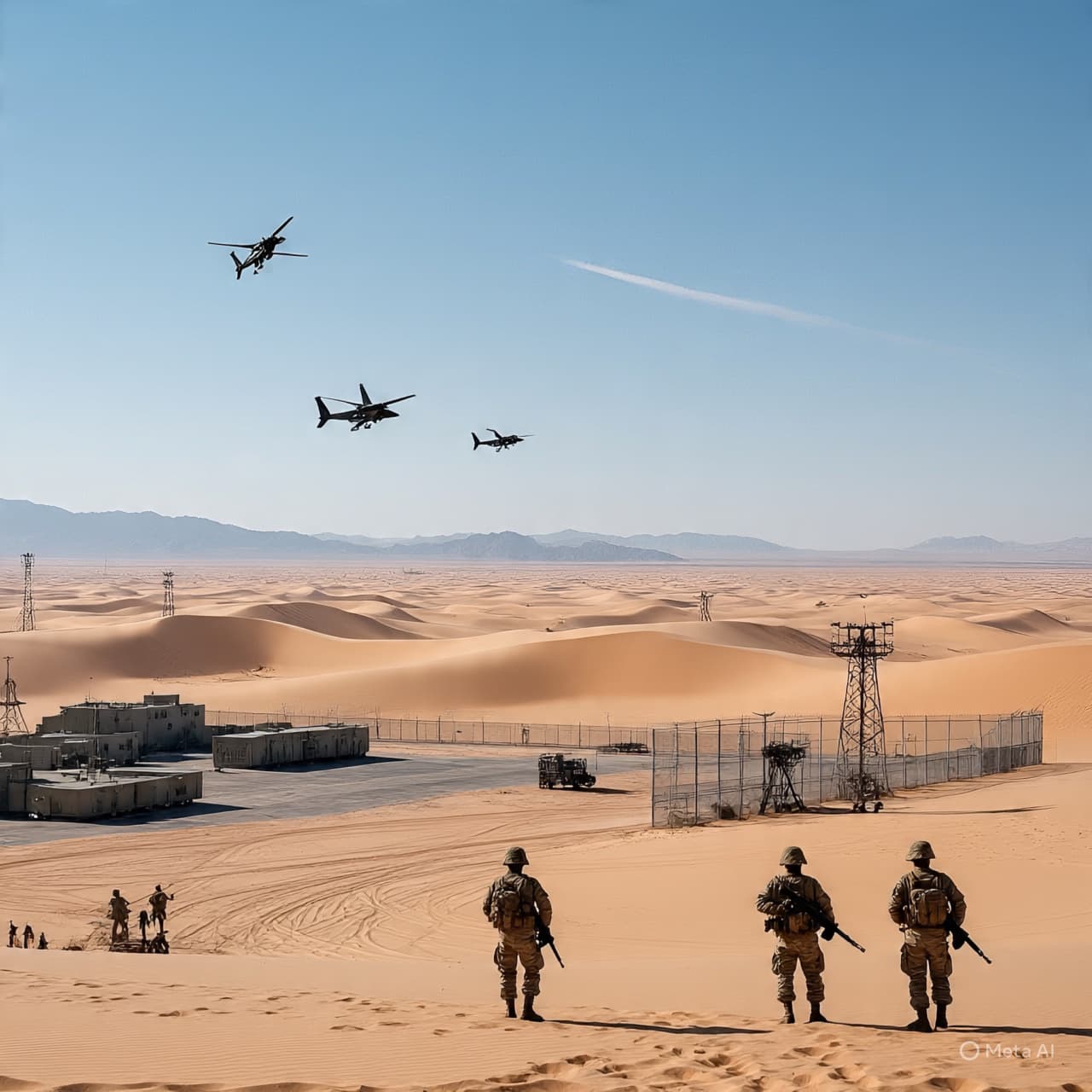
AI Image Disclaimer: “Images in this article are AI-generated illustrations, meant for concept only.” “Visuals are created with AI tools and are not real photographs.” “Illustrations were produced with AI and serve as conceptual depictions.” “Graphics are AI-generated and intended for representation, not reality.” Sources: The New York Times Reuters BBC News The Wall Street Journal Defense One
Published by Banx Network. This article is part of the Banx decentralized media programme, powered by the BXE token on the XRP Ledger.