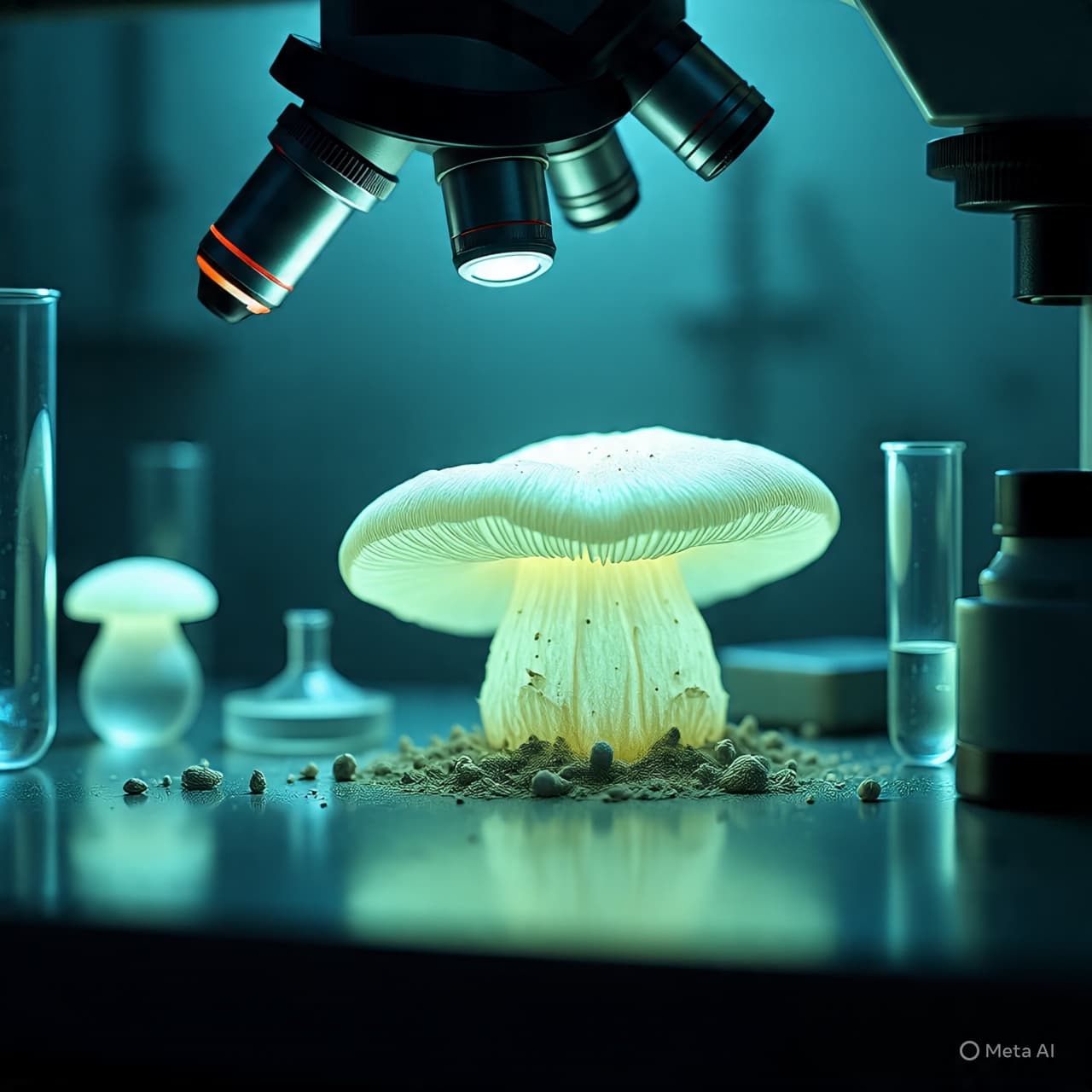
Amid the silent ruins of Pripyat, where concrete skeletons stand as relics of human ambition and error, life has found a curious way to persist. In the shadow of Chernobyl’s still-smoking reactor, a delicate fungus spreads, unseen by most, yet rewriting the very rules of survival. Scientists now say it has evolved an extraordinary ability: to harness the radiation that once rendered this landscape hostile, turning lethal energy into nourishment.
It is an unsettling beauty. A tiny organism thriving in a place where humans flee, its growth almost imperceptible yet relentless. Researchers studying its DNA describe adaptations that allow it to convert high-energy gamma rays into chemical energy, a process echoing the slow, patient alchemy of photosynthesis. Here, in the amber glow of instruments and Petri dishes, biology dances with radiation in ways that defy our expectations.
This discovery resonates beyond the boundaries of the exclusion zone. It challenges notions of resilience and adaptability, suggesting that life, in its quiet tenacity, may possess strategies we are only beginning to comprehend. While Chernobyl remains a symbol of catastrophe, it also harbors a subtle narrative of ingenuity and survival, where even the smallest forms of life learn to bend adversity into opportunity.
As scientists continue to probe the fungus’s potential applications—from bioremediation to insights into radiation resistance—the world outside watches, reminded that nature often writes its own rules. In the silence of abandoned streets and the flicker of radioactive light, a fungus quietly reminds us that life’s persistence is sometimes most extraordinary where least expected.
AI Image Disclaimer Visuals are AI-generated and serve as conceptual representations.
Sources Nature Scientific Reports BBC Science Live Science New Scientist
Published by Banx Network. This article is part of the Banx decentralized media programme, powered by the BXE token on the XRP Ledger.