There is a certain stillness just before dawn — when the sky, touched by a pale promise of light, seems to hold its breath. In that fragile quiet, nations too can pause, teetering between what was and what might be. Such is the moment Bangladesh finds itself in: at a crossroads between a turbulent past and an uncertain future.
In a landmark decision, Bangladesh’s International Crimes Tribunal has sentenced former Prime Minister Sheikh Hasina to death in absentia, finding her guilty of crimes against humanity for her role in ordering a brutal crackdown on last year’s student-led uprising. The tribunal’s ruling follows months of trial, where prosecutors presented evidence that Hasina deployed lethal force — including the use of helicopters, drones, and firearms — against unarmed protestors. For many, the verdict marks both a reckoning and a rupture: a symbolic end to Hasina’s 15-year rule, and the beginning of a deeply fraught chapter for Bangladesh.
Prosecutors detailed how, during the protests in July and August 2024, more than 800 people were killed, according to the interim government, while United Nations investigations estimated that the death toll could be as high as 1,400. The tribunal accused Hasina of not only ordering the crackdown but also failing to prevent widespread violence, stating that she bore direct responsibility. Her former home minister was also sentenced to death, while a third defendant — a former police chief — received a five-year term after turning state witness.
From her base in exile in India, Hasina vehemently rejected the ruling. She called the tribunal “biased and politically motivated,” insisting she acted to maintain order amid chaos. Her denial echoes through her statements, but the courtroom was resolute. Justice Golam Mortuza Mozumder, reading the verdict, said the tribunal had established that she had “direct command” in deploying force — and that her actions constituted crimes against humanity.
The verdict has sent ripples across Bangladesh. Security was tight in Dhaka as the tribunal delivered its decision, and the days before the ruling saw a wave of unrest — arson attacks, bomb blasts, and heightened fears ahead of parliamentary elections expected in February. On one side, the interim government under Nobel laureate Muhammad Yunus welcomed the decision as accountability restored, with Yunus declaring that “no one, regardless of power, is above the law.” On the other, Hasina’s supporters warn of deepening divisions and potential instability should politics revert to vengeance.
Beyond the verdict lies a heavier question: What does justice truly mean in a nation still aching from violence? For students who defied the state, the tribunal’s decision may feel like vindication. For others, especially those tied to Hasina’s Awami League, it may seem like a closing of the door on a chapter of leadership. The tribunal itself, once created under Hasina’s government to prosecute war crimes, now stands as the body to judge her — a twist of fate laden with irony and grief.
As Bangladesh tries to steady itself, the shadow of the past looms large. The uprising that toppled one of its longest-serving leaders was born of youthful energy, idealism, and a cry for reform. Now, in the aftermath of bloodshed and verdicts, the nation must decide whether this moment becomes a turning point or simply another fracture in its long journey.
In the coming months, all eyes will be on Dhaka: on whether the verdict holds, whether political reconciliation can follow, and whether the wound opened by the July uprising can truly begin to heal. For now, the sentence stands — a grave judgment, and a somber milestone in Bangladesh’s fraught history.
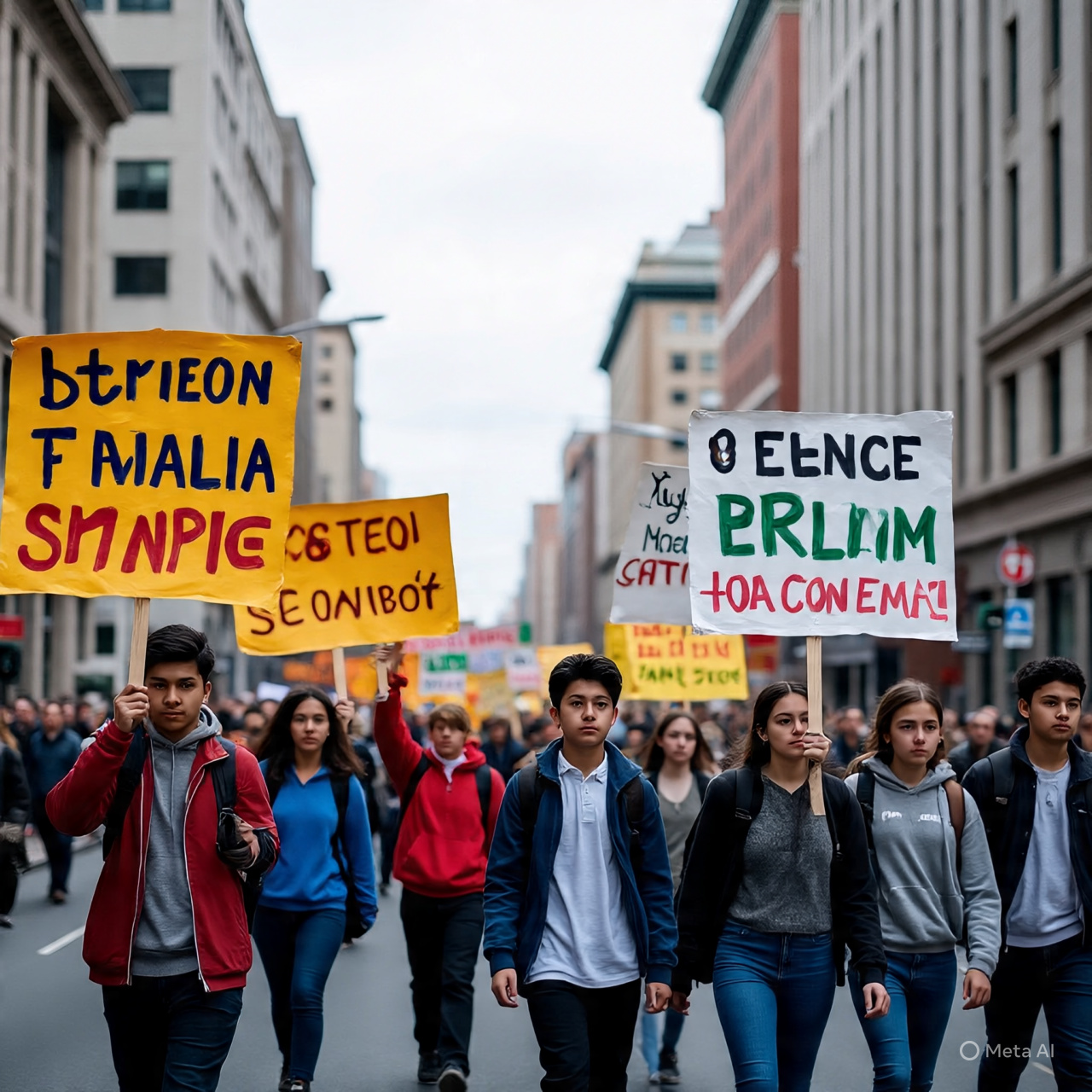
AI Image Disclaimer Visuals in this article are AI-generated illustrations, meant for conceptual representation only.
Published by Banx Network. This article is part of the Banx decentralized media programme, powered by the BXE token on the XRP Ledger.