There are places where time does not move forward so much as it lingers—where history settles into the landscape and remains, quiet but present. In the exclusion zone surrounding Chernobyl Nuclear Power Plant, silence carries a different weight. It is not emptiness, but a kind of suspended narrative, where the past continues to shape what grows, survives, and adapts.
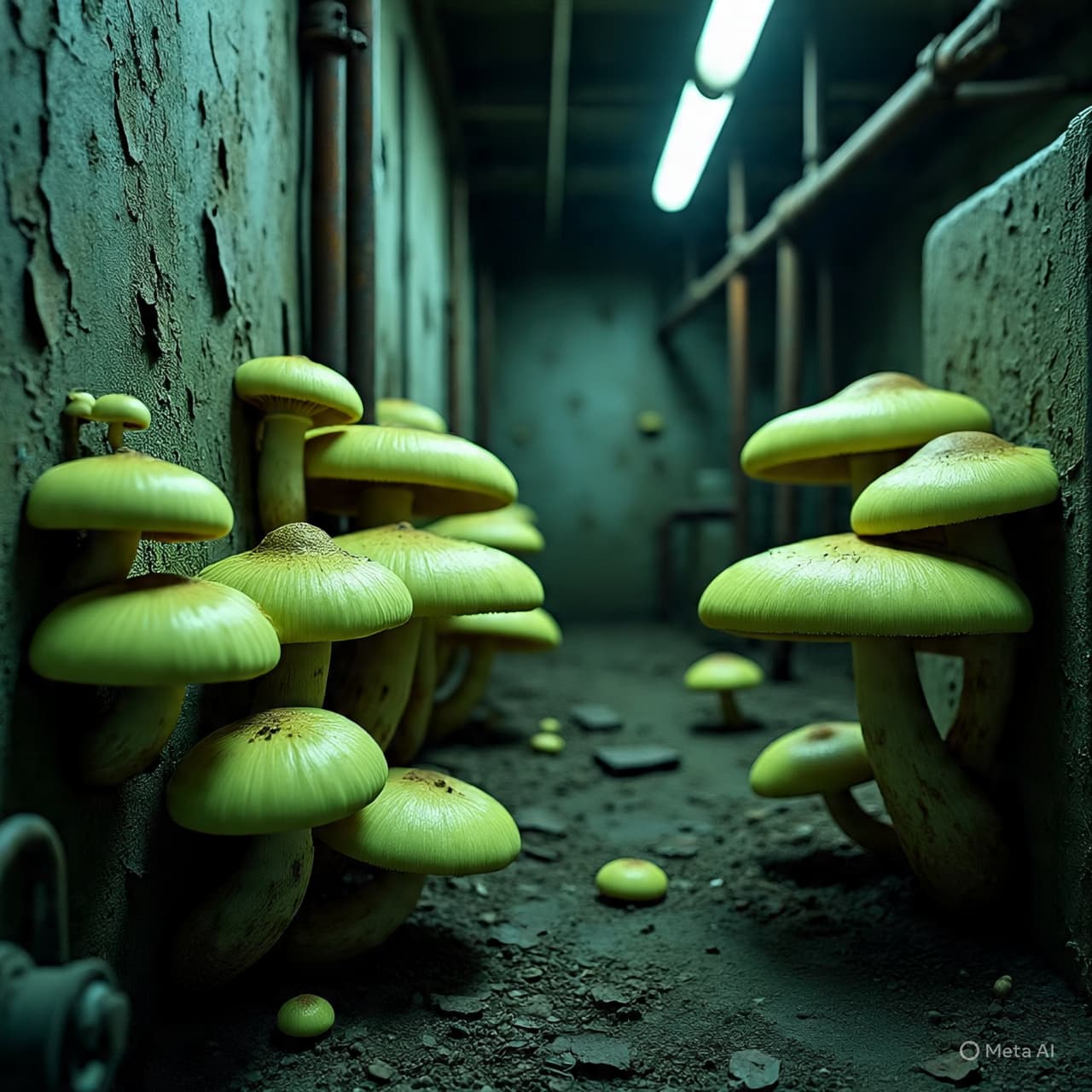
In this environment, marked by the long shadow of the Chernobyl disaster, scientists have observed something both subtle and remarkable: certain fungi appear not only to endure high levels of radiation, but to interact with it in ways that suggest adaptation. Over time, research has pointed toward species that seem capable of using ionizing radiation as a form of energy, a process that has drawn comparisons—carefully and metaphorically—to how plants use sunlight.
This phenomenon, sometimes referred to as radiotrophy, centers on the role of melanin, a pigment found in many organisms, including these fungi. In laboratory studies, melanin-rich fungi exposed to radiation have shown changes in growth patterns, suggesting that the pigment may help convert radiation into a usable form of chemical energy. The exact mechanisms remain an area of ongoing research, but the implications have captured scientific interest.
The fungi observed in and around Chernobyl are not entirely unique in their composition; similar organisms exist in other environments. What distinguishes them is the context in which they have persisted. The exclusion zone, with its elevated radiation levels, presents conditions that would be challenging for many forms of life. Yet these fungi have not only survived, but appear to have found a way to function within that constraint.
It is important, however, to approach this idea with measured clarity. The notion that fungi can “feed on radiation” is often simplified in public discussions. In reality, the process is more nuanced, involving biochemical interactions that are still being explored. Scientists continue to investigate how melanin behaves under radiation, how energy transfer occurs, and what limits exist within this adaptation.
There is also a broader significance to this research. Understanding how organisms respond to extreme environments can inform studies in fields ranging from medicine to space exploration. If certain biological systems can tolerate or even utilize radiation, they may offer insights into how life could persist in conditions beyond Earth, or how materials and organisms might be designed to withstand high-radiation environments.
At the same time, the presence of these fungi serves as a quiet reminder of resilience. Life, in its many forms, often finds pathways where none seem immediately available. It adapts, not with intention, but through gradual change—responding to pressures in ways that, over time, can appear almost purposeful.
The Chernobyl exclusion zone itself has become an unexpected site of study, where ecological processes unfold in the absence of regular human activity. Plants, animals, and microorganisms have established a complex environment, shaped both by the legacy of the disaster and by the natural rhythms that continue despite it.
In recent years, scientists have continued to study these fungi in controlled settings, seeking to better understand their properties and potential applications. While the idea of radiation-utilizing organisms remains under investigation, ongoing research is expected to clarify how these adaptations function and what they may reveal about the boundaries of life.
AI Image Disclaimer Visuals are created with AI tools and are not real photographs.
Source Check (Credible Media & Journals): Nature Science Scientific American BBC News Smithsonian Magazine
Published by Banx Network. This article is part of the Banx decentralized media programme, powered by the BXE token on the XRP Ledger.