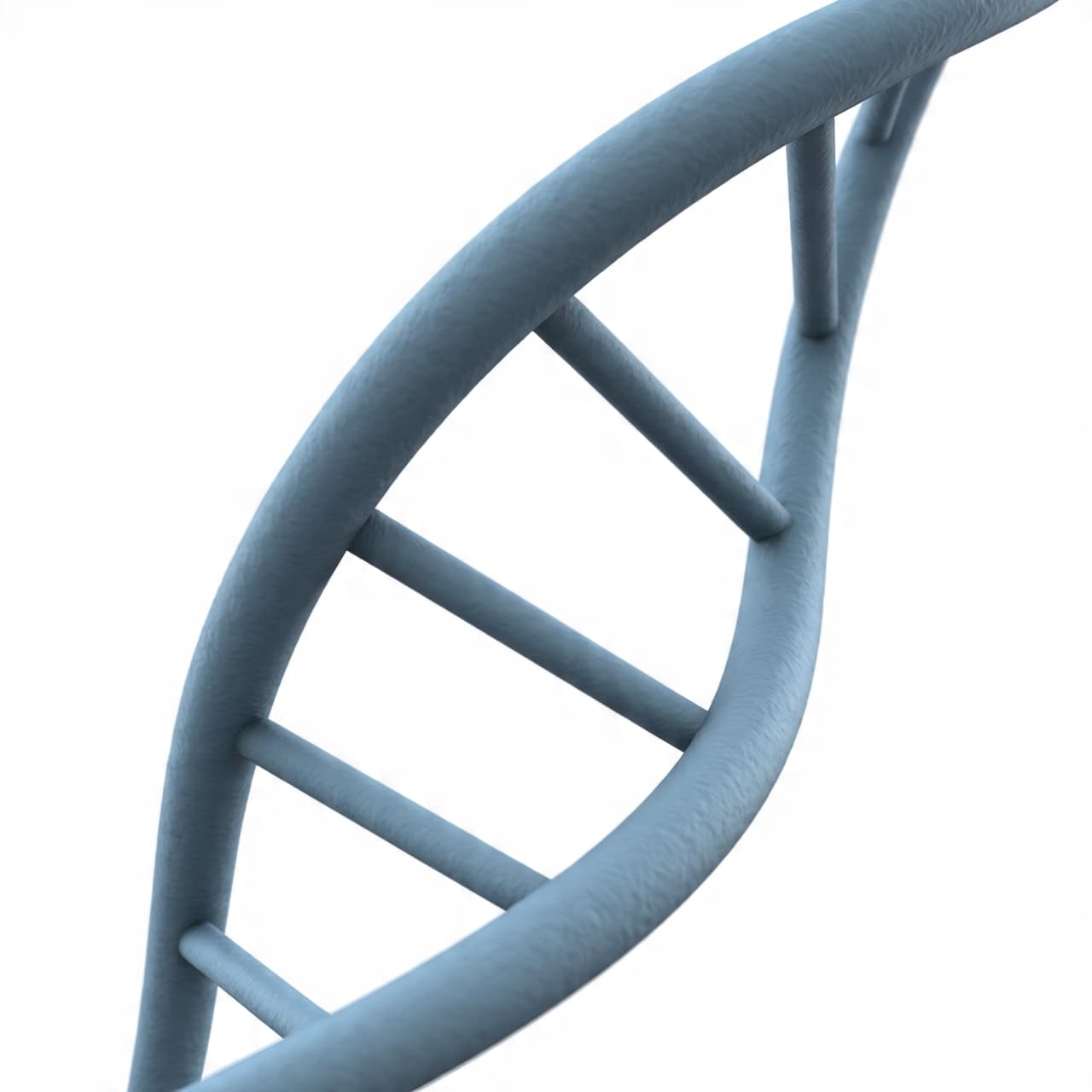
There are structures so familiar that they begin to feel almost symbolic, their forms repeated in textbooks and diagrams until they seem fully understood. Yet beneath that familiarity, complexity remains—quiet, intricate, and often only partially revealed. The double helix of DNA is one such form, its elegant spiral carrying not only the blueprint of life, but also the subtleties that shape how that blueprint can be read and changed.
In recent research, attention has turned to the physical shape of DNA itself, and how that shape may influence the success of gene therapy. The focus is not solely on the sequence of genetic code—the arrangement of letters that has long defined genetic understanding—but on the way the molecule bends, folds, and positions itself within the cell. These structural details, often overlooked, appear to play a role in how easily genetic material can be accessed and modified.
Gene therapy, at its core, is an effort to correct or replace faulty genes, offering the possibility of addressing conditions at their source. The process depends on the ability to deliver genetic material into cells and ensure it interacts effectively with existing DNA. Yet this interaction is not purely abstract. It takes place within a physical environment, where molecules occupy space, adopt shapes, and respond to forces that influence their behavior.
Researchers have found that certain shapes of DNA can create barriers to this process. Regions where the molecule is tightly coiled or arranged in particular configurations may be less accessible, making it more difficult for therapeutic tools to reach their targets. Conversely, areas where the structure is more open may allow for easier interaction, increasing the likelihood of successful modification.
This understanding introduces a new layer to the challenge of gene therapy. It suggests that success is not determined only by identifying the correct sequence, but also by navigating the physical landscape in which that sequence exists. The molecule becomes not just a string of information, but a terrain—one that must be approached with consideration of its contours and constraints.
There is a certain quiet shift in perspective here. The focus moves from code to form, from abstraction to structure. It reflects a broader pattern within science, where deeper understanding often comes from looking not only at what something is, but how it exists in space and time.
At the same time, the implications remain measured. The findings do not diminish the potential of gene therapy, but they clarify the challenges it faces. By recognizing the role of DNA shape, researchers can refine their approaches, developing methods that take these structural factors into account.
The work continues, unfolding gradually as new techniques allow for more detailed observation. Each discovery adds to a growing picture of how genetic processes operate, revealing layers that were once hidden beneath the surface of established knowledge.
Researchers say the physical shape of DNA plays a key role in gene therapy outcomes, affecting how accessible certain genes are to modification. The findings may help improve future gene-editing techniques by accounting for DNA structure.
AI Image Disclaimer These visuals are AI-generated and intended as conceptual illustrations.
Sources Nature Science MIT Technology Review BBC News The Guardian
Published by Banx Network. This article is part of the Banx decentralized media programme, powered by the BXE token on the XRP Ledger.