There are moments when uncertainty reveals itself not in headlines, but in small, observable acts. A line that lingers a little longer than expected, a purchase that feels slightly larger than necessary, a gesture that draws quiet attention from those nearby. These are the subtle ways in which broader concerns begin to take shape in everyday life.
At a fuel station in New Zealand, one such moment was captured.
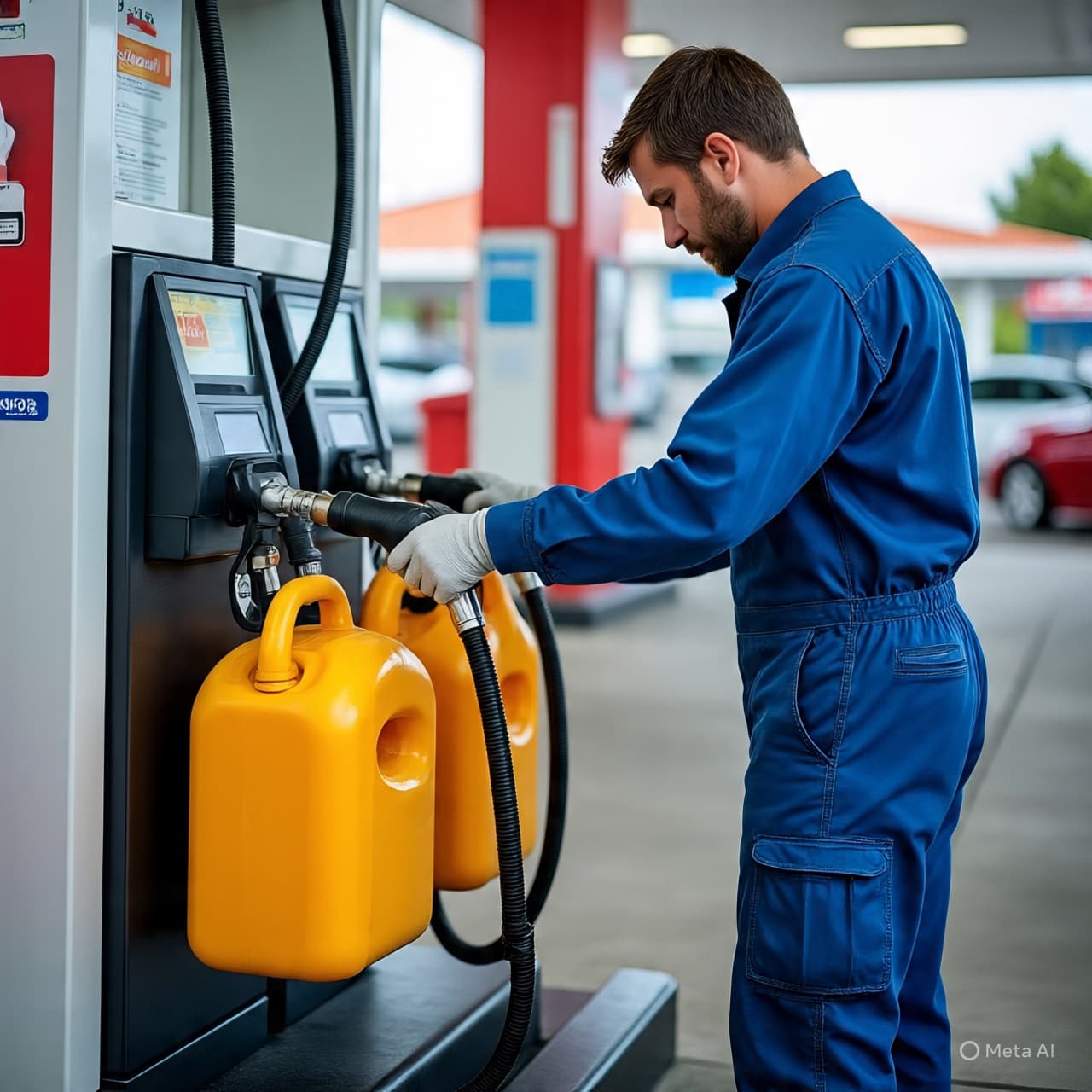
A man was photographed appearing to stockpile barrels of fuel, filling multiple containers at the pump. The image, shared widely, prompted a simple response from an onlooker: “Hey, that’s not the right thing to do.” The remark, understated yet direct, reflected a tension that extends beyond the individual act—a shared awareness that resources, when perceived as uncertain, can alter behavior in unexpected ways.
The timing of the incident is not incidental. Fuel prices have been rising, influenced by global pressures and regional disruptions, and the visibility of those increases has made them part of daily conversation. For many, the act of refueling has shifted from routine to consideration, its cost and availability more closely observed than before.
In such an environment, the line between preparedness and excess can become less clearly defined. Storing additional fuel may be seen by some as a practical response to uncertainty, a way of ensuring continuity in the face of potential disruption. For others, it raises questions about fairness and collective impact, particularly when supply is shared across a wider community.
Regulations often exist to guide such behavior, setting limits on how much fuel can be stored and how it must be handled. These rules are shaped not only by concerns about availability, but by safety—fuel, after all, is not only a resource, but a volatile one, requiring careful management.
The photograph itself does not capture the full context. It offers only a moment, a single frame within a larger sequence of actions and intentions. Yet it is enough to prompt reflection, to draw attention to how individuals respond when conditions shift.
There is also a quieter dimension to the reaction it generated. The comment directed at the man was not forceful, but measured, suggesting a shared understanding rather than confrontation. It points to the way communities navigate such moments—not always through enforcement, but through observation and response.
In this way, the incident becomes less about one individual and more about a collective state of mind. It reflects how uncertainty can influence behavior, and how that behavior, in turn, becomes visible to others.
A man in New Zealand was photographed apparently stockpiling barrels of fuel at a service station, prompting public concern. The incident comes amid rising fuel prices, with regulations governing fuel storage and safety remaining in place.
AI Image Disclaimer
These illustrations are AI-generated and are intended as visual representations only.
Source Check
RNZ (Radio New Zealand) The New Zealand Herald Stuff 1News Newstalk ZB
Published by Banx Network. This article is part of the Banx decentralized media programme, powered by the BXE token on the XRP Ledger.

.jpg&w=3840&q=75 "India Says First Phase of U.S. Trade Deal Is Nearly Done, Seeks Edge Over Rivals")