

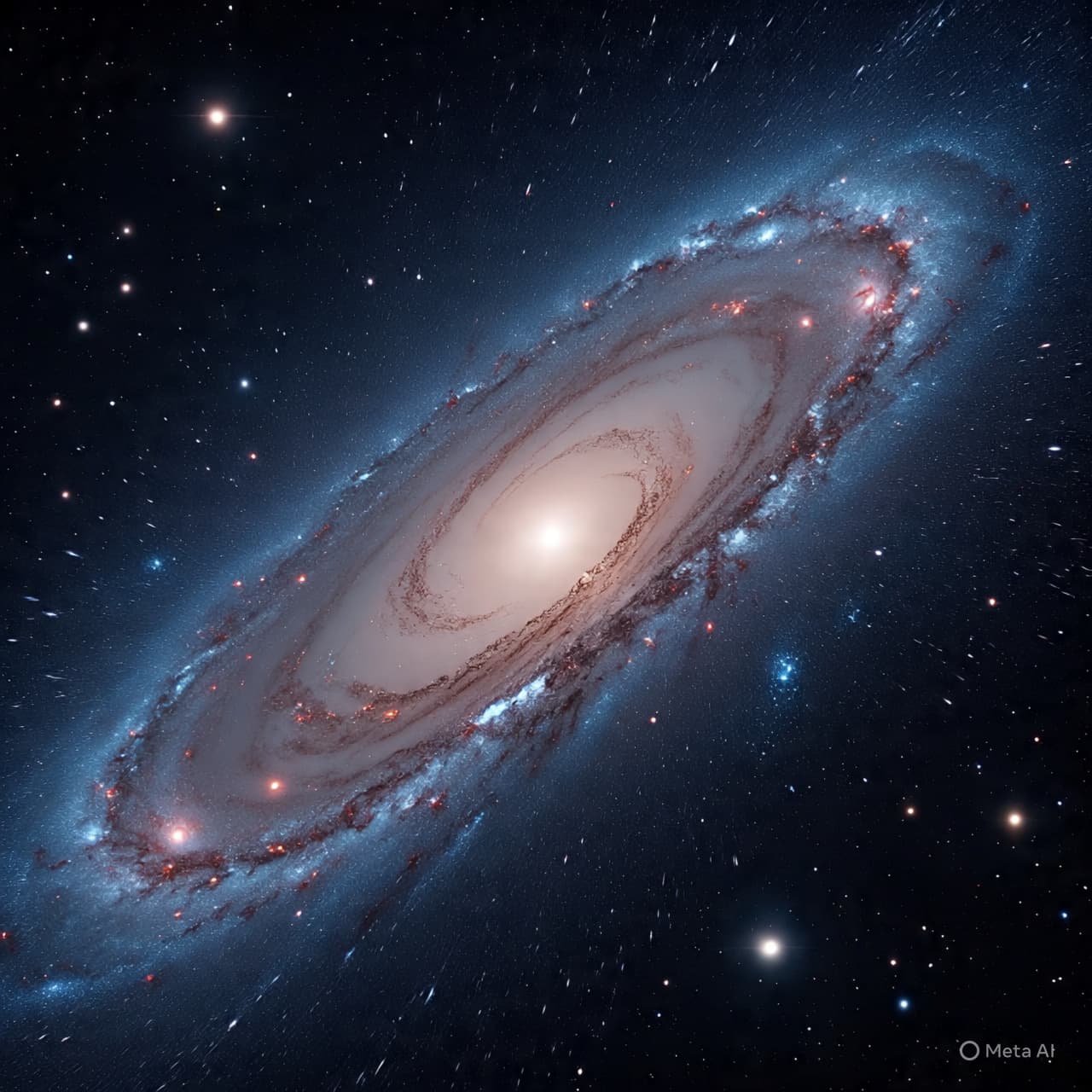
Key Highlights
- Discovery:Astronomers have identified an ultra-faint dwarf satellite galaxy orbiting Andromeda.
- Significance:This galaxy provides insights into dark matter and cosmic formation.
- Technology:Advanced imaging techniques enabled the detection of this faint object.
Astronomy often reveals its secrets in subtle ways, and the recent identification of an ultra-faint dwarf satellite galaxy orbiting Andromeda exemplifies this phenomenon. This galaxy, which is the Milky Way's nearest large galactic neighbor, exists on the very edge of detectability, emitting only a faint trace of light that challenges our observational capabilities.
Dwarf galaxies like this one are considered some of the oldest building blocks of the universe. Their small size and low luminosity often lead them to be overlooked, yet they hold vital clues about the universe's earliest epochs. The simplicity of these galaxies belies their significance, as they provide a clearer record of galactic evolution compared to larger, more complex structures.
The discovery was made possible through deep-sky surveys and advanced imaging techniques that can identify extremely low-luminosity objects. By analyzing star distributions and subtle gravitational patterns, astronomers successfully distinguished this faint satellite from the background noise of the cosmos. This breakthrough highlights the importance of technological advancements in astronomy, which continue to push the boundaries of what we can observe.
What makes this finding particularly compelling is its implications for dark matter studies. Ultra-faint dwarf galaxies are believed to be heavily dominated by dark matter, making them ideal laboratories for understanding this elusive force that shapes the universe. The presence of this newly identified satellite galaxy adds to the growing body of evidence that challenges our understanding of dark matter and its role in cosmic structure.
This satellite galaxy also contributes to a broader effort to map Andromeda's extended system. Scientists suspect that many more such faint companions remain hidden in the vast darkness surrounding larger galaxies. The increasing number of known dwarf satellites around Andromeda has steadily risen in recent years, challenging earlier assumptions about how galaxies form and interact. Each new discovery adds nuance to the models that attempt to describe cosmic structure and evolution.
The presence of this ultra-faint galaxy raises intriguing questions about how many similar objects may exist beyond current detection limits. It underscores the limitations of observational astronomy, where the absence of evidence often reflects technological boundaries rather than true emptiness. As instruments continue to improve, astronomers anticipate uncovering even fainter and more distant structures, which may reshape our understanding of how galaxies assemble over billions of years.
For now, the newly identified satellite remains a quiet companion to Andromeda—a reminder that even the faintest lights can hold immense significance in the vast architecture of the universe. As we continue to explore the cosmos, each discovery brings us closer to understanding the intricate tapestry of galactic formation and the fundamental forces that govern our universe.
Published by Banx Network. This article is part of the Banx decentralized media programme, powered by the BXE token on the XRP Ledger.




