The beginning of life is often described as a race—millions of cells moving through a narrow and uncertain path, each carrying the quiet promise of inheritance. Under the microscope, sperm appear almost identical, propelled by the same slender tails, guided by the same chemistry of motion. Yet recent research suggests that beneath this apparent equality lies a far more complicated contest.
In certain animals, some sperm carry genetic instructions that do more than simply wait for chance to decide their fate. Instead, they appear to reshape the competition itself, quietly sabotaging their rivals and tilting the outcome of fertilization in their own favor.
Scientists studying these phenomena describe them as “selfish genetic elements.” Unlike ordinary genes, which pass through generations according to the familiar rules of inheritance, selfish genes manipulate biological systems to increase their own chances of survival. They do not merely participate in evolution’s lottery—they attempt to rewrite its odds.
Recent research has focused on how such genes operate within sperm cells themselves. Investigators found that in some cases these elements exploit a molecular system that normally acts as a kind of genetic gatekeeper during sperm development. This gatekeeper helps ensure that developing sperm receive the proteins and cellular machinery they need to function properly.
But selfish genetic variants appear able to hijack this system.
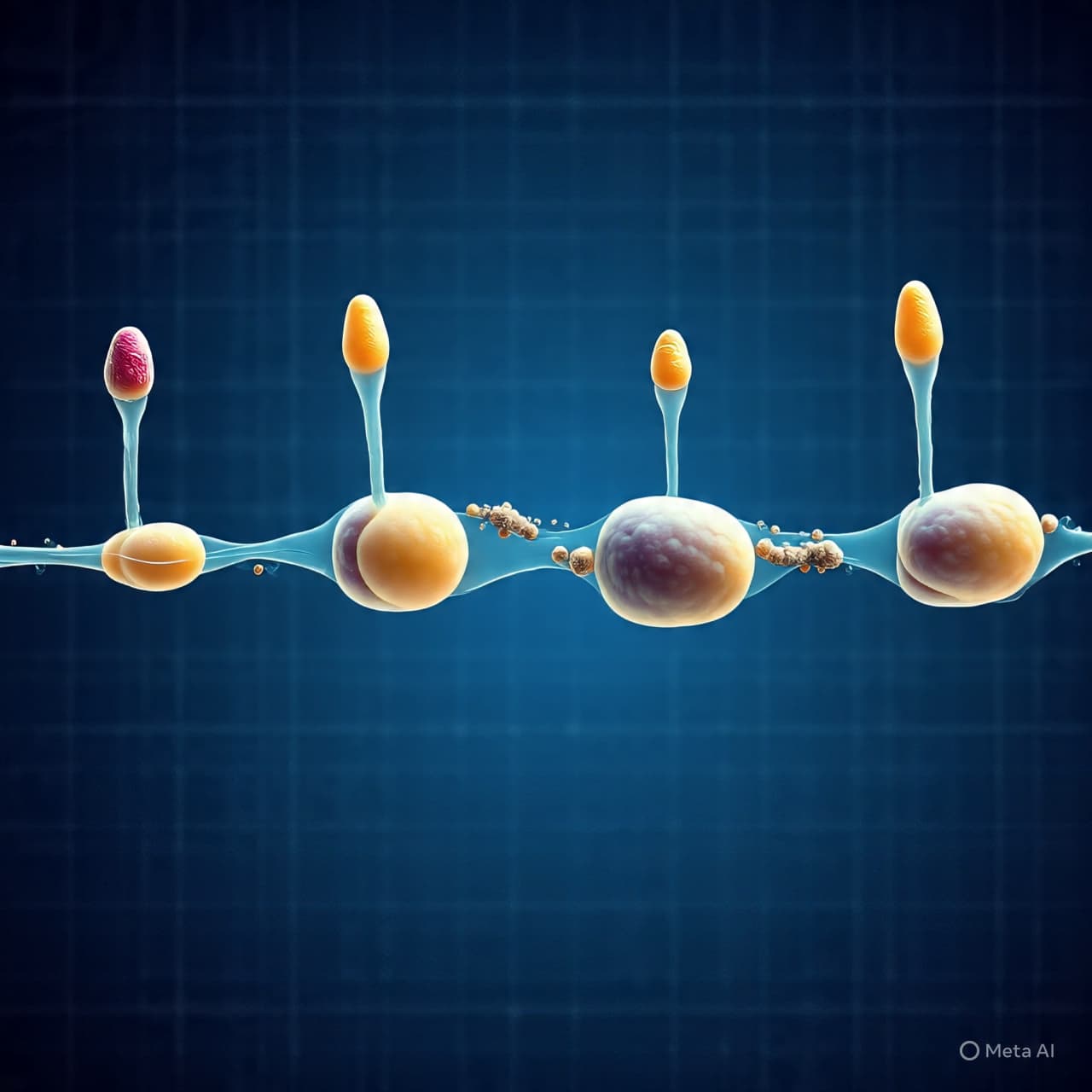
During sperm formation, many developing cells share components with one another through small cytoplasmic bridges. These connections allow proteins and genetic products to circulate among neighboring sperm cells, helping maintain uniformity. The process normally prevents differences between sperm that carry different genetic versions of a gene.
Researchers discovered that certain selfish elements circumvent this shared system. By interfering with the molecular “gatekeeper,” they restrict the flow of critical proteins, ensuring that only sperm carrying the selfish gene receive the full set of functional components. Neighboring sperm that lack the gene are left partially disabled.
Under the microscope, the consequences become visible in subtle ways. Some sperm move more slowly. Others struggle to navigate or lose the ability to reach the egg efficiently. The result is not a dramatic elimination but a quiet weakening of competitors.
What remains are the sperm carrying the selfish genetic variant—cells that retain their full capacity for motion and fertilization.
In evolutionary terms, this strategy allows the gene to be transmitted far more frequently than the usual fifty-percent expectation dictated by Mendelian inheritance. Instead of passing randomly between offspring, the selfish gene effectively ensures that it is carried forward by the majority of successful sperm.
The phenomenon has been observed in several organisms, including laboratory mice, where such genes can spread rapidly through populations despite sometimes carrying harmful side effects for the organism as a whole. In some cases, the distortions they create can even influence fertility rates or population genetics over time.
Yet the process also reveals an unexpected dimension of biology. What appears to be cooperation during sperm development—the sharing of cellular resources—can become the stage for hidden conflicts between genes themselves.
Inside a single reproductive cell, evolution’s pressures remain active. Genes compete not only between individuals but sometimes within the same body, shaping microscopic contests that ultimately influence which combinations of DNA move forward into the next generation.
The research concludes that certain selfish genetic elements can manipulate molecular gatekeeping systems during sperm development, weakening rival sperm that lack the gene. By impairing these competitors, the selfish variants increase their own chances of fertilization and inheritance.
AI Image Disclaimer
Illustrations were generated using AI systems and depict conceptual representations rather than real scientific photographs.
Source Check
Credible coverage and/or primary reporting exist from: Nature Science New Scientist ScienceDaily The Guardian
Published by Banx Network. This article is part of the Banx decentralized media programme, powered by the BXE token on the XRP Ledger.