There are moments in astronomy when the universe seems less like a distant machine and more like a quiet nursery. In the hush between stars, clouds of gas gather, fold, and begin a slow transformation. They do not rush. They do not announce themselves loudly. Yet sometimes, through the patient eye of a telescope, we glimpse what appears to be a beginning.
In a newly released image from the Hubble Space Telescope, one of the closest known baby nebulae to Earth appears to be “hatching” from its cocoon. The phrase feels almost tender for a process so vast. But the image suggests exactly that: a young stellar object emerging from thick veils of dust and gas, light pushing gently against darkness.
The object, located within our galactic neighborhood, represents an early chapter in the life of a star. Nebulae are often described as stellar nurseries, and with good reason. Within these dense molecular clouds, gravity slowly draws material inward. Over time, pressure and temperature rise at the core, setting the stage for nuclear fusion. Before that ignition, however, there is this fragile phase—an in-between state where the forming star remains swaddled in its birth cloud.
Hubble’s image captures the structure in remarkable detail. A bright central region shines through a surrounding envelope of dust, while narrow jets of material stream outward in opposite directions. These jets, common in young stellar objects, carve channels through the surrounding cloud. As they interact with nearby gas, they create glowing shock fronts that add texture and shape to the scene.
The “hatching” appearance comes from this interplay of light and dust. The surrounding nebula seems to split open, revealing the luminous core within. It is not a sudden event but a gradual unveiling. Over thousands of years, stellar winds and radiation will disperse the cocoon further, allowing the young star to stand more clearly on its own.
What makes this nebula especially compelling is its proximity. Being among the closest of its kind to Earth gives astronomers a clearer laboratory for studying early stellar evolution. Distance in space often means compromise in clarity. Here, however, researchers can observe fine structures—filaments, arcs, and cavities—that help refine models of how stars gather mass and shed excess material in their infancy.
The Hubble Space Telescope, despite being launched more than three decades ago, continues to provide imagery that feels both scientific and intimate. Orbiting high above Earth’s atmosphere, it avoids the distortions that blur ground-based observations. Its instruments capture wavelengths of light that reveal features otherwise hidden from view. In this case, those capabilities allow scientists to examine the delicate balance between gravity pulling inward and energetic outflows pushing outward.
There is something quietly humbling about witnessing a star before it fully becomes one. Our own Sun passed through a similar stage billions of years ago, wrapped in dust, sending out jets, slowly igniting. The image is not only about a distant object; it is, in a sense, about origins—about how common yet extraordinary the act of becoming can be.
The newly released Hubble image offers astronomers additional data on early stellar development and the dynamics of nearby nebulae. Researchers continue to analyze the structure and composition of the region to better understand how young stars evolve and influence their surroundings. The image stands as both documentation and discovery, adding another piece to the ongoing study of star formation within our galaxy.
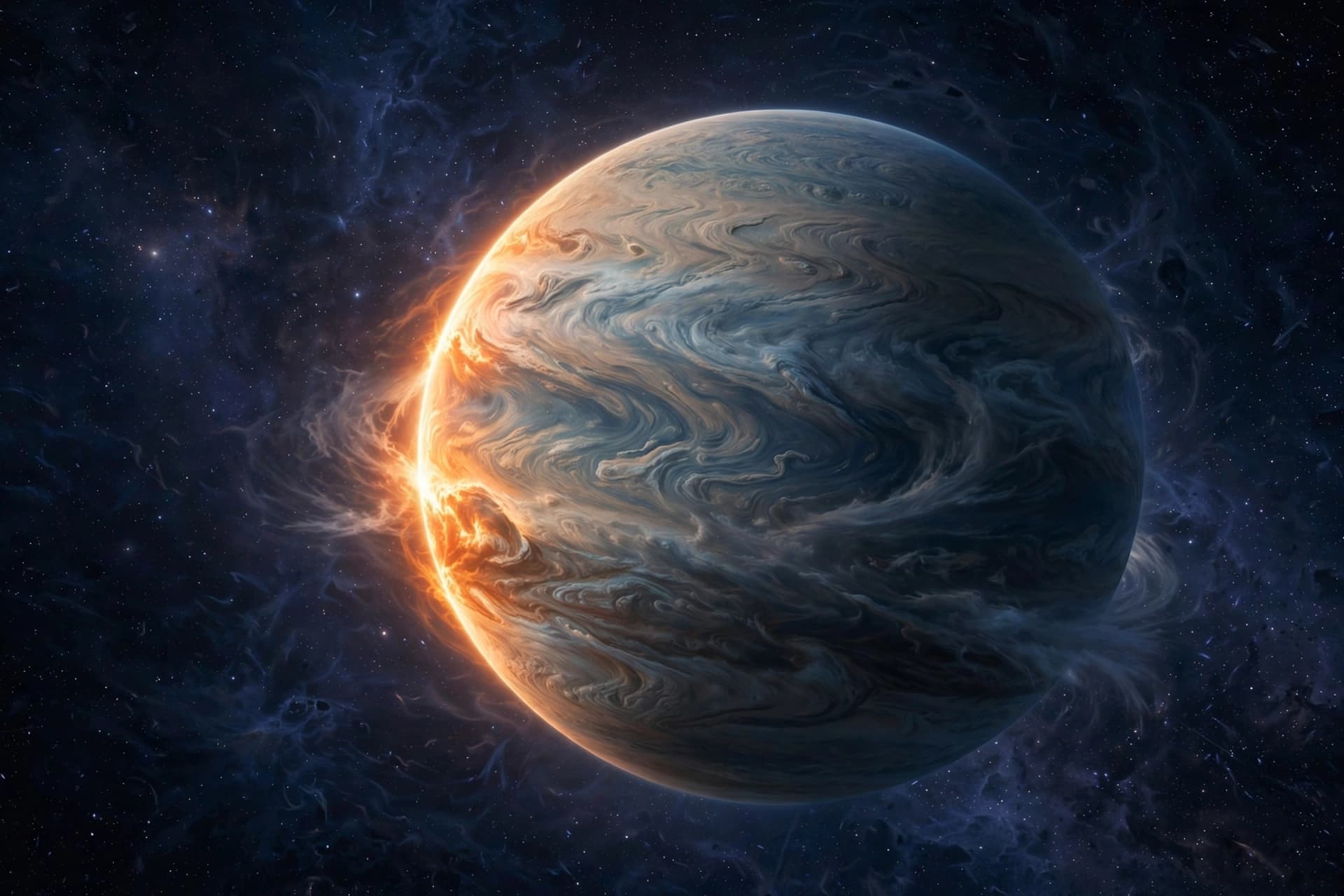
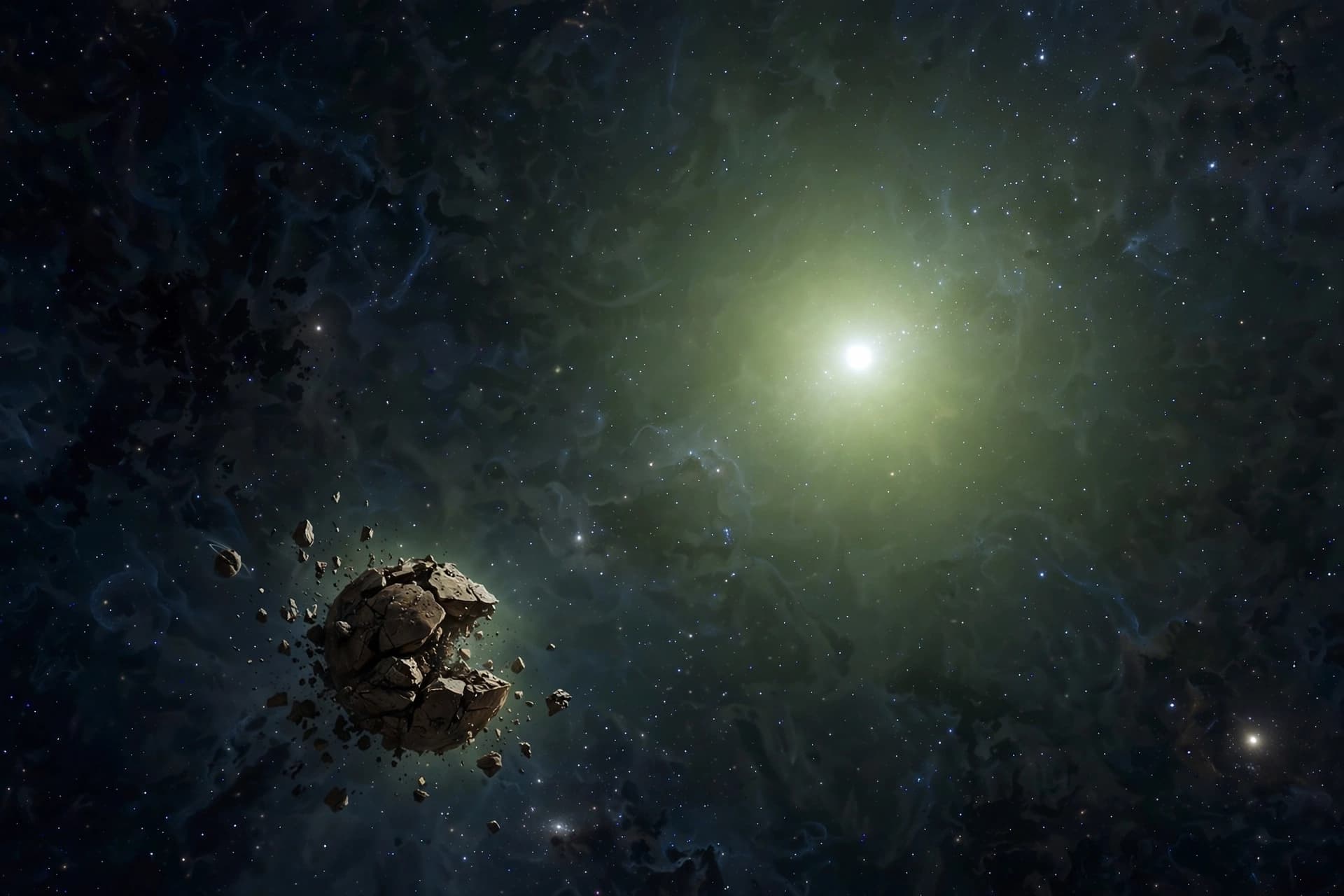
AI Image Disclaimer: Illustrations were produced with AI and serve as conceptual depictions.
Sources: NASA ESA (European Space Agency) Space.com Sky & Telescope Live Science
Published by Banx Network. This article is part of the Banx decentralized media programme, powered by the BXE token on the XRP Ledger.