

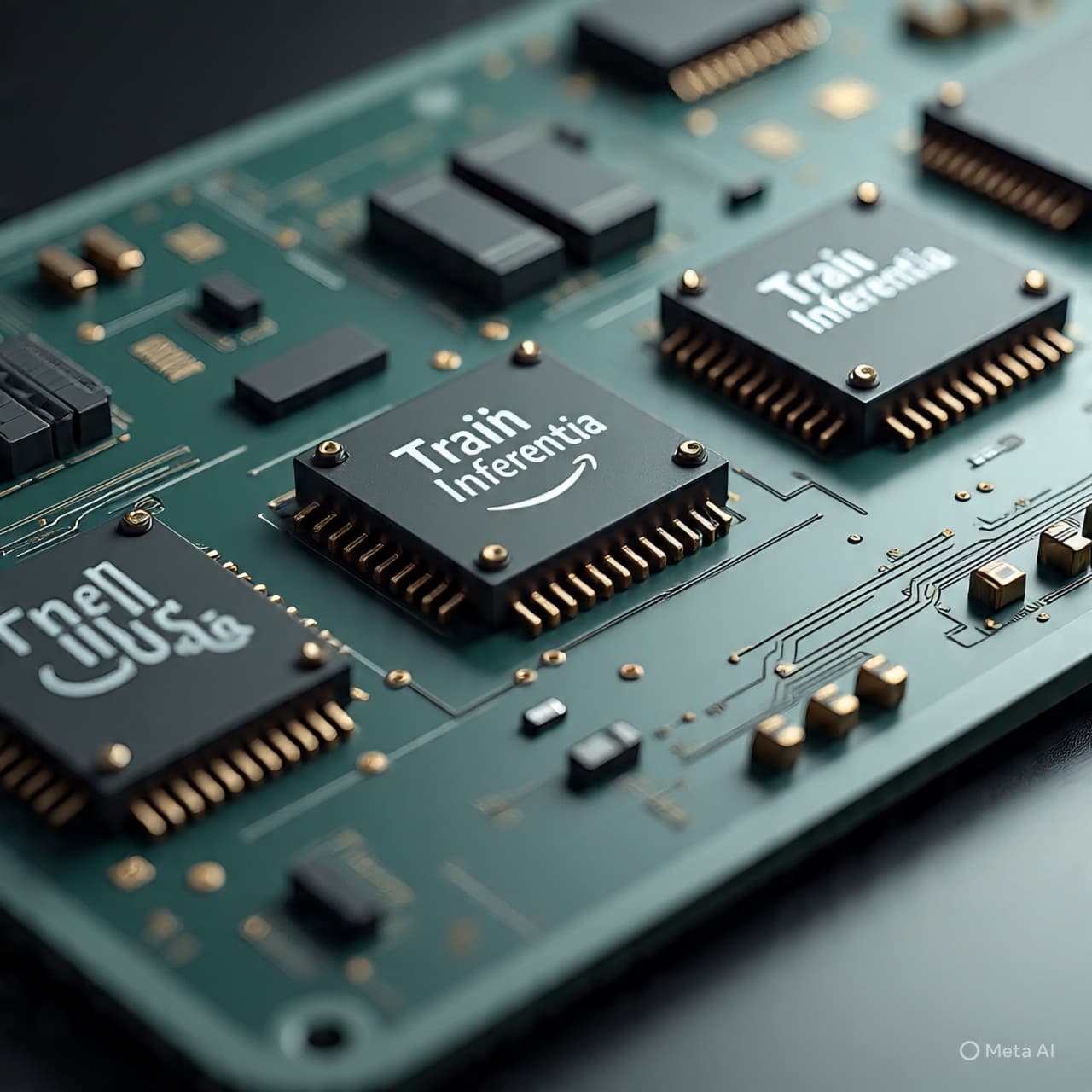
Key Highlights
- Amazon is developing custom AI chips to enhance its cloud services.
- The initiative aims to reduce costs and improve efficiency in AI model training.
- This shift reflects broader trends in technology and supply chain resilience.
Amazon is quietly reshaping the landscape of artificial intelligence with its latest initiative: the development of in-house AI chips. This strategic move marks a significant shift in how the tech giant approaches its cloud services and AI model training. By designing and deploying its own custom silicon, Amazon aims to enhance performance while also addressing cost pressures that have become increasingly relevant in the competitive cloud computing market.
For years, the AI infrastructure landscape has been dominated by third-party silicon, particularly high-end graphics processors that serve as the backbone for many machine learning systems. However, as the demand for AI capabilities grows, Amazon is looking inward. The company’s Trainium and Inferentia processors are now being positioned as foundational platforms for training and running next-generation AI models. This internal focus not only reflects a desire for greater control over technology but also a strategic response to the evolving economics of AI.
Peter DeSantis, Amazon's AI lead, has articulated the challenges associated with generalized AI workloads. He emphasizes that by utilizing silicon that the company has designed and understands intimately, Amazon can potentially reshape the cost structures associated with AI development. This approach not only aims to enhance the performance of AI models but also to make them more accessible to a broader range of users, from startups to large enterprises.
The implications of Amazon's shift towards in-house chip design extend beyond the company itself. This move is part of a larger conversation about supply chain resilience and technological sovereignty. In an era marked by chip shortages and export restrictions, developing custom silicon can be seen as a proactive measure to ensure that cloud providers maintain control over the tools they rely on. Amazon's data centers are now humming with the results of these strategic choices, as engineers work to fine-tune architectures that prioritize both performance and accessibility.
However, the journey towards fully realizing the potential of in-house chips is not without its challenges. Some industry observers caution that Amazon's custom silicon still has a way to go in matching the performance breadth offered by leading alternatives. Others view this strategy as a long-term play, where tailored efficiency and deep integration will eventually attract a loyal customer base in a competitive AI landscape.
There is a certain elegance to Amazon's approach, which emphasizes building rather than borrowing. In the intricate dance between algorithms and hardware, the company is exploring what it means to create technology that is not only powerful but also cost-effective and user-friendly. This philosophy resonates with many users who seek solutions that align closely with their specific needs and operational realities.
As Amazon continues to navigate the complexities of AI and cloud computing, its story unfolds quietly, marked by thoughtful decisions rather than loud proclamations. This evolution invites reflection on the nature of technological progress, prompting stakeholders to consider not just what technology can achieve, but how it can be developed and deployed in ways that are sustainable and beneficial for all.
AI Image Disclaimer Illustrations were produced with AI and serve as conceptual depictions, not real photographs.
Published by Banx Network. This article is part of the Banx decentralized media programme, powered by the BXE token on the XRP Ledger.




